
Main Course Recipes
Paella
4 servings
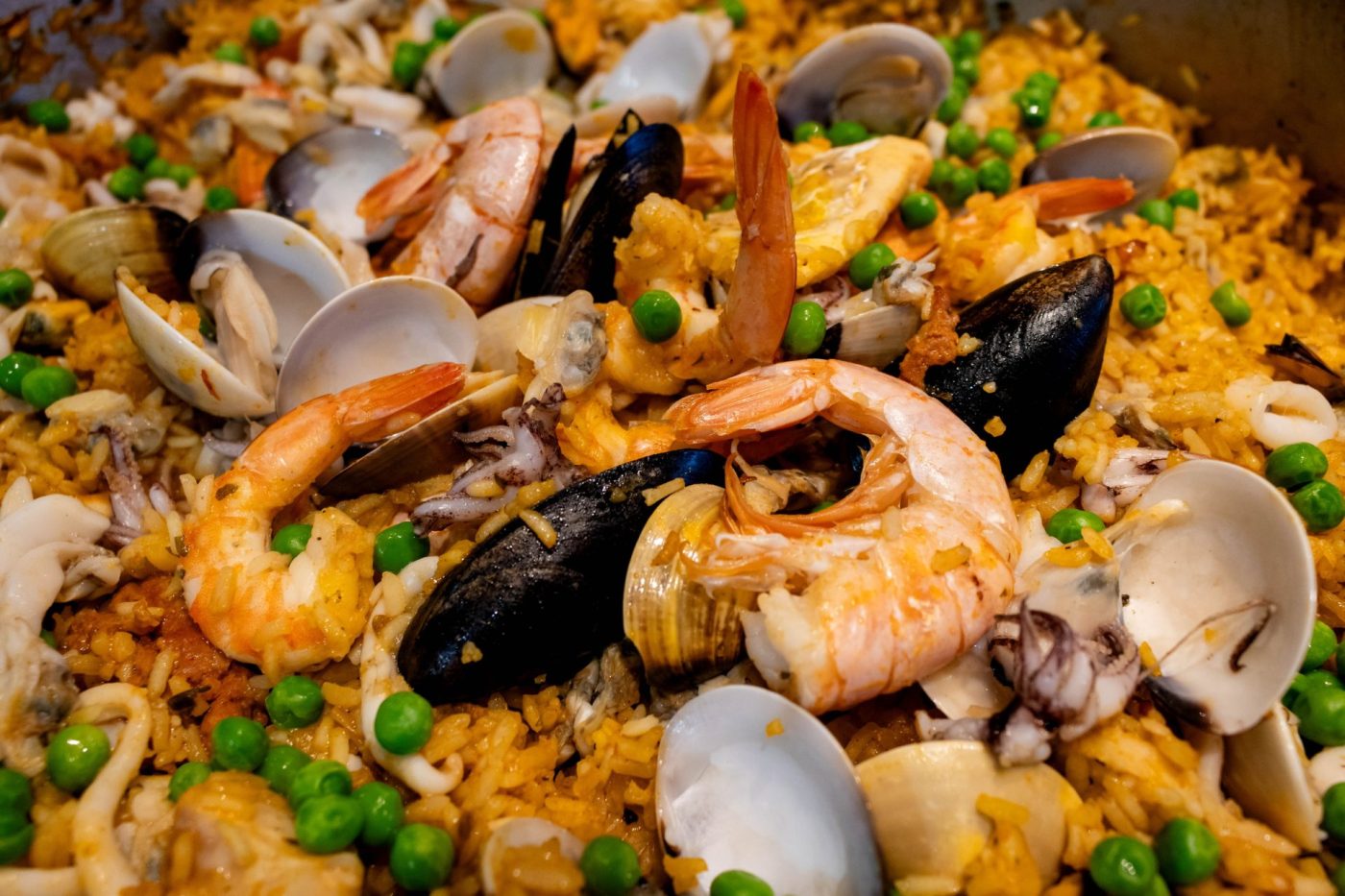
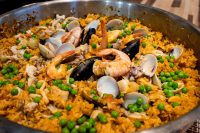
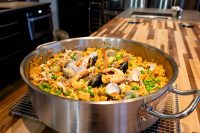
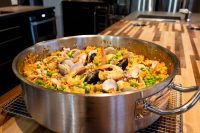
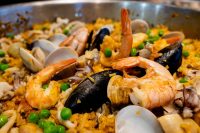
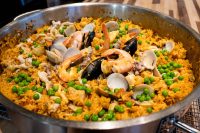
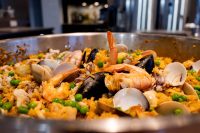
Let’s bring the vibrant flavors of Spain to your table! This scratch-made Paella is a celebration of worldwide cuisine built with arborio rice, fresh seafood, crushed tomatoes, and vegetable broth. We layer deep flavors with ground smoked paprika and dried saffron. Cooked in a large sauté pan with frying oil, extra virgin olive oil, and white wine, this gorgeous meal finishes perfectly in the oven. Read More
Main Course Recipes
Gluten-freeDairy-free
Before You Start
Let’s talk about important parts of the recipe before you start…
Welcome to My Authentic Paella Recipe
I am absolutely thrilled to share my scratch-made Paella with you today. As a chef who focuses on worldwide cuisine, bringing the vibrant flavors of Spain to your table is a true joy. This recipe avoids artificial shortcuts, relying instead on real, unprocessed ingredients. We build an incredible base using frying oil, arborio rice, crushed tomatoes, vegetable broth, and a splash of dry white wine. The beautiful aromatics come alive with ground smoked paprika, extra virgin olive oil, and a fragrant pinch of dried saffron. To top it off, we use the best fresh seafood you can find. Since my wife is a pescatarian, I often use vegan chorizo, which works perfectly here, but traditional Paella was originally made without meat. You can add a sprinkle of fresh green peas as a modification that is not part of the recipe, but it is truly magnificent exactly as I have written it.
Preparing the Fresh Seafood
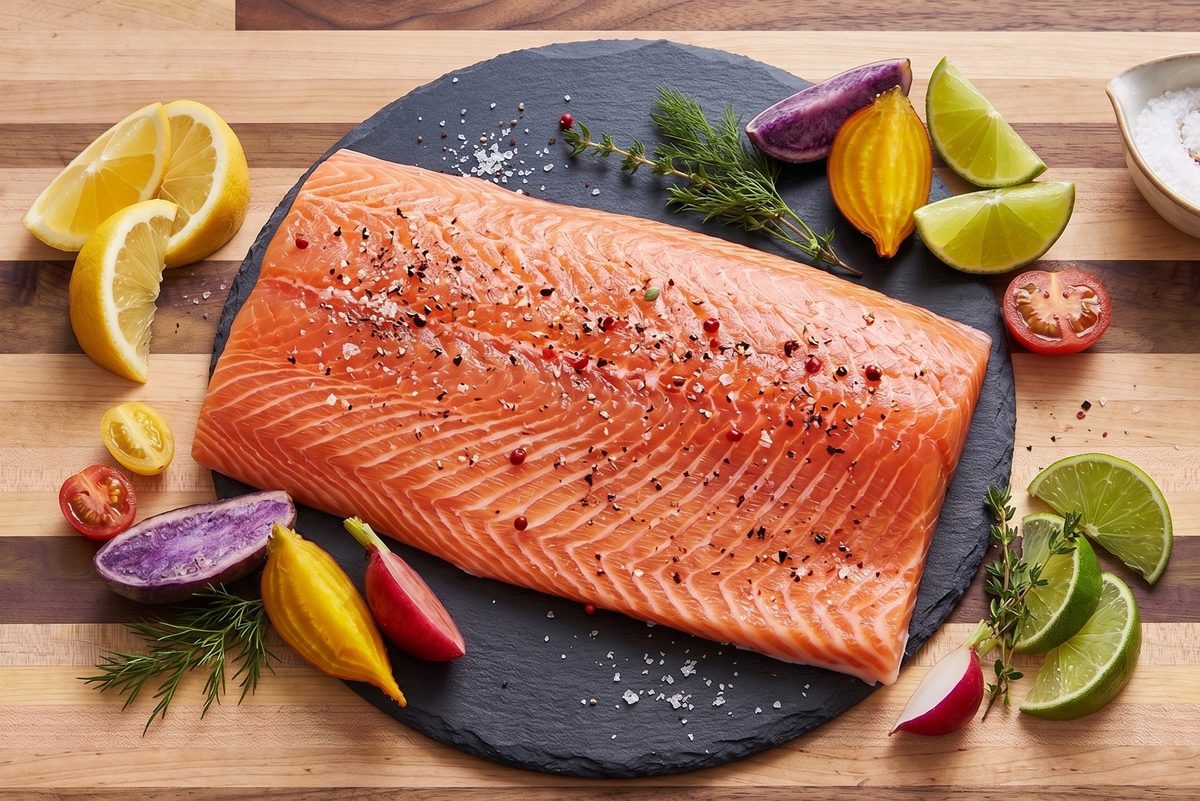
When I start making my Paella, the very first thing I do is prepare the fresh seafood. I usually do about half fish and half seafood. For the fish, I love to use cod, tilapia, tuna, or mahi-mahi, but salmon is also a great choice. For the other half, I love to use shrimp, mussels, and calamari. It is best to use raw shrimp, typically identified by their gray color, since precooked ones can get rubbery during cooking. Everything must be fresh or defrosted prior to cooking. I rinse them under cold water, let them drain, and use my chef’s knife and cutting board to cut the fish into large chunks. I place it all in a medium mixing bowl, drizzle it with extra virgin olive oil, squeeze the juice from one lemon, and add a pinch of salt and ground black pepper. I gently stir it and place it aside for the final baking step.
Sautéing the Onion, Bell Pepper, and Chorizo
The base of our Paella is where all the deep flavors begin to develop. I preheat a large sauté pan or stir fry pan—making sure it is ovenproof with a lid—on medium-high heat with 5 tablespoons of frying oil. I toss in 1 finely chopped yellow or white onion and sauté with occasional stirring until it is glossy and slightly seared, which takes about 3 to 4 minutes. Then, I add 1 diced yellow bell pepper and cook it for about a minute. While traditional paella was made without meat, including just fresh seafood, it is common in modern days to add chorizo. I add half a pound of raw chorizo and cook while stirring for 2 to 3 minutes until its surface is partially cooked and it releases some of its fat into the frying oil.
Toasting the Arborio Rice
Next, it is time to add the rice to the Paella. I specifically use 1 and a half cups of arborio rice, though you can use other short-grain rice or white rice of your choice. I add the arborio rice directly into the large sauté pan with the frying oil and the rendered fat from the chorizo. I sauté the mixture while stirring continuously until the rice gets a beautiful glossy look. This usually takes about 3 to 5 minutes. Toasting the arborio rice this way helps the grains maintain their structure when we eventually add the crushed tomatoes and vegetable broth later in the cooking process.
Deglazing with White Wine
Once the arborio rice is glossy and perfectly toasted, I deglaze the large sauté pan by adding 1 cup of white wine. I personally prefer to use a dry white wine for my Paella. I cook the mixture with constant stirring using a wooden spoon. You want to keep stirring until about half of the white wine gets absorbed by the arborio rice and evaporated. This step usually takes just about 1 minute, but it is absolutely essential for infusing the rice with a bright acidity before we introduce the vegetable broth, ground smoked paprika, and dried saffron.
Building the Broth with Tomatoes and Dried Saffron
Now we build the body of the Paella. I set my oven to preheat to 350 degrees Fahrenheit. Into the large sauté pan, I add 1 cup of canned crushed tomatoes—or tomato puree if you prefer—and 2 cups of vegetable broth or chicken broth. I season this rich liquid with 1 teaspoon of dried parsley, 1 teaspoon of ground smoked paprika, 2 cloves of grated garlic, a generous pinch of dried saffron, 1 teaspoon of salt, and half a teaspoon of black pepper. I thoroughly stir everything together so the vegetable broth, crushed tomatoes, ground smoked paprika, and dried saffron create an incredibly aromatic cooking liquid for the arborio rice.
Adding the Seafood and Finishing in the Oven
For the final cooking stage of the Paella, I take the marinated fresh seafood and fish chunks from the medium mixing bowl and place them right on top of the arborio rice mixture. You can stir them in, but I usually keep them on the surface. I cover the pan with a lid or tinfoil and place it into the preheated 350-degree oven. I let it cook for about 20 to 30 minutes until the liquid gets absorbed and the arborio rice is fully cooked. Stirring during this phase is not necessary. If you have too much liquid while it is finishing in the oven, remove the lid and continue to cook to let the liquid evaporate. Once done, I remove it from the oven, squeeze one lemon over the top, and gently salt and pepper before serving!
Popular questions
What should I do if there is still too much liquid in my Paella after the baking time is done?
If you have too much liquid while your Paella is finishing in the oven, or even after the 20 to 30 minutes of baking time, you should simply remove the lid or tinfoil from your ovenproof pan. Continue to cook the dish uncovered in the oven to allow the excess vegetable broth, white wine, and crushed tomatoes to safely evaporate until the arborio rice is perfectly tender.
Paella
Ingredients:
Click any ingredient to learn moreSeafood:
1 ½ LB of fish and seafood of your choice (*)
Drizzle of Extra Virgin Olive Oil
Pinch of salt
Pinch of black pepper - ground
Paella:
5 TBSP of frying oil (any kind) (adjust if needed)
1 onion - peeled and finely chopped (yellow or white)
1 bell pepper of your choice - diced (preferably yellow)
Optionally: ½ LB of chorizo (raw) (**)
1 ½ cup of arborio rice (or other short-grain rice or white rice of your choice)
1 cup of white wine of your choice (I prefer dry wine)
1 cup of canned crushed tomatoes (or tomato puree)
2 cups of vegetable broth (or chicken broth)
1 TSP of dried parsley (or 1 TBSP of fresh)
1 TSP of ground smoked paprika (or regular one)
2 cloves of garlic - peeled and grated (or pressed)
Pinch of dried saffron
1 TSP of salt
½ TSP of black pepper
Final Touch:
Pinch of salt
Pinch of black pepper - ground
* Here, you can be very creative and cater to what you like or what you have available. I usually do about half fish and half seafood. For fish, I love to use cod, tilapia, tuna and mahi-mahi, but other fish, e.g., salmon, can also be used. For seafood, I love to use shrimp (for this recipe, it is best to use raw, typically identified by their gray color, since precooked ones can get rubbery during cooking), mussels, and calamari. All need to be fresh or defrosted prior to cooking.
** Traditional paella was made without meat, including just seafood. But in modern days, it is common to add some form of chorizo or sausage. I personally enjoy chorizo since it gives the entire meal a nice tone. Since my wife is a pescatarian, I have to opt for vegan chorizo, which works equally as well as the regular one. Optionally, you can skip the chorizo or any other sausage.
Tools:
Click any tool to learn more1x Chef’s knife
1x Large Sauté Pan or Stir Fry Pan (Or a brazier pot, ovenproof with a lid)
1x Wooden Spoon
1x Lemon Squeezer (Optional)
Nutrition per 1 Serving:(recipe split into 4 servings)
EstimatedCalories 504
Protein 7.3 g
Fat 17.8 g
Saturated fat 1.5 g
Carbohydrate 68.8 g
Sugars 5.3 g
Fiber 4.3 g
Sodium 860 mg
Cholesterol 0 mg
Gluten-freeDairy-free
Estimated. Worked out from the ingredients above using the United States Department of Agriculture’s FoodData Central reference data. An estimate, not a measurement — brands, sizes and how much of a marinade actually ends up on the plate all move it.
Directions:
1.Fish and Seafood Preparation:
Let’s start preparing the Paella!
1.1.
Rinse the seafood and fish under cold water and then let them drain.
1.2.
Then, cut the fish into large chunks and place them into a mixing bowl.
1.3.
Drizzle with extra virgin olive oil and squeeze lemon on top.
1.4.
Then add a pinch of salt and pepper.
1.5.
Gently stir.
1.6.
Place aside for the later steps.
1.7.
2.Paella Base:
2.1.
Preheat a stir-fry pan on medium-high heat with 5 TBSP of frying oil and add:
1 onion – finely chopped
Sauté with occasional stirring until the onion is glossy and slightly seared (usually about 3 – 4 minutes).
2.2.
Then add:
1 bell pepper – diced
Cook, stirring occasionally, for about a minute.
2.3.
Then, optionally add:
½ LB of chorizo
Cook while stirring until the chorizo’s surface is partially cooked and it releases some of its fat (about 2-3 minutes).
2.4.
Add:
1 ½ cups of rice
Sauté while stirring until the rice gets a glossy look (usually for about 3 – 5 minutes).
2.5.
Then add:
1 cup of white wine of your choice
Cook with constant stirring until about half of the wine gets absorbed and evaporated (usually about 1 minute).
3.Paella Body:
3.1.
Set the oven to preheat to 350°F.
3.2.
Then, add:
1 cup of crushed tomatoes
2 cups of vegetable broth
1 TSP of dried parsley
1 TSP of smoked paprika
2 cloves of garlic – grated
Pinch of saffron
1 TSP of salt
½ TSP of pepper
Thoroughly stir.
3.3.
Then, add the fish and seafood on top.
Note:
You can stir them in, but I usually keep them on the surface.
3.4.
Cover with a lid (or tinfoil) and place it in the preheated oven.
3.5.
Cook until the liquid gets absorbed and the rice is fully cooked (usually for about 20-30 minutes).
Note: Stirring during this phase is not necessary.
Important: If you have too much liquid while it’s finishing in the oven, or even after, remove the lid and continue to cook to let the liquid evaporate.
4.Plate and Serve Paella:
4.1.
Then, remove it from the oven and squeeze one lemon over the top and gently salt and pepper.
4.2.
Serve by letting everyone scoop their own portion.
4.3.
Kitchen Guide
Fish
USDA minimum safe internal temperature is 145°F
Popular serving temperatures:
- 110 – 125°F – Rare
- 125 – 140°F – Medium Rare
- 145 – 155°F – Medium
Share
Click on the icons below to share "Title of the item to share"