
Main Course Recipes

Tilapia in a Creamy Wine Sauce

4 servings

Fast, easy, and absolutely delicious—that's the best way to describe my Tilapia in a Creamy Wine Sauce. In this recipe, I am pairing tender, flaky white fish fillets with a rich, decadent cream sauce that comes together in a flash. Whether you use tilapia or your favorite fish, this flavor combination featuring heavy cream and a splash of white wine is simply impossible to resist. Grab your ovenproof fry pan and let's get cooking! Read More

☆☆☆☆☆0x(write a review)👁595x
Published: 8.7.2026
Main Course Recipes
15 min.
15 min.
1/5
347 calories Per Serving (of 4) Read More

Before You Start

Let’s talk about important parts of the recipe before you start…

Jump to Recipe

Welcome to my Tilapia in a Creamy Wine Sauce Recipe

I am so excited to share my Tilapia in a Creamy Wine Sauce with you today. Fast, easy, and absolutely delicious—that’s the best way to describe this Tilapia in a Creamy Wine Sauce. We’re pairing tender, flaky fish with a rich, decadent cream sauce that comes together in a flash using heavy cream and white wine, specifically Chardonnay if you follow my preference. Whether you use tilapia or your favorite white fish fillets, this flavor combination is simply impossible to resist. Let’s get cooking and pan sear this wonderful meal!

Fish Preparation for Tilapia in a Creamy Wine Sauce

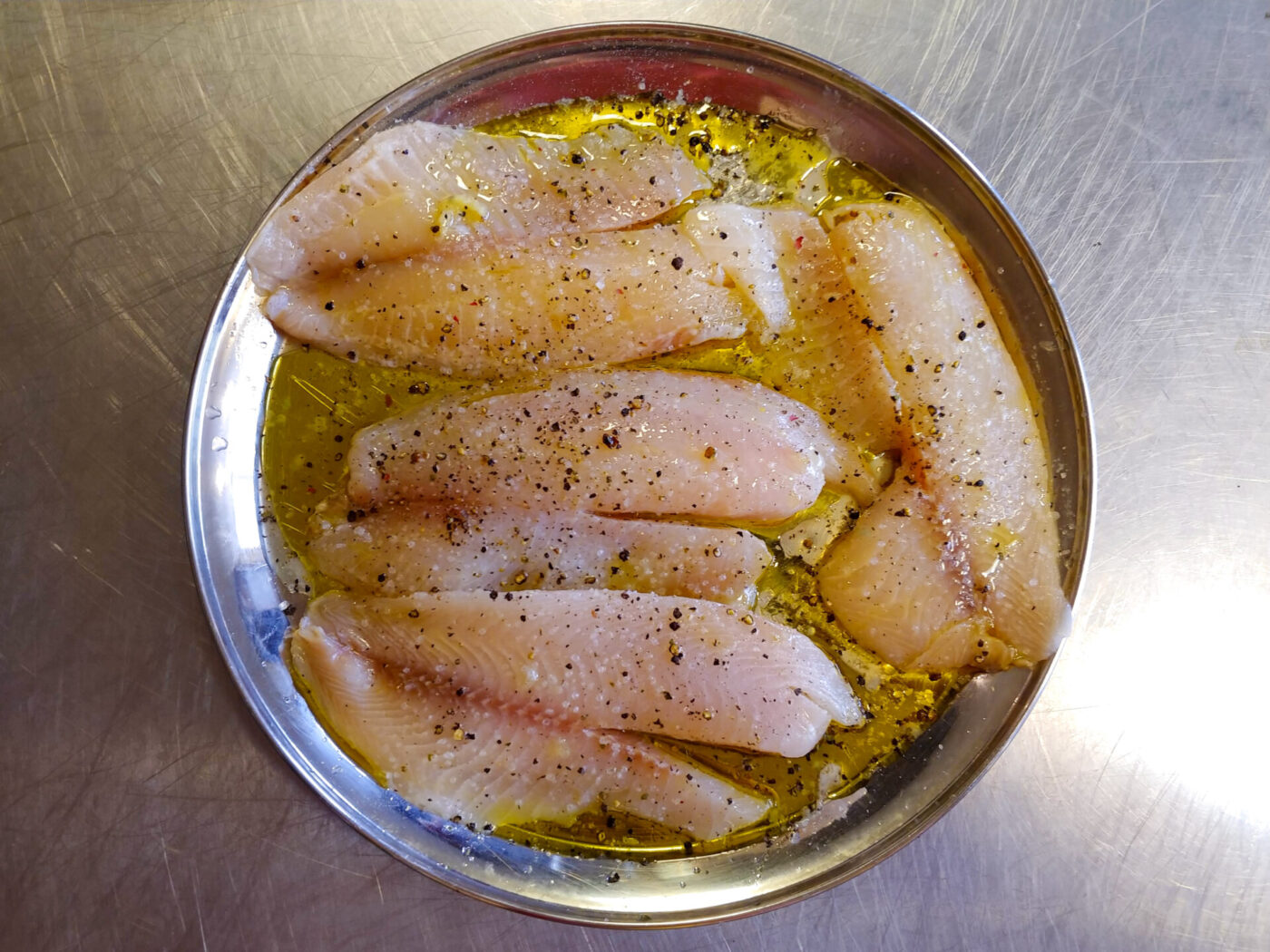
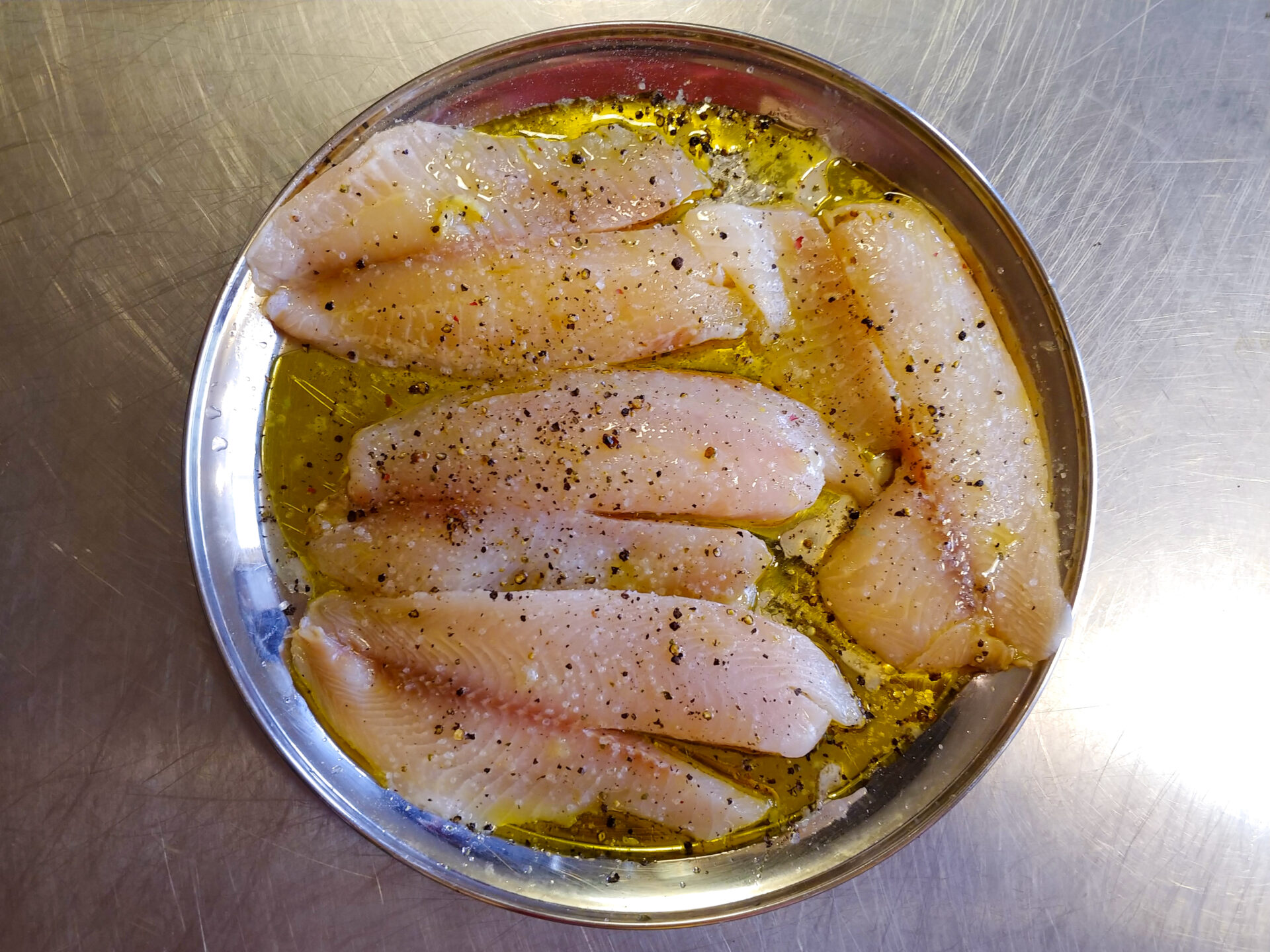
When preparing my Tilapia in a Creamy Wine Sauce, placing the white fish fillets on a plate and evenly dividing the lemon juice, olive oil, salt, and freshly ground pepper across all sides is a crucial first step. You want to make sure you squeeze the lemon and pour the olive oil gently, then generously salt and pepper before setting it aside for the upcoming cooking. While you can use any other kind of white fish fillets as well, remember that if you are going to use frozen fish, make sure that the fish is fully defrosted before you start. This ensures the best texture when you pan sear it later.

Tilapia in a Creamy Wine Sauce - Fish preparation

The Pan Sear for Tilapia in a Creamy Wine Sauce

A great pan sear is essential for the Tilapia in a Creamy Wine Sauce. You will need to preheat an ovenproof fry pan on high heat with frying oil. Briefly sear from one side to reach a nice sear, which usually takes about one to two minutes. This quick pan sear locks in the flavors of the white fish fillets and builds the foundational taste for our decadent cream sauce.

The Wine Reduction for Tilapia in a Creamy Wine Sauce

Once you turn the fish, adding the white wine is where the magic happens for this Tilapia in a Creamy Wine Sauce. I prefer to use Chardonnay, but you can use the white wine of your choice. You must cook until the wine is reduced to about half, which takes about one to two minutes. This reduction concentrates the flavors before we introduce the heavy cream.

Oven Finishing the Tilapia in a Creamy Wine Sauce

After you evenly pour over the heavy cream and the liquid from the marinade, finishing the Tilapia in a Creamy Wine Sauce requires moving the ovenproof fry pan into an oven set to 350 degrees. You will finish in a preheated oven until the fish is fully cooked, which is about two to three minutes. This gentle heat ensures the white fish fillets cook perfectly while melding with the decadent cream sauce.

Sauce Finishing for Tilapia in a Creamy Wine Sauce

For the perfect decadent cream sauce, remove the fish from the pan and place it on a cutting board or plate, leaving the sauce in the pan. Important: Move fast or consider covering the fish with tin foil or a lid to prevent cooling while you finish the Tilapia in a Creamy Wine Sauce. Place the pan with the sauce on high heat, and using a whisk, cook and stir the sauce constantly until it thickens enough to coat the back of a spoon, which takes about one minute.

Checking the Internal Temperature for Tilapia in a Creamy Wine Sauce

I always check my Tilapia in a Creamy Wine Sauce with a food thermometer to make sure I have reached the desired temperature. The USDA minimum safe internal temperature for fish is 145 degrees. Measuring the internal temperature with a food thermometer guarantees your white fish fillets are safe and delicious. Popular serving temperatures are 110 to 125 degrees for rare, 125 to 140 degrees for medium fair, and 145 to 155 degrees for medium.

Popular questions

Can I use frozen fish instead of fresh for this Tilapia in a Creamy Wine Sauce?

Yes, you can use any other kind of white fish fillets as well as frozen ones for my Tilapia in a Creamy Wine Sauce. However, if you are going to use frozen fish, make sure that the fish is fully defrosted before you start. This ensures that the pan sear goes perfectly and that the fish reaches the correct minimum safe internal temperature when you check it with your food thermometer.

Tilapia in a Creamy Wine Sauce

4 servingsPublished: 8.7.2026 ☆☆☆☆☆0x(write a review)👁595x
15 min.
15 min.
1/5
🖨Print

Ingredients:

Click any ingredient to learn more
4 fillets of tilapia
2 TBSP of Extra Virgin Olive Oil (adjust if needed)
Pinch of salt (adjust if needed)
Pinch of pepper (adjust if needed)
2 TBSP of frying oil (any kind) (adjust if needed)
½ cup of white wine of your choice (I prefer to use Chardonnay)
1 cup of heavy cream

Nutrition per 1 Serving:(recipe split into 4 servings)

Estimated
Calories 347 Protein 1.7 g Fat 35.1 g Saturated fat 15.3 g Carbohydrate 2.5 g Sugars 2.0 g Fiber 0.0 g Sodium 18 mg Cholesterol 68 mg
Estimated. Worked out from the ingredients above using the United States Department of Agriculture’s FoodData Central reference data. An estimate, not a measurement — brands, sizes and how much of a marinade actually ends up on the plate all move it.
Directions:

1.Fish Preparation:

1.1.

Make sure that the fish fillets are properly rinsed under cold water.

1.2.

Place fish fillets on a plate.

1.3.

Pour and sprinkle these ingredients on both sides of each fillet (each side should have about 1/4 of the ingredients shown; adjust if needed):

1.3.1.

Squeeze lemon and pour olive oil.

1.3.2.

Optionally sprinkle with herbs of your choice.

1.3.3.

Generously salt and pepper.

1.4.

Set aside for an upcoming cooking.

Tilapia in a Creamy Wine Sauce-5

2.Pan Sear & Finish in the Oven:

2.1.

Set oven to prehat to 350°F.

2.2.

Preheat a fry pan on high heat with 2 TBSP of frying oil.

2.3.

Briefly sear from one side to reach a nice sear (about 1 – 2 minutes).

2.4.
Turn and add:

½ cup of white wine

Cook until the wine is reduced to about half (about 1-2 minutes).

2.5.
Then evenly pour over:
1 cup of heavy cream
Liquid from the marinade

Finish in a preheated oven until the fish is fully cooked (about 2 – 3 minutes). *

3.Sauce Finishing:

3.1.

Remove sauce from the sauce and place it on high heat to reduce – cook sauce with a stirring until you reduce it to the consistency that you prefer (I cook it usually for about 1 minute).

4.Plate & Serve:

4.1.

Place fish on the plate.

4.2.

Pour the sauce over the fish and sprinkle with salt and pepper.

4.3.

Serve with your favorite side.

* Check with a food thermometer to make sure that you have reached the minimum recommended safe serving temperature for fish of 145°F.
Kitchen Guide

Fish

USDA minimum safe internal temperature is 145°F

Popular serving temperatures:

  • 110 – 125°F – Rare
  • 125 – 140°F – Medium Rare
  • 145 – 155°F – Medium
Read More
Fish
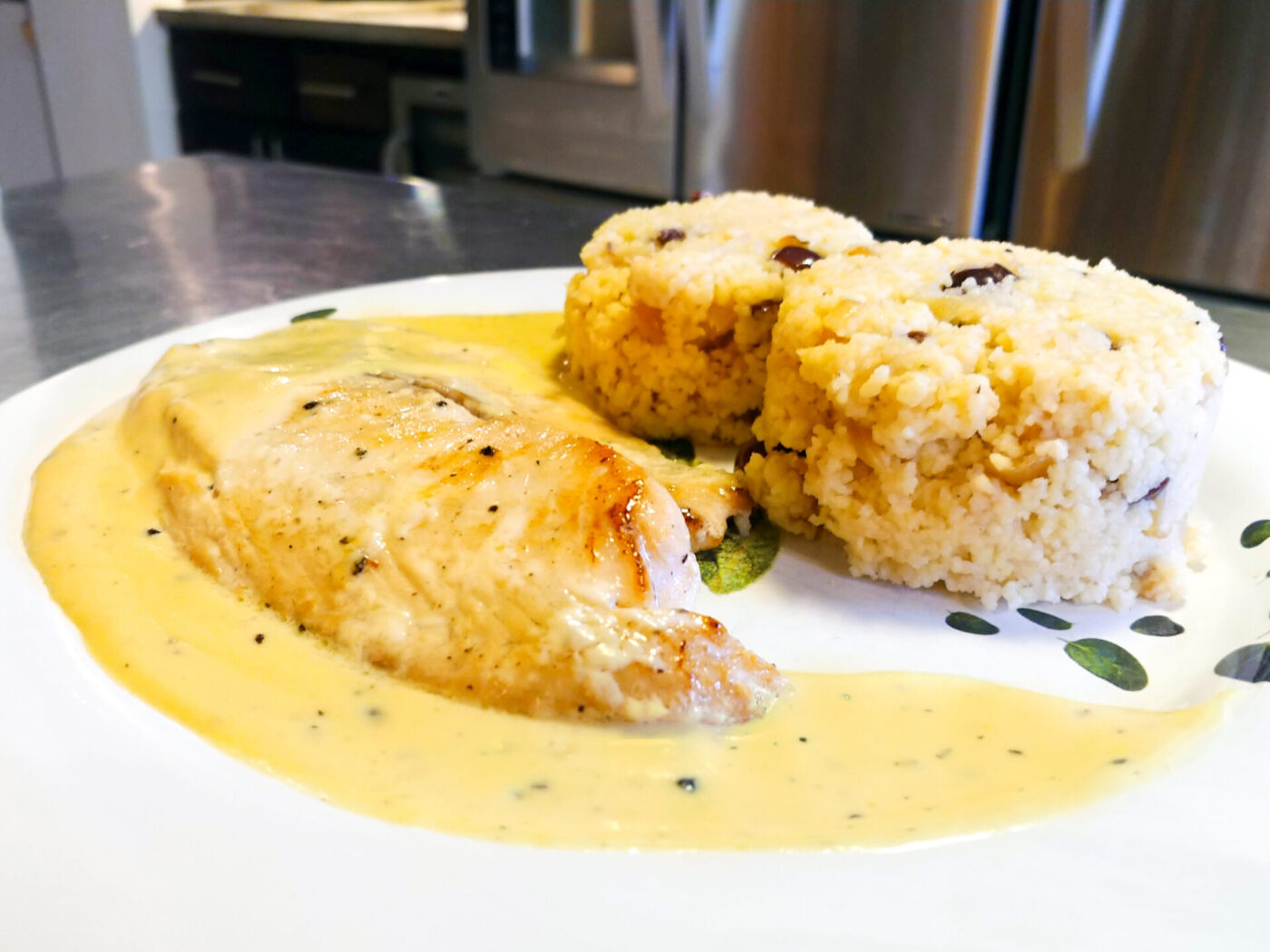
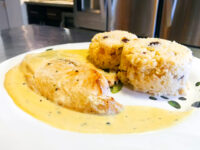
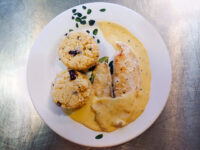
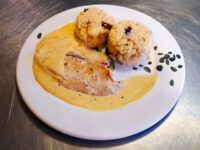
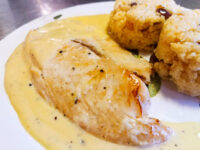
Pan-seared Tilapia in a Creamy Wine Sauce plated with couscous on a leaf-patterned white plate.
Pan-seared Tilapia in a Creamy Wine Sauce plated with couscous on a leaf-patterned white plate.Tilapia in a Creamy Wine Sauce with pale cream sauce, herb flakes, and two grain cakes on a white plate.Sliced tilapia in creamy wine sauce on a white plate with two couscous rounds and herb garnish.Pan-seared tilapia fillet in creamy wine sauce, served with two mounds of studded couscous on a floral white plate.

Small Disclaimer

Disclaimer

General Information The content provided on the Tom the Chef blog (operated by Checked Solutions, LLC), including all recipes, articles, and other materials, is for general informational and educational purposes only. This content reflects the personal opinions and experiences of the author and is not intended to provide professional dietary, medical, nutritional, or legal advice. Please consult a qualified medical or nutritional professional before making any health or diet-related decisions based on the information presented here.

Content Ownership and Use All content published on the Tom the Chef blog is the intellectual property of Checked Solutions, LLC and its author, unless otherwise noted. Our content may be shared, linked, or embedded on third-party websites and blogs provided it remains unmodified and properly credited to Tom the Chef. No financial reimbursement or compensation will be provided for this use. If we remove content from the Tom the Chef blog, it will no longer be available through any embedded links.

Limitation of Liability Neither Tom the Chef nor Checked Solutions, LLC is responsible for any outcome or consequence resulting from the use of the information on this site. This limitation of liability includes, but is not limited to:

  • Food Safety: Any health risk related to food handling, food quality, cross-contamination, or failure to follow USDA recommendations (including minimum safe cooking temperatures).

  • Preparation Safety: The proper and safe handling of cooking equipment, hot surfaces, sharp knives, or the suitability of tools for any given task.

  • Recipe Outcomes: The final look, taste, yield, or success of following a recipe. Results may vary significantly based on differences in ingredient brands, oven temperatures, cooking abilities, altitude, and humidity.

  • Ingredients and Equipment: The sourcing, quality, and condition of ingredients, tools, or equipment used in the preparation of food.

  • Nutritional and Dietary Information: The accuracy of any nutritional data provided. Any nutritional information shared is simply an estimate calculated through third-party services. It is provided as a courtesy and should not be considered a guarantee.

  • Allergies and Dietary Restrictions: Any allergic reactions or health issues that may arise from consuming ingredients listed in our recipes.

  • Errors and Omissions: Any potential errors, typos, or unclear directions found within articles and recipes.

User Responsibility All readers, visitors, and users of our content are solely responsible for evaluating the recipes and articles provided. You must use your own judgment to determine whether to follow the steps and recommendations. It is strictly your responsibility to ensure that all ingredients and preparation methods are safe and appropriate for your personal dietary restrictions, allergies, and overall health conditions.

Affiliate Disclosure As an Amazon Associate I earn from qualifying purchases. Some of the ingredient and tool links above are affiliate links: if you buy through them the price is the same for you, and it helps keep these recipes free. #ad Tom the Chef and Checked Solutions, LLC only recommend professional-grade cookware, tools, and ingredients that are built to last in any household and that we genuinely use and trust.