
Appetizers and Party Food Recipes
Hummus
6 - 8 servings (about 1 LB)
Who doesn’t enjoy this Mediterranean delicacy called Hummus? You will also be surprised by how easy it is to prepare! You simply place all ingredients into a food processor, process, and you are ready to serve! It is that simple and is one of the most popular vegan meals. Read More
Appetizers and Party Food Recipes
VegetarianVeganGluten-freeDairy-free
Before You Start
Let’s talk about important parts of the recipe before you start…
Welcome to My Easy Hummus Recipe
I am thrilled to share my recipe for Hummus, a classic Mediterranean delicacy that is beloved by so many. In my experience as Tom the Chef, I have found that people are often surprised by just how simple this dish is to prepare at home. There is no need for complicated techniques; you simply place all the ingredients into a food processor, process them, and you are ready to serve. It really is that simple! This is one of the most popular vegan meals for a reason, offering a rich and creamy texture that store-bought versions often lack. Whether you are looking for a quick snack or a side for a larger feast, my Hummus is the perfect choice for Cold Cuisine.
The Foundation: Chickpeas and Liquid
The heart of any great Hummus lies in the chickpeas (also known as garbanzo beans). For my recipe, I use 2 cups of canned chickpeas that have been drained. However, a crucial step that I always emphasize is to save part of the liquid from the can. In the processing stage, I specifically add 1 TBSP of this liquid back into the mix. This starchy liquid helps facilitate the blending process and contributes to that smooth, creamy texture we all desire. It is a small detail that makes a big difference in the final consistency of the dip.
Achieving the Perfect Creamy Texture
One of the most important instructions in my recipe is how to use the kitchen food processor. To get that restaurant-quality smoothness, I process the ingredients on high speed until they are perfectly smooth and a creamy texture without chunks is reached. This is not a quick pulse; I recommend processing for about 7 – 9 minutes. If you notice parts of the ingredients sticking to the side of the food processor during this time, I stop the machine and use a silicone spatula to mix it back in before continuing. This patience ensures the tahini paste and chickpeas fully emulsify with the Extra Virgin Olive Oil.
The Essential Flavor Profile
The flavor of authentic Hummus comes from a balance of strong, fresh ingredients. I use the juice from one large lemon to provide brightness and acidity, which cuts through the richness of the tahini paste. I also include 1 clove of peeled garlic (whole) for that necessary pungent kick, along with ½ TSP of salt and ¼ TSP of ground pepper. After the long processing time, I always recommend that you taste the mixture. This is the time to add more salt and/or pepper if needed to suit your personal palate. This balance is what makes this Mediterranean delicacy so satisfying.
Creating the Optional Topping
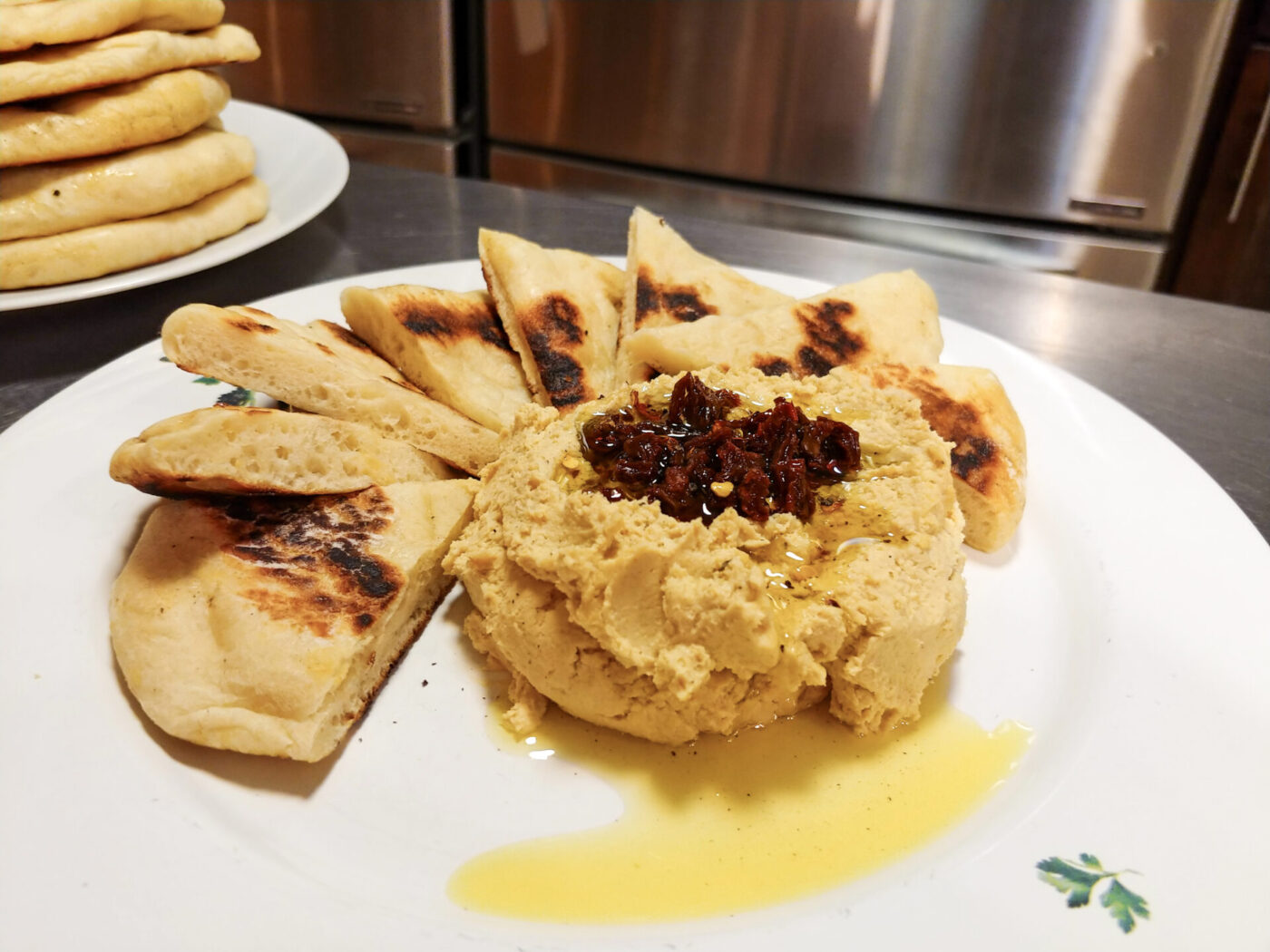
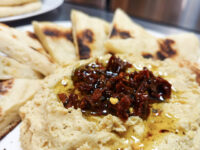
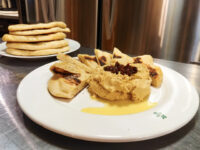
While the dip is delicious on its own, I love to elevate this vegan meal with a flavorful topping. My optional topping consists of ¼ cup of marinated roasted peppers, ¼ cup of sun-dried tomatoes, and ¼ cup of black olives, all drained and finely chopped. For those who like a bit of heat, I suggest adding 1 TSP of crushed pepper flakes. I mix these with 2 TBSP of Extra Virgin Olive Oil, a pinch of salt, and a pinch of ground pepper in a small mixing bowl. This mixture adds texture and a burst of savory flavor that complements the creamy base perfectly.
Resting for Best Results
Although you can eat the Hummus immediately, I have found that patience yields the best results. I suggest placing the prepared dip into a small food container and refrigerating it overnight. This resting period allows the ingredients to settle completely and the flavors of the garlic, lemon juice, and tahini paste to meld together beautifully. If you are preparing the optional topping, you can place it on top before refrigerating, or keep it separated until you are ready to plate. This step ensures your homemade dip tastes its absolute best when served.
Popular questions
Do I have to use the optional topping for this Hummus recipe?
No, the topping is completely optional. While I love the combination of roasted peppers, sun-dried tomatoes, and olives, you can simply decorate the Hummus with olives, a drizzle of Extra Virgin Olive Oil, and salt and pepper. The base recipe using chickpeas and tahini paste is delicious on its own as a Mediterranean delicacy.
Hummus
Ingredients:
Click any ingredient to learn moreHummus
2 cups of chickpeas (garbanzo beans) - canned, drained (save part of the liquid)
¼ cup of Extra Virgin Olive Oil
¼ cup of tahini paste ((paste from sesame seeds))
1 clove of garlic - peeled
½ TSP of salt
¼ TSP of pepper - ground
Optional topping:
¼ cup of marinated roasted peppers - canned, drained and finely chopped
¼ cup of sun-dried tomatoes - canned, drained and finely chopped
¼ cup of black olives - canned, drained and finely chopped
1 TSP of crushed pepper flakes (dried) - crushed
2 TBSP of Extra Virgin Olive Oil
Pinch of salt
Pinch of pepper - ground
Or simply decorate with olives, drizzle of olive oil, and salt and pepper.
Nutrition per 1 Serving:(recipe split into 6 servings)
EstimatedCalories 420
Protein 17.1 g
Fat 19.7 g
Saturated fat 2.9 g
Carbohydrate 44.2 g
Sugars 10.4 g
Fiber 8.3 g
Sodium 265 mg
Cholesterol 3 mg
VegetarianVeganGluten-freeDairy-free
Estimated. Worked out from the ingredients above using the United States Department of Agriculture’s FoodData Central reference data. An estimate, not a measurement — brands, sizes and how much of a marinade actually ends up on the plate all move it.
Directions:
1.Optional Topping:
1.1.
Prepare the topping by putting these ingredients in a small mixing bowl:
¼ cup of roasted peppers – finely chopped
¼ cup of sundried tomatoes – finely chopped
¼ cup of black olives – finely chopped
Optionally: 1 TSP of crushed pepper flakes (spicy)
2 TBSP of Extra Virgin Olive Oil
Pinch of salt
Pinch of ground pepper
Mix together with a spatula.
1.2.
Taste and add salt and/or pepper if needed.
1.3.
Place hummus into a small food container and let it cool in the refrigerator until you serve it.
2.Process:
2.1.
Place into your kitchen food processor:
2 cups of chickpeas
1 TBSP of liquid from chickpea can
¼ cup of Extra Virgin Olive Oil
Juice from one large lemon
¼ cup tahini paste
1 clove of garlic – whole
½ TSP of salt
¼ TSP of ground pepper
Process on high speed until perfectly smooth and a creamy texture without chunks is reached (about 7 – 9 minutes).
2.2.
Taste and add salt and/or pepper if needed.
3.Assemble:
3.1.
Place hummus into a small food container and place part or all of the optional toppings on the top (if you plan to plate your hummus later, you can keep the optional toppings separated until then).
3.2.
Refrigerate overnight for best results (ingredients will be able to settle completely).
4.Serve from a small food container or serve in a bowl or deep plate.
If parts of the ingredients stick on the side of the food processor during processing, stop the food processor and use a spatula to mix it back in. Then, continue processing.
Share
Click on the icons below to share "Title of the item to share"