
Main Course Recipes

Fettuccine Alfredo with Chicken

4 servings

I am so incredibly excited to share my absolute favorite way to prepare Fettuccine Alfredo with Chicken! Sautéing the meat, specifically the chicken, with premium olive oil and freshly grated garlic brings so much authentic flavor to the dish. Whether you choose to use store-bought or make your own pasta, cooking it perfectly is the key. We then use a standard frying oil to cook the proteins and add fresh peas to the pan. The real magic happens when we create the sauce directly in the pan using warm cream, rich parmesan, and a pinch of nutmeg to complete this amazing recipe. Read More

☆☆☆☆☆0x(write a review)👁449x
Published: 6.7.2026
25 min.
25 min.
1/5
914 calories Per Serving (of 4) Read More

Before You Start

Let’s talk about important parts of the recipe before you start…

Jump to Recipe

Welcome to my beloved Fettuccine Alfredo with Chicken

I have always believed that making authentic Italian-style dishes at home should be straightforward, which is why I love preparing this Fettuccine Alfredo with Chicken. Say goodbye to processed sauces! In this recipe, I will show you how simple it is to combine meat, specifically chicken, marinated in extra virgin olive oil and garlic with perfectly cooked pasta. We will cook everything using a bit of frying oil, toss in some vibrant fresh peas, and then build a luxurious sauce right in the pan. By gently mixing in heavy cream, rich parmesan, and a touch of ground nutmeg, you will discover that a true Alfredo is not a pre-made sauce at all, but a beautiful emulsification created right before serving.

Preparing the Marinade for the Meat and Chicken

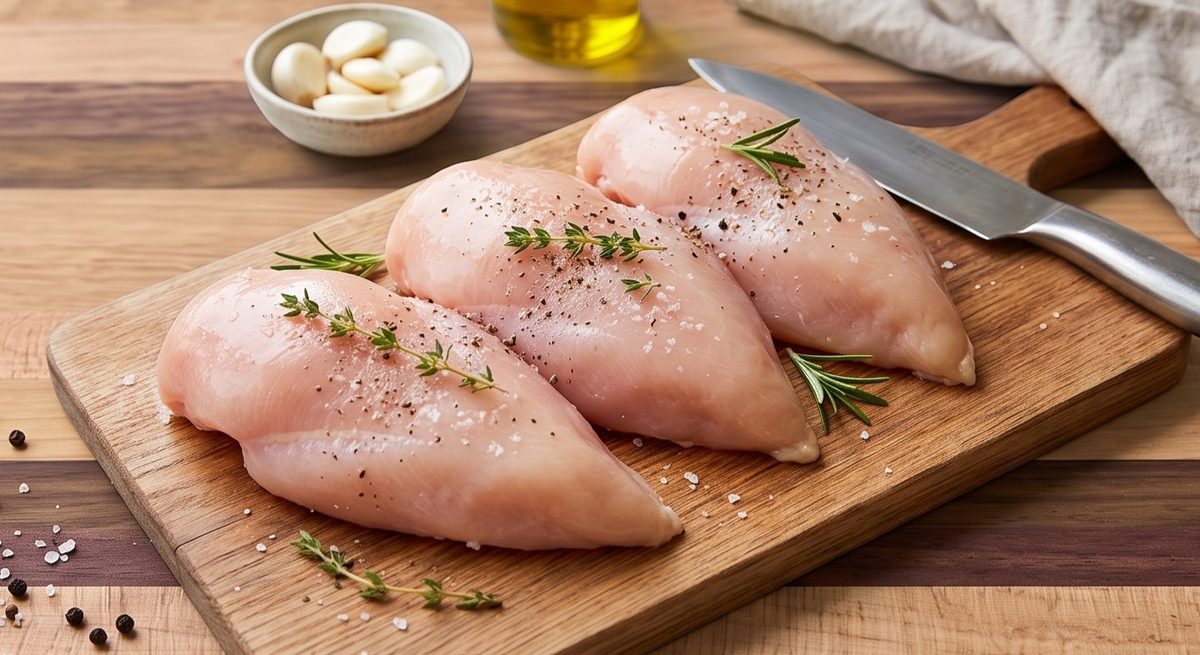
In my Fettuccine Alfredo with Chicken, the foundation of flavor begins with how we treat the meat, specifically the two pieces of skinless and boneless chicken breasts. I start by making sure they are properly rinsed under cold water and any unwanted parts are removed. Then, using my chef’s knife and cutting board, I cut the chicken into quarter-inch thick strips to ensure even cooking and place them into a medium mixing bowl. Next, I coat it thoroughly with two tablespoons of extra virgin olive oil, three cloves of freshly grated garlic, half a teaspoon of salt, half a teaspoon of pepper, and the juice of one large lemon. I thoroughly stir everything together with a spatula for about one to two minutes until fully incorporated. This olive oil mixture tenderizes and flavors the chicken beautifully. I always let this set aside on the countertop to absorb the flavors, but I am very careful to make sure the room temperature does not go over 72 degrees Fahrenheit. While it rests, I get ready to boil the pasta and gather the peas, heavy cream, parmesan, and ground nutmeg. Using standard frying oil later will help sear this perfectly.

Fettuccine Alfredo with Chicken - Pasta preparation

Handling the Pasta Correctly

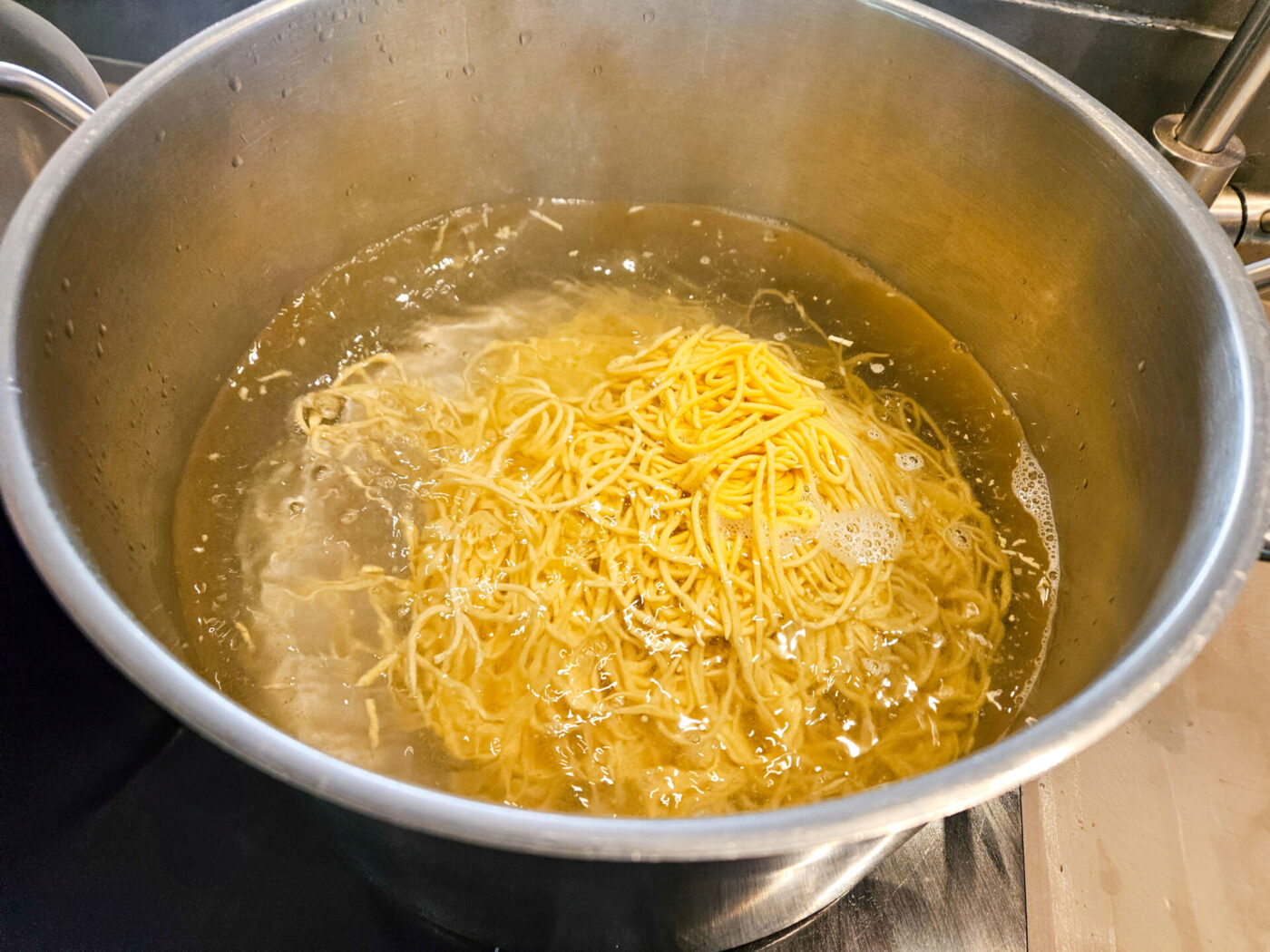
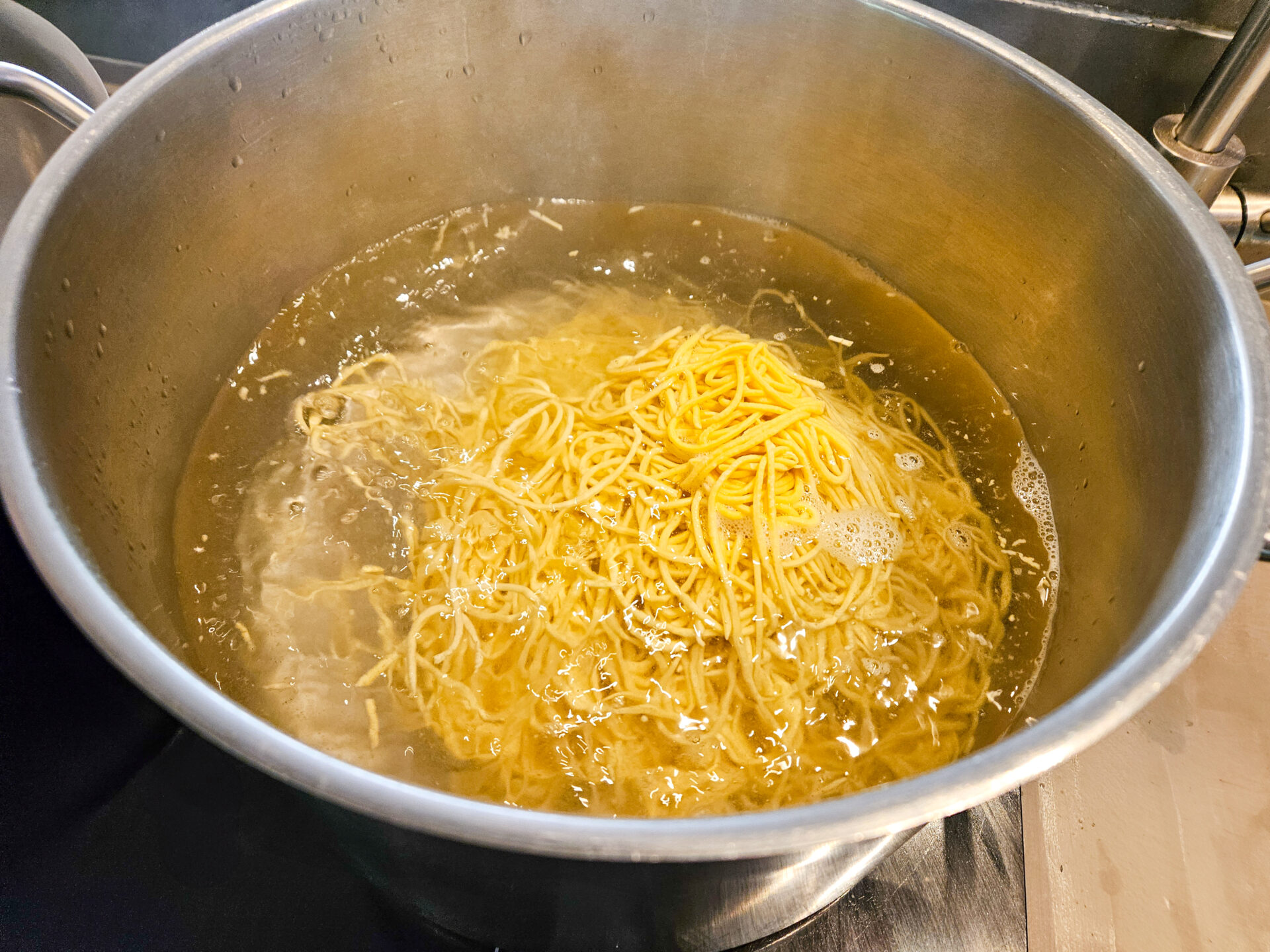
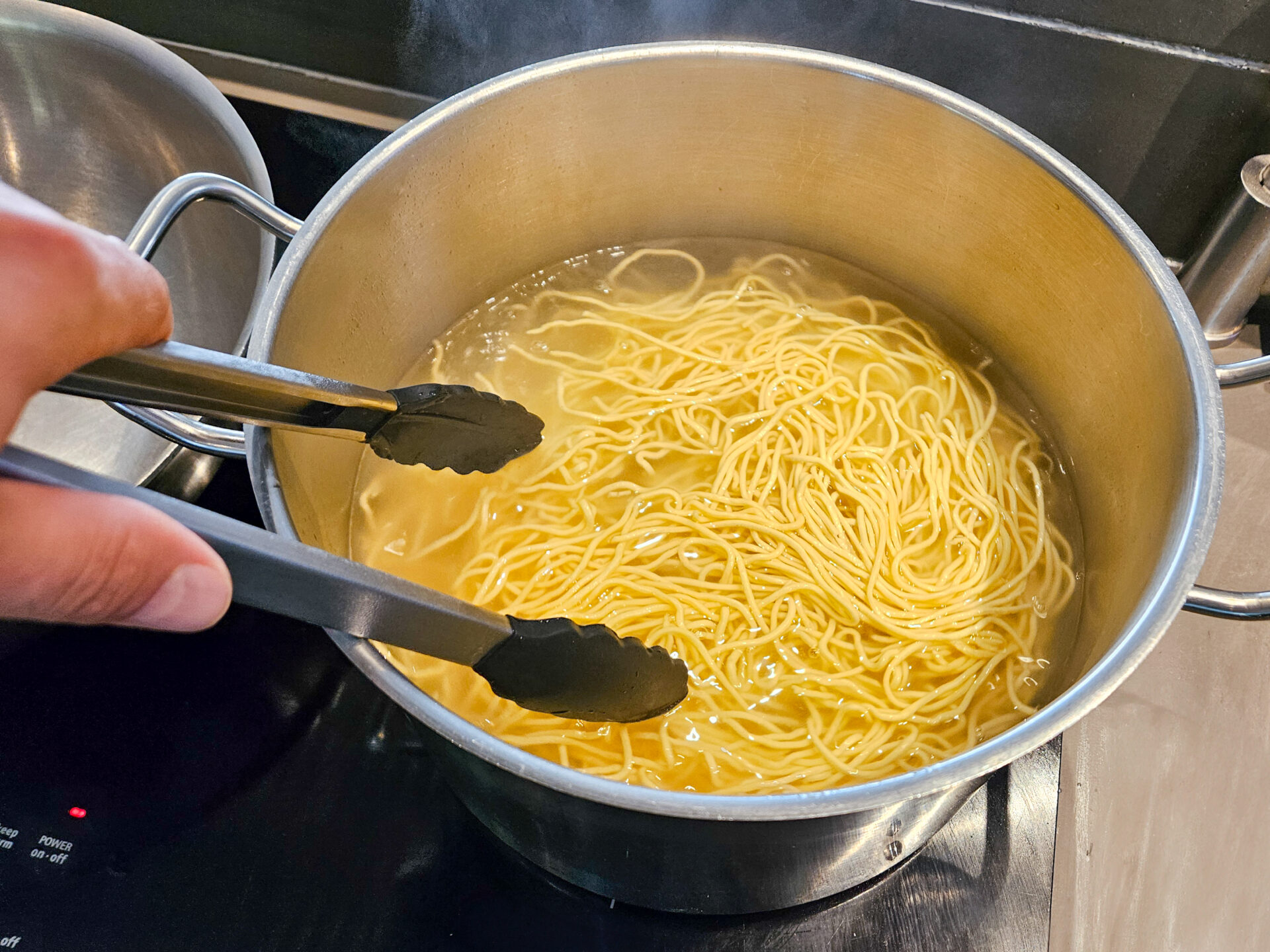
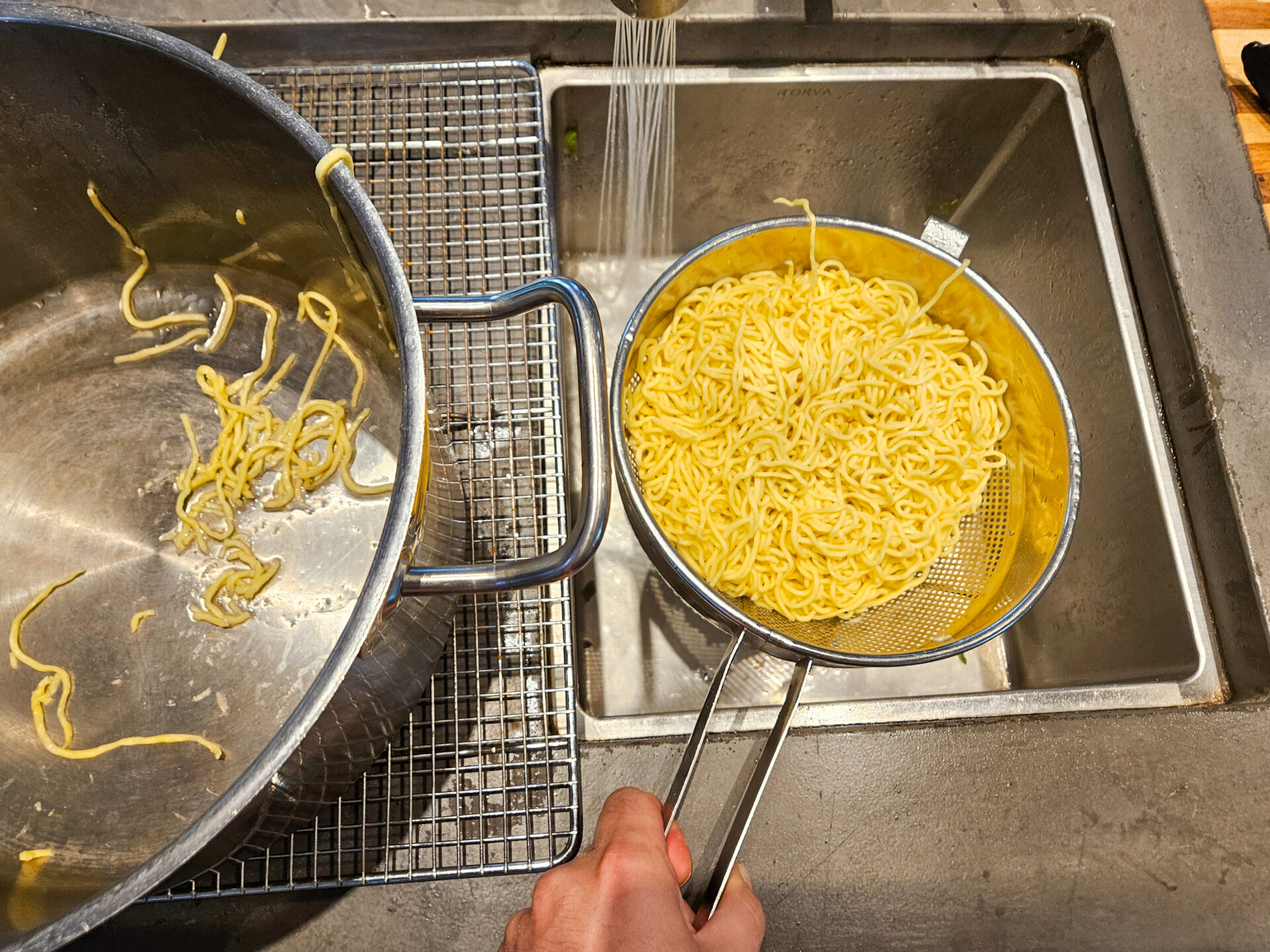
Whether you choose to make homemade pasta or use four servings of standard store-bought pasta, the boiling and draining process is absolutely critical for my Fettuccine Alfredo with Chicken. I follow the instructions on the box if it is store-bought, using a large pot, and after I boil the pasta, I drain the water by pouring the pasta over a colander. However, I must emphasize a very important rule: I never leave the pasta to rest in the colander. Because of the hot temperature of the noodles, the pasta is actually still cooking! If left sitting, your meat and peas might be ready, but your pasta will turn to an overcooked mush. I either use it immediately in the next step in the pan with the frying oil and chicken, or I place the pasta to cool on a baking sheet if I need more time. I always make sure I have my garlic, cream, parmesan, and nutmeg ready so the timing is absolutely flawless.

Cooking the Meat to Perfection in Oil

When it is time to cook the meat for my Fettuccine Alfredo with Chicken, I preheat my large ovenproof sauté pan on medium-high heat with four tablespoons of frying oil. I then add the marinated chicken breasts along with all that wonderful olive oil and garlic from the previous step directly into the pan. I stir fry this with occasional stirring for about four to five minutes until it is fully cooked. Because the meat is cut into small strips, it cooks incredibly quickly and evenly. If I am ever unsure if the chicken is completely done just by looking, I simply cut a random piece in the middle to check. Right at the end of this step, I optimally add one cup of fresh peas—or defrosted frozen peas that I prepared in the microwave—to the pan and cook for an additional thirty seconds before bringing in the pasta, cream, parmesan, and nutmeg.

Combining the Ingredients in the Pan

This step is where the incredible textures of my Fettuccine Alfredo with Chicken begin to truly come together. I reduce the heat to medium and add the perfectly cooked pasta right into the pan with the meat, peas, garlic, and frying oil. I sauté this entire mixture for about one to two minutes, constantly turning it with my silicone-tipped tongs to prevent any sticking. The olive oil from the marinade blends beautifully with the pan juices. It is crucial to keep the pasta moving so nothing burns to the bottom of the pan. Once everything is wonderfully combined and heated through, I prepare for the final, most important step involving the heavy cream, parmesan, and nutmeg to build the authentic, creamy sauce.

Creating the Authentic Alfredo Sauce

Many people mistakenly think Alfredo is a heavy, pre-thickened liquid, but in my Fettuccine Alfredo with Chicken, I make it the traditional way right in the pan! I take the pan completely off the burner, but I make sure to leave the pasta, chicken, and peas inside. Then, I add two cups of warm heavy cream, one clove of grated garlic, one cup of grated parmesan cheese, a pinch of ground nutmeg, half a teaspoon of salt, and half a teaspoon of ideally freshly ground pepper. I thoroughly stir everything together using my tongs. The residual heat from the pasta, meat, and oil emulsifies the cream and parmesan into a rich, clinging sauce. I always taste and add more salt or pepper if needed. For serving, I place the pasta in the center of the plate using tongs, trying to create a beautiful twist effect, and sprinkle with an additional four tablespoons of grated parmesan and freshly ground salt and pepper. If you want, you can garnish the dish with a sprinkle of chopped fresh parsley, but please note that this is a modification that is not part of the recipe.

Popular questions

Can I let the pasta sit in the strainer while I finish cooking the meat and chicken for my Fettuccine Alfredo with Chicken?

No, I highly advise against this! In my recipe for Fettuccine Alfredo with Chicken, I emphasize that you must not leave the pasta to rest in the colander. Because of the hot temperature, it is actually still cooking. If you leave it, you will end up with overcooked mush. You should use it immediately in the pan with the chicken, meat, peas, and frying oil, or place it on a baking sheet to cool. This ensures the noodles hold up perfectly when we mix in the olive oil, garlic, heavy cream, grated parmesan, and nutmeg.

Fettuccine Alfredo with Chicken

4 servingsPublished: 6.7.2026 ☆☆☆☆☆0x(write a review)👁449x
25 min.
25 min.
1/5
🖨Print

Ingredients:

Click any ingredient to learn more
Chicken:
2 PCS of chicken breasts - skinless and boneless
3 cloves of garlic - peeled and grated (or pressed)
½ TSP of salt
½ TSP of pepper
Fettucine alfredo:
4 servings of fettuccine (store-bought or recipe here, Optionally substitute with tagliatelle, spaghetti, linguine fini, or another kind of pasta)
4 TBSP of frying oil (any kind) (adjust if needed)
1 cup of peas - fresh (or defrosted frozen) (defrost in microwave)
2 cups of heavy cream
1 clove of garlic - peeled and grated (or pressed)
Pinch of nutmeg - ground
½ TSP of salt
½ TSP of pepper - ideally freshly ground
Final touch:
4 TBSP of parmesan cheese (adjust if needed)
pepper - ideally freshly ground

Nutrition per 1 Serving:(recipe split into 4 servings)

Estimated
Calories 914 Protein 33.4 g Fat 80.4 g Saturated fat 36.8 g Carbohydrate 16.6 g Sugars 6.4 g Fiber 3.2 g Sodium 1051 mg Cholesterol 218 mg
Estimated. Worked out from the ingredients above using the United States Department of Agriculture’s FoodData Central reference data. An estimate, not a measurement — brands, sizes and how much of a marinade actually ends up on the plate all move it.
Directions:

1.Protein Preparation:

1.1.

Make sure that the chicken breasts are properly rinsed under cold water and the unwanted parts are removed.

1.2.

Cut chicken breasts into ¼ thick strips (or any other desired shape) with a sharp knife and place it into a medium mixing bowl.

1.3.
Add:
2 TBSP of Extra Virgin Olive Oil
Juice from one large lemon
3 cloves of garlic – grated
½ TSP of ground pepper
½ TSP of salt

Thoroughly stir together with a spatula until fully incorporated (about 1- 2 minutes).

1.4.

Set aside on the countertop until you prepare other parts of the meal. Make sure that the temperature in the room doesn’t go over 72° F.

2.Pasta Preparation:

2.1.

Cook your pasta (follow the instructions on the box for cooking store-bought pasta) and then drain the water by pouring pasta over the colander.

2.2.
Or prepare and cook homemade pasta. Then drain with the colander.
Important:
Do not leave pasta to rest in the colander. It is still cooking (because of the hot temperature of the pasta) and you can end up with overcooked pasta. Use the pasta immediately in the next step or place the pasta to cool on a baking sheet if you need more time.
Spaghetti cooking
Spaghetti cooking
Spaghetti are being drained

3.Complete the Meal:

3.1.
Preheat a fry pan on medium-high heat with 4 TBSP of frying oil and add:

Chicken breasts from the previous step (together with the marinade)

Stir fry with occasional stirring until it is fully cooked (about 4 – 5 minutes).*

3.2.
Optimally add:

1 cup of peas

And cook for additional 30 seconds.

3.3.
Reduce heat to medium and add:

Cooked pasta

Sauté for about 1- 2 minutes while constantly turning with tongs (to prevent sticking).

3.4.
Take the pan off the burner (but leave the pasta in the pan) and add:
2 cups of warm heavy cream
1 clove of garlic – grated
1 cup of grated parmesan
Pinch of ground nutmeg
½ TSP of salt
½ TSP of ground pepper

Thoroughly stir together using tongs.

3.5.

Taste and add salt or pepper if needed.

4.Serving:

4.1.

Place pasta in the center of the plate using tongs (try to create a twist effect during plating).

4.2.

Sprinkle with grated parmesan and freshly ground salt and pepper.

*  You should have an easy time to determine if the meat is cooked since it is cut into small pieces. If you are not sure by looking, just simply cut a random piece in the middle.

* Check with a food thermometer to make sure that you have reached the minimum recommended safe serving temperature for poultry of 165°F.
Kitchen Guide

Poultry

The USDA minimum safe internal temperature is 165°F.

The popular serving temperature is the same as the minimum serving temperature.

Read More
Poultry
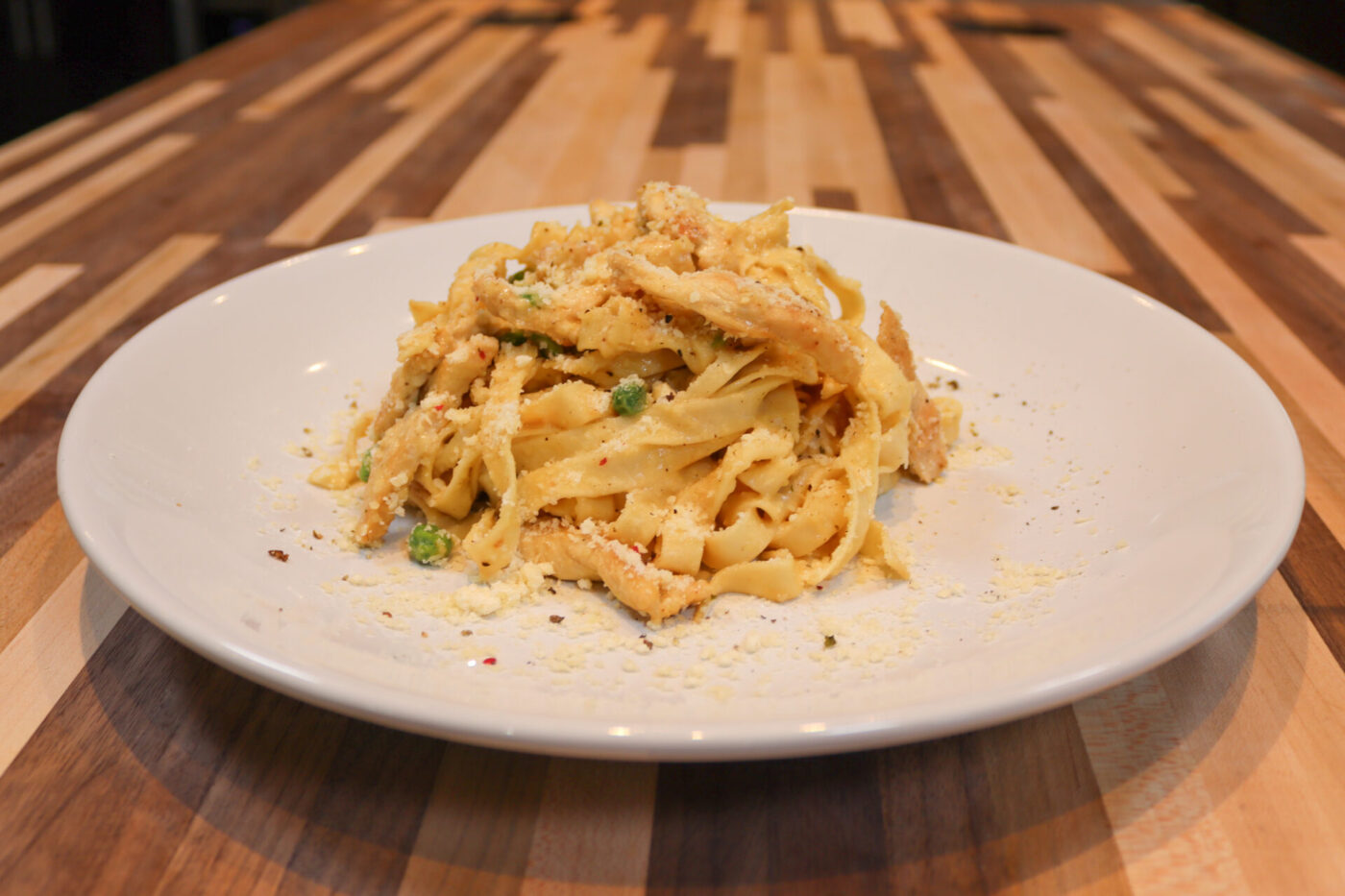
Fettuccine Alfredo with Chicken piled on a white plate, showing cream-coated ribbon pasta, chicken strips, peas, and grated cheese on a striped wooden table.
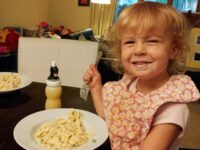
Fettuccine Alfredo with Chicken piled on a white plate, showing cream-coated ribbon pasta, chicken strips, peas, and grated cheese on a striped wooden table.Toddler with sauce on her face holds a fork over a plate of Fettuccine Alfredo with peas in creamy sauce.

Cook to safe temperatures and check for allergens. Nutrition values and results are estimates and may vary.

As an Amazon Associate I earn from qualifying purchases. Some of the ingredient and tool links above are affiliate links: if you buy through them the price is the same for you, and it helps keep these recipes free. #ad

Show moreShow less of the Disclaimer

Disclaimer

Last updated October 27, 2026

GENERAL INFORMATION

The content provided by Checked Solutions, LLC (doing business as Tom the Chef) ("we," "us," or "our") on https://www.tomthechef.com (the "Site") and through our related services — including recipes, articles, columns, live and recorded cooking classes, and other materials — is for general informational and educational purposes only and reflects the personal opinions and experience of the author. All information is provided in good faith; however, we make no representation or warranty of any kind, express or implied, regarding the accuracy, adequacy, validity, reliability, availability, or completeness of any information. Your use of the Site and your reliance on any information is solely at your own risk.

NO PROFESSIONAL ADVICE

Our content is not intended to provide, and does not constitute, professional dietary, medical, nutritional, or legal advice. Before making any health- or diet-related decision based on our content, consult a qualified medical or nutritional professional.

COOKING, FOOD SAFETY, AND YOUR RESPONSIBILITY

You are solely responsible for evaluating our recipes and instructions and using your own judgment before following them. To the fullest extent permitted by law, we are not responsible for any outcome or consequence resulting from your use of the Site or our content, including but not limited to:

  • Food Safety: any health risk related to food handling, food quality, cross-contamination, or failure to follow USDA recommendations (including minimum safe cooking temperatures).
  • Preparation Safety: the safe handling of cooking equipment, hot surfaces, sharp knives, or the suitability of tools for any task.
  • Allergies and Dietary Restrictions: any allergic reaction or health issue arising from ingredients in our recipes. You are responsible for ensuring that all ingredients and methods are safe and appropriate for your dietary restrictions, allergies, and health.
  • Recipe Outcomes: the final look, taste, yield, or success of a recipe, which may vary based on ingredients, equipment, oven temperatures, altitude, humidity, and skill.
  • Ingredients and Equipment: the sourcing, quality, and condition of ingredients, tools, or equipment.
  • Nutritional Information: the accuracy of any nutritional data, which is an estimate provided as a courtesy and should not be relied on as a guarantee.
  • Errors and Omissions: any errors, typos, or unclear directions in our content.

EXTERNAL LINKS

The Site may contain links to third-party websites or content, including in banners or other advertising. We do not investigate, monitor, or guarantee the accuracy or reliability of third-party sites. We are not responsible for them or for any transaction between you and a third party. Accessing third-party sites is at your own risk.

TESTIMONIALS, REVIEWS, AND COMMENTS

The Site may contain testimonials, reviews, and comments from users. These reflect the personal experiences and opinions of individual users and may not be representative of all users; your individual results may vary. Testimonials and reviews may be shortened for brevity or corrected for grammar. The views expressed belong solely to the individual. They are not intended as claims that our products or services diagnose, treat, cure, or prevent any disease or medical condition.

CONTENT OWNERSHIP

All content published by Tom the Chef is the intellectual property of Checked Solutions, LLC and its author, unless otherwise noted, and may not be used except as permitted in our Terms of Use.

AFFILIATE DISCLOSURE

As an Amazon Associate, we earn from qualifying purchases. Some ingredient and tool links on the Site are affiliate links. If you buy through them, the price is the same for you, and it helps support our content. We only recommend products we genuinely use and trust.

LIMITATION OF LIABILITY

Under no circumstances shall Checked Solutions, LLC or Tom the Chef have any liability to you for any loss or damage of any kind incurred as a result of the use of the Site or reliance on any information provided. This Disclaimer forms part of, and is subject to, our Terms of Use.