
Side Recipes

Stuffing

6 servings
NEW

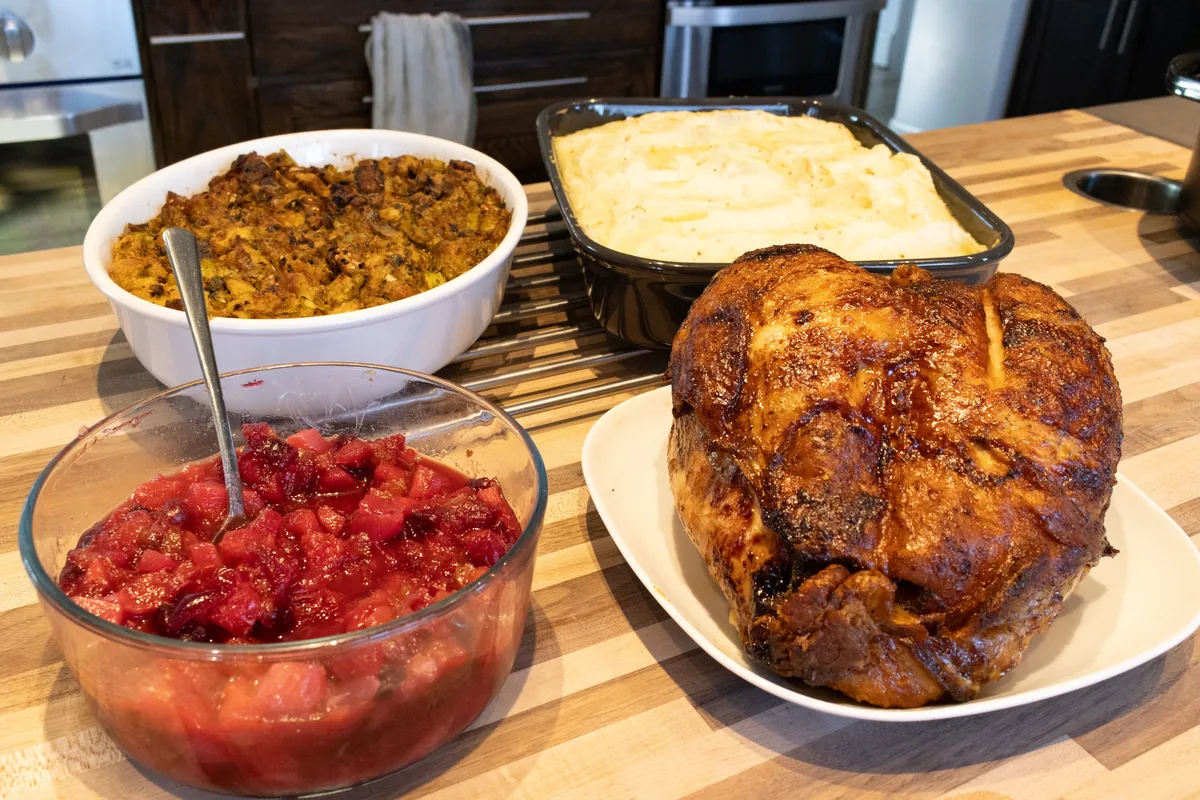
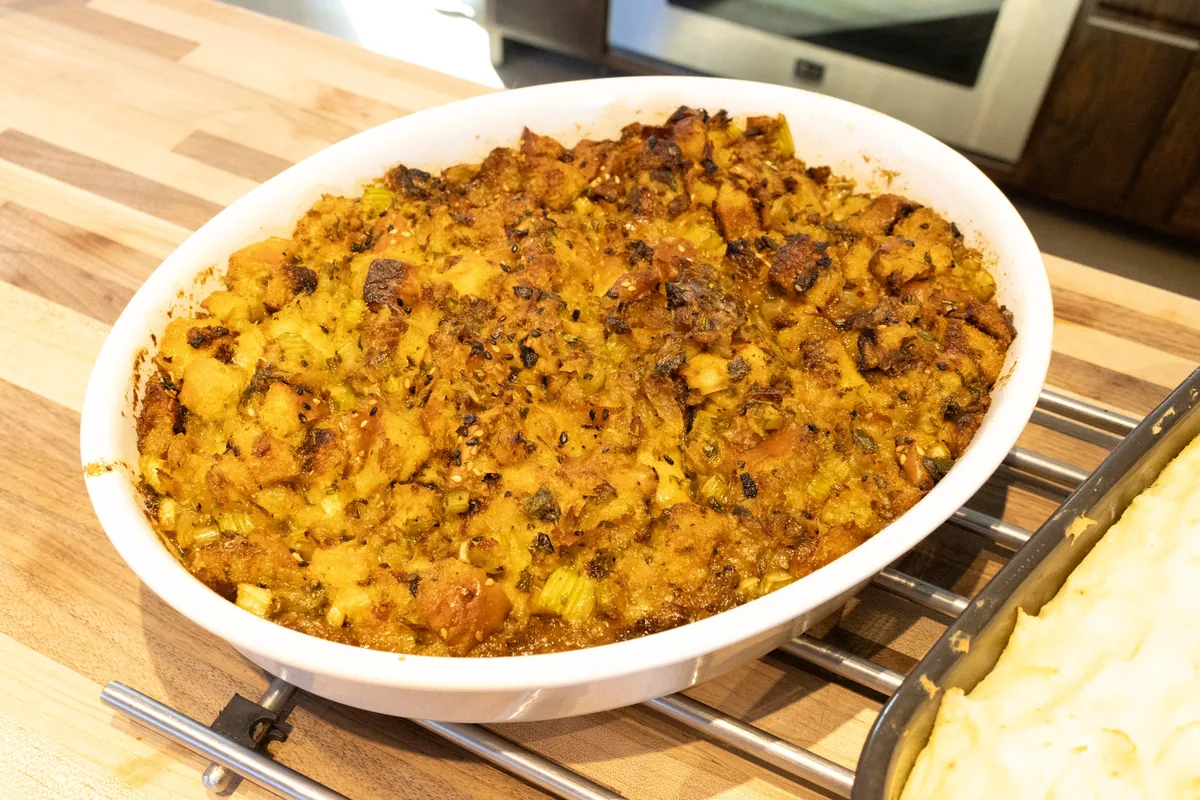
Stuffing is a must for any meal that includes whole turkey! You can decide if you want to bake it separately or stuff your bird with it. 2 TBSP of fresh rosemary - finely chopped (or 1 TSP of dried) * Use bread with fat content, such as burger buns, toast, and similar types. Read More

☆☆☆☆☆0x(write a review)👁10x
Side Recipes
NEW
Vegetarian
25 min.
25 min.
1/5
237 calories Per Serving (of 6) Read More

Before You Start

Let’s talk about important parts of the recipe before you start…

Jump to Recipe

My Stuffing, Built on Croutons I Make Myself

Stuffing lives or dies on the bread, so that is where I start. I dice bread with a high fat content — burger buns, toast, that sort of thing — season it, oil it in a cold pan, and let it sit for a couple of minutes before the burner ever goes on. By the time it crisps, every cube has taken the salt, the pepper and the oil all the way through, and it can stand up to broth later without turning to paste.

From there it is onion and celery, a half stick of butter, and a generous handful of fresh sage, rosemary and basil with a clove of grated garlic. Two cups of vegetable broth go in last, just until they are absorbed, and then the whole thing bakes at 350°F until the bread is no longer soggy. Twenty-five minutes of work, twenty-five minutes of cooking, and you have stuffing that tastes like somebody actually made it.

Choose Bread With Fat in It

I call for 4 cups of diced bread with a high fat content — burger buns, toast and similar types. This is not a throwaway detail. Enriched bread carries fat and a soft, tight crumb, which means the cubes brown into real croutons instead of drying into shards, and they hold their shape when the vegetable broth hits them at the end. Dice everything to a reasonably even size so the cubes crisp at the same rate; a chef's knife and a cutting board are all you need, and a few minutes spent cutting neatly here pays you back in texture through the entire stuffing.

Start the Bread in a Cold Pan, Then Wait

The bread goes into a cold fry pan with ½ teaspoon of salt, ¼ teaspoon of pepper and 3 tablespoons of frying oil, and I stir it thoroughly until everything is combined. Then I set it aside for about 2 to 3 minutes before turning on the heat. That pause is the whole trick: the oil and seasoning soak into the cubes rather than sitting on the surface, so the croutons are seasoned through and the salt does not simply fall to the bottom of the pan. Skipping the rest is the step people rush, and you can taste the difference — bland bread with a salty slick on the outside instead of croutons that taste good on their own.

Crisping the Croutons Without Burning Them

Once the bread has rested, the pan goes on medium heat and I stir constantly until the cubes are crispy, about 4 to 5 minutes. Constant movement is what keeps the oiled surfaces turning over so they color evenly rather than scorching on one face. A wooden spoon or a high-temperature silicone spatula works best here, and a large fry pan, wok or 12-inch sauté pan gives the cubes enough room to toast rather than steam. When they are crisp, move them straight into a medium mixing bowl — around 8 quarts or more — and hold them there until the final phase.

Onion First, Celery Second

The aromatics go into a preheated pan over medium-high heat with 3 tablespoons of frying oil: one large onion, finely chopped, sautéed with occasional stirring until the onion turns glossy, about 3 to 4 minutes. Glossy is the cue I watch for — the onion has softened and turned translucent and the harsh edge is gone. Only then do the 5 finely chopped celery ribs join it, for another 2 minutes. The staggered order matters because the onion needs longer, and giving the celery just two minutes keeps a little bite in the stuffing instead of cooking it down to nothing.

The Fresh Herbs and the Butter Go In Together

The final phase is where this stuffing gets its character: half a stick of butter, ¼ cup of finely chopped fresh sage, 2 tablespoons of fresh rosemary, ¼ cup of fresh basil, one clove of grated garlic, a pinch of salt and pepper, and the croutons from the first step. I stir while cooking for about 1 to 2 minutes, just until everything is nicely combined. The butter melts and carries the herb oils onto the bread, and because the herbs are fresh and chopped fine, they bloom rather than toast. Grate the garlic on a small hand grater or push it through a garlic press — one clove spread evenly through the whole pan seasons far better than a few coarse pieces.

Adding the Broth: Absorbed, but Still a Little Mushy

Now raise the heat to medium-high and add 2 cups of vegetable broth, cooking with occasional stirring for about 1 to 2 minutes. The target is specific: the broth is absorbed, but the bread is still a little mushy. That slight wetness is intentional, because the oven is going to drive off the remaining moisture. If you cook the broth away completely on the stove, the stuffing comes out of the oven dry; if you leave a pool in the pan, it never firms up. Watch the pan rather than the clock and stop when the liquid is gone from the bottom but the bread still looks soft.

The Bake, and How to Tell It Is Done

Set the oven to preheat to 350°F while the onion and celery are cooking, so it is ready the moment the broth is absorbed. Transfer the stuffing to a baking dish, roasting pan or lasagna pan and bake for about 10 to 15 minutes. The finish line is simple and you judge it by texture, not by color: the bread is no longer soggy. Spreading the stuffing out in the dish rather than heaping it helps the moisture leave evenly, and preheating properly means the surface sets quickly instead of slowly steaming.

Equipment That Makes This Easy

Nothing here is exotic, but the sizes matter. A large fry pan, large stir fry pan, wok or sauté pan of 12 inches or more gives the bread cubes and the vegetables room to cook instead of crowd. A medium mixing bowl of about 8 quarts or more holds the croutons comfortably while the aromatics cook. Measuring spoons and cups keep the salt, pepper, oil and broth where the recipe wants them, a wooden spoon or high-temperature silicone spatula handles the constant stirring, and a baking dish, roast pan or lasagna pan takes it through the final bake.

Timing the Whole Thing

This stuffing runs about 25 minutes of preparation and 25 minutes of cooking, and the steps overlap by design. The bread rests for 2 to 3 minutes while you get organized, the oven preheats while the onion and celery are in the pan, and the croutons wait in their bowl until the herbs and butter are ready for them. If you read the whole method once before you start and have the onion, celery, sage, rosemary, basil and garlic chopped in advance, the final phase moves quickly — it is only a few minutes from butter to baking dish.

Stuffing

6 servingsNEW ☆☆☆☆☆0x(write a review)👁10x
25 min.
25 min.
1/5
🖨Print

Ingredients:

Click any ingredient to learn more
Bread
½ TSP of salt
¼ TSP of pepper
3 TBSP of frying oil - adjust if needed
Other
3 TBSP of frying oil - adjust if needed
1 large onion - peeled and finely chopped
5 celery ribs - finely chopped
½ stick (2 OZ) of butter - sliced
¼ cup of fresh sage - finely chopped (or 1 TBSP of dried)
2 TBSP of fresh rosemary - finely chopped (or 1 TSP of dried)
¼ cup of fresh basil - finely chopped (or 1 TBSP of dried)
1 clove of garlic - peeled and grated
Extra pinch of salt and pepper
2 cups of vegetable broth
* Use bread with fat content, such as burger buns, toast, and similar types.

Nutrition per 1 Serving:(recipe split into 6 servings)

Estimated
Calories 237 Protein 2.0 g Fat 22.6 g Saturated fat 6.6 g Carbohydrate 9.9 g Sugars 1.8 g Fiber 5.0 g Sodium 460 mg Cholesterol 20 mg
Vegetarian
Estimated. Worked out from the ingredients above using the United States Department of Agriculture’s FoodData Central reference data. An estimate, not a measurement — brands, sizes and how much of a marinade actually ends up on the plate all move it.
Directions:

1.Bread Preparation:

1.1.
Place into a cold fry pan:

4 cups Use bread with high fat content, such as burger buns, toast, and similar types.- diced

½ TSP of salt
¼ TSP of pepper
3 TBSP of frying oil

Thoroughly stir until combined.

1.2.

Set aside for about 2 - 3 minutes.

1.3.

Then, place the pan with the diced bread on medium heat.

1.4.

While constantly stirring, sauté until crispy (about 4 - 5 minutes).

1.5.

Place aside into a medium mixing bowl for later steps.

2.Sauté:

2.1.
Preheat a fry pan on medium-high heat with 3 TBSP of frying oil and add:

1 large onion - finely chopped

Sauté with occasional stirring until onions are glossy (about 3 - 4 minutes).

2.2.
Add:

5 celery ribs – finely chopped

Sauté with occasional stirring for another 2 minutes.

3.Preheat Oven:

3.1.

Meanwhile, set the oven to preheat to 350°F.

4.Final Phase:

4.1.
Then add to the pan with onion and celery:
½ stick of butter
¼ cup of fresh sage - finely chopped
2 TBSP of fresh rosemary - finely chopped
¼ cup of fresh basil - finely chopped
1 clove of garlic - grated
Pinch of salt and pepper

Croutons prepared from the previous step

Stir while cooking until all ingredients are nicely combined (about 1 - 2 minutes).

4.2.
Then Increase temperature to medium-high heat and add:

2 cups of vegetable broth

Cook with occasional stirring until the broth is absorbed, but the bread is still a little mushy (about 1 - 2 minutes).

4.3.

Place the stuffing into a baking dish and bake in a preheated oven until the bread is no longer soggy (about 10-15 minutes).

Stuffing
StuffingStuffing

Small Disclaimer

Disclaimer

General Information The content provided on the Tom the Chef blog (operated by Checked Solutions, LLC), including all recipes, articles, and other materials, is for general informational and educational purposes only. This content reflects the personal opinions and experiences of the author and is not intended to provide professional dietary, medical, nutritional, or legal advice. Please consult a qualified medical or nutritional professional before making any health or diet-related decisions based on the information presented here.

Content Ownership and Use All content published on the Tom the Chef blog is the intellectual property of Checked Solutions, LLC and its author, unless otherwise noted. Our content may be shared, linked, or embedded on third-party websites and blogs provided it remains unmodified and properly credited to Tom the Chef. No financial reimbursement or compensation will be provided for this use. If we remove content from the Tom the Chef blog, it will no longer be available through any embedded links.

Limitation of Liability Neither Tom the Chef nor Checked Solutions, LLC is responsible for any outcome or consequence resulting from the use of the information on this site. This limitation of liability includes, but is not limited to:

  • Food Safety: Any health risk related to food handling, food quality, cross-contamination, or failure to follow USDA recommendations (including minimum safe cooking temperatures).

  • Preparation Safety: The proper and safe handling of cooking equipment, hot surfaces, sharp knives, or the suitability of tools for any given task.

  • Recipe Outcomes: The final look, taste, yield, or success of following a recipe. Results may vary significantly based on differences in ingredient brands, oven temperatures, cooking abilities, altitude, and humidity.

  • Ingredients and Equipment: The sourcing, quality, and condition of ingredients, tools, or equipment used in the preparation of food.

  • Nutritional and Dietary Information: The accuracy of any nutritional data provided. Any nutritional information shared is simply an estimate calculated through third-party services. It is provided as a courtesy and should not be considered a guarantee.

  • Allergies and Dietary Restrictions: Any allergic reactions or health issues that may arise from consuming ingredients listed in our recipes.

  • Errors and Omissions: Any potential errors, typos, or unclear directions found within articles and recipes.

User Responsibility All readers, visitors, and users of our content are solely responsible for evaluating the recipes and articles provided. You must use your own judgment to determine whether to follow the steps and recommendations. It is strictly your responsibility to ensure that all ingredients and preparation methods are safe and appropriate for your personal dietary restrictions, allergies, and overall health conditions.

Affiliate Disclosure As an Amazon Associate I earn from qualifying purchases. Some of the ingredient and tool links above are affiliate links: if you buy through them the price is the same for you, and it helps keep these recipes free. #ad Tom the Chef and Checked Solutions, LLC only recommend professional-grade cookware, tools, and ingredients that are built to last in any household and that we genuinely use and trust.