
Main Course Recipes
Spaghetti Carbonara
4 servings
Indulge in the ultimate comfort food with my Spaghetti Carbonara, a classic pasta recipe that I have personally enhanced for maximum creaminess. By combining 8 rich egg yolks, heavy cream, and savory bacon, this dish delivers a velvety texture that stands out among traditional pasta and noodles. Perfect for a quick 25 min dinner, it is a simple yet sophisticated meal that will quickly become a household favorite. Read More
Main Course Recipes
Before You Start
Let’s talk about important parts of the recipe before you start…
Discover the Creamy Perfection of My Spaghetti Carbonara
Welcome! I am Tom the Chef, and today I am showing you how to master Spaghetti Carbonara. This dish is deeply rooted in culinary tradition, embodying the very essence of classic pasta and noodles. While the traditional version is a masterpiece, I have taken the liberty of incorporating heavy cream into the recipe. This addition, combined with a generous amount of egg yolks and parmesan cheese, creates a luxurious, velvety sauce that perfectly coats every strand of spaghetti. Whether you are using store-bought or fresh homemade pasta, this 25 min recipe ensures a delicious result that is both satisfying and elegant. Let’s dive into the details of making this creamy Spaghetti Carbonara.
Handling and Timing the Pasta Preparation
When I prepare Spaghetti Carbonara, the timing of the pasta is absolutely critical. Whether you choose store-bought spaghetti or my fresh pasta dough recipe, you must drain it using a colander the moment it reaches the right texture. A vital tip I always share: do not leave the pasta to rest in the colander. Because of the residual heat, the pasta continues to cook, and you could easily end up with an overcooked, mushy mess. I recommend using the pasta immediately in the sauté pan or spreading it on a baking sheet to cool if you need a few extra minutes to finish your bacon and onion mixture.
Creating the Rich Egg Mixture Base
The soul of my Spaghetti Carbonara lies in the egg mixture. In a small mixing bowl, I whisk together 8 egg yolks, 3/4 cup of heavy cream, and 1/2 cup of grated parmesan cheese. To add depth, I include a clove of grated garlic, 1 TSP of salt, and 1/4 TSP of ground pepper. I whisk these for about 30 seconds until they are thoroughly combined. Using only egg yolks—and setting the egg whites aside for a scramble—is what gives this Spaghetti Carbonara its signature golden color and incredibly rich mouthfeel that defines high-quality pasta and noodles.
Sautéing the Onion and Bacon for Flavor
To build the flavor base for Spaghetti Carbonara, I preheat a stir fry pan on medium-high heat with 2 TBSP of frying oil. I start by sautéing one finely chopped medium onion for about 2–3 minutes until the pieces are glossy. Then, I add 1/2 LB of diced bacon. You should sauté the bacon until it reaches the specific degree of cooking you prefer. This step ensures that every bite of the finished Spaghetti Carbonara has a smoky, savory crunch that balances the richness of the heavy cream and egg yolks.
Integrating the Pasta and Savory Base
Once the bacon is ready, I lower the heat to medium and add the cooked pasta directly into the stir fry pan. This is a crucial moment in the Spaghetti Carbonara process. I use tongs to constantly turn the spaghetti for 1–2 minutes. This ensures the pasta doesn’t stick to the bottom of the pan and that the sautéed onion and bacon are evenly distributed throughout the dish. This brief sautéing period also allows the pasta to absorb some of the savory fats from the bacon before we add the creamy egg mixture.
The Art of Coating the Pasta without Scrambling
The most important technique in this Spaghetti Carbonara recipe is the final thickening of the sauce. I remove the pan from the stove entirely before adding the egg mixture from Step 2. This prevents the egg yolks from curdling into a scramble. I stir the mixture into the pasta for 30 seconds to 1 minute until the sauce nicely coats every strand. The residual heat from the hot pasta and the pan is more than enough to cook the egg yolks fully and safely, resulting in a smooth, glossy finish that makes this version of Spaghetti Carbonara so irresistible.
Plating and the Final Touch
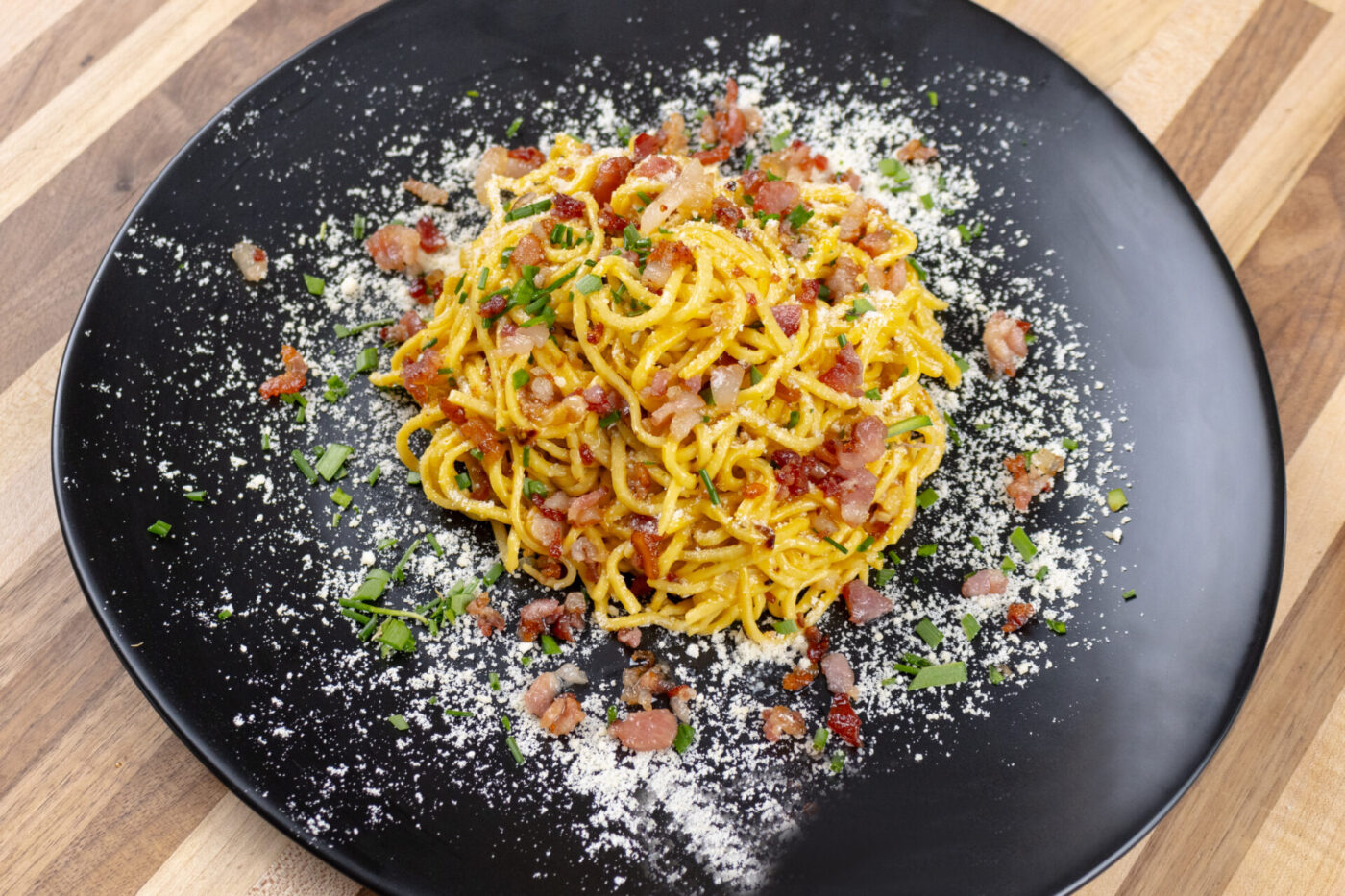
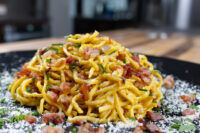
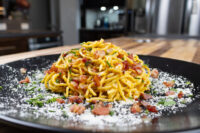
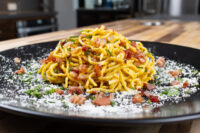
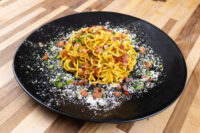
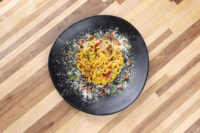
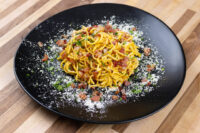
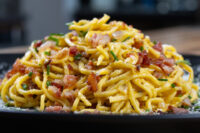
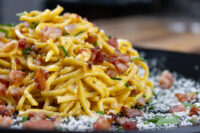
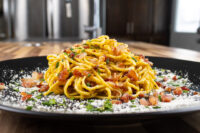
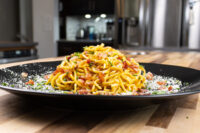
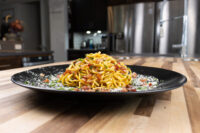
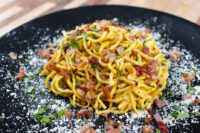
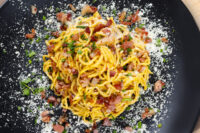
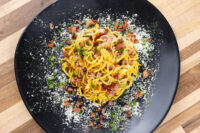
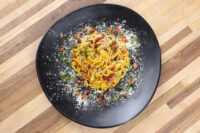
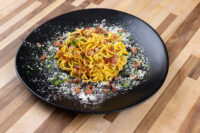
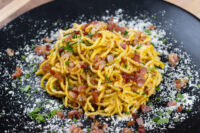
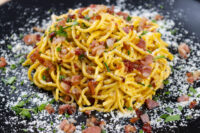
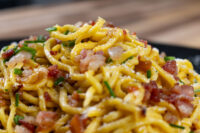
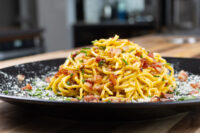
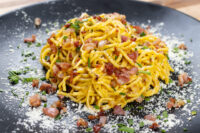
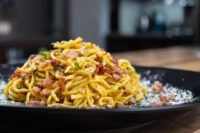
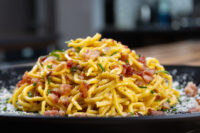
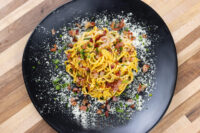
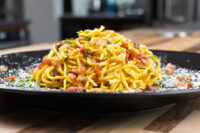
Presentation is the final step to a perfect meal. I use tongs to place the Spaghetti Carbonara in the center of the plate, trying to create a twist effect during plating. For the final touch, I sprinkle on an additional 4 TBSP of parmesan cheese and a bit more freshly ground salt and pepper. While not in the original recipe, you can mention options to add modification such as fresh and chopped chives to add a lovely pop of color and freshness. Serving this with a warm herb baguette makes for an unforgettable dining experience.
Spaghetti Carbonara
Ingredients:
Click any ingredient to learn moreSpaghetti Carbonara:
8 egg yolks (*)
¾ cups of heavy cream
½ cup of parmesan cheese
1 clove of garlic - peeled and grated (or pressed)
1 TSP of salt
¼ TSP of pepper - ideally freshly ground
4 servings of spaghetti (store-bought or recipe here, Optionally substitute with fettuccine, or another kind of pasta )
2 TBSP of frying oil (any kind) (adjust if needed)
1 onion - peeled and finely chopped
½ LB of bacon (pork) - diced (**)
Final touch:
4 TBSP of parmesan cheese (adjust if needed)
pepper - ideally freshly ground
Optionally: chives - fresh and finely chopped
* You won’t need egg whites with this recipe, but make sure that you don’t waste them. You can use them in other recipes or just make yourself a quick scramble!
** Skip the bacon for a vegetarian option. If you love bacon, you can consider doubling it.
Nutrition per 1 Serving:(recipe split into 4 servings)
EstimatedCalories 772
Protein 25.0 g
Fat 59.4 g
Saturated fat 24.5 g
Carbohydrate 34.3 g
Sugars 2.9 g
Fiber 0.5 g
Sodium 1205 mg
Cholesterol 495 mg
Estimated. Worked out from the ingredients above using the United States Department of Agriculture’s FoodData Central reference data. An estimate, not a measurement — brands, sizes and how much of a marinade actually ends up on the plate all move it.
Directions:
1.Pasta Preparation:
1.1.
Cook your pasta (follow the instructions on the box for cooking store-bought pasta) and then drain the water by pouring pasta over the colander.
1.2.
Or prepare and cook homemade pasta. Then drain with the colander.
Important:
Do not leave pasta to rest in the colander. It is still cooking (because of the hot temperature of the pasta) and you can end up with overcooked pasta. Use the pasta immediately in the next step or place the pasta to cool on a baking sheet if you need more time.
2.Egg Mixture:
2.1.
Place in a small mixing bowl:
8 egg yolks
¾ cup of heavy cream
½ cup of grated parmesan
1 clove of garlic – grated
1 TSP of salt
¼ TSP of ground pepper
Whisk together until thoroughly combined (about 30 seconds).
2.2.
Put aside for a later step.
3.Complete the Meal:
3.1.
Meanwhile, preheat a stir fry pan on medium-high heat with 2 TBSP of frying oil and add:
1 medium onion – finely chopped
Sauté together until onions are glossy (about 2 – 3 minutes).
3.2.
Add:
½ LB of bacon
Sauté until you reach the degree of cooking you prefer.
3.3.
Lower the heat to medium and add:
Cooked pasta
Sauté while constantly turning with tongs to ensure the pasta doesn’t stick to the bottom of the pan and the onion and bacon are stirred into it (about 1- 2 minutes).
3.4.
Remove the pan from the stove, leaving the pasta, bacon, and onion inside of the pan.
3.5.
Add:
Egg mixture from Step 2
Stir until the sauce nicely coats the pasta (about 30 seconds to 1 minute).
Important: Don’t worry, the egg yolks will cook fully from the heat of the hot pasta and pan as soon as the pasta is coated.
3.6.
Taste and add salt or pepper if needed.
4.Plating & Serving:
4.1.
Place pasta in the center of the plate using tongs (try to create a twist effect during plating).
4.2.
Sprinkle with grated parmesan and freshly ground salt and pepper.
4.3.
Optionally, also sprinkle with fresh and choopped chives.
Popular questions
Can I make this recipe if I do not want to use pork?
Yes! To adapt this Spaghetti Carbonara for different dietary needs, you can simply skip the bacon for a vegetarian option. The combination of egg yolks, heavy cream, and parmesan cheese still provides a deeply flavorful and creamy richness to the pasta. If you choose to keep the meat but love extra flavor, you can also consider doubling the bacon for a more intense smoky taste.
Share
Click on the icons below to share "Title of the item to share"