
Main Course Recipes
Spaghetti Bolognese
4 servings
Spaghetti Bolognese is a beloved Italian dish with roots in Bologna. This classic recipe, pairing a rich meat sauce with tender spaghetti, has become a global favorite. Interestingly, the traditional Italian pairing is with tagliatelle or lasagne, not spaghetti. With my recipe, you'll master this dish in no time, bringing the heart of Italy to your kitchen. Read More
Main Course Recipes
Before You Start
Let’s talk about important parts of the recipe before you start…
Welcome to my kitchen, where I will show you how to create the ultimate Spaghetti Bolognese.
I believe that Spaghetti Bolognese is more than just a meal; it is a comforting experience that brings people together. In my version of this classic, I focus on building layers of flavor—from the aromatic sautéed vegetables to the richness of the ground beef and red wine. Whether you are using store-bought pasta or following my guide for homemade dough, the goal is a cohesive dish where the sauce perfectly coats every strand. Let’s dive into the preparation of this timeless favorite!
The Importance of Sautéing Aromatics in Spaghetti Bolognese
When I begin my Spaghetti Bolognese, the first critical step is sautéing the finely chopped onion, shredded carrots, and sliced garlic in frying oil. I use high heat initially to ensure the vegetables soften and the onions become glossy, which usually takes about 4 to 5 minutes. This process, often called a soffritto, creates the flavor base for the entire Spaghetti Bolognese. The carrots add a subtle sweetness that balances the acidity of the tomatoes later on, while the garlic provides that essential pungent aroma that defines a great meat sauce. It is vital to stir occasionally so nothing burns, as bitter garlic can ruin the delicate balance of the marinara sauce and ground beef.
Mastering the Ground Beef and Butter Integration
After my vegetables are ready, I lower the heat to medium-high to add the 1 LB of 85/15 ground beef. I always use a wooden spoon to separate the meat while sautéing to ensure there are no large clumps; I want the beef to be finely textured so it integrates perfectly into the Spaghetti Bolognese sauce. Once the meat is fully cooked, which takes about 3 to 5 minutes, I add half a stick of unsalted butter. I let it melt and fully incorporate with constant stirring. This is a key secret in my Spaghetti Bolognese recipe—the butter adds a velvety richness and a smooth mouthfeel that oil alone cannot provide, making the red wine and parmesan cheese flavors pop.
The Role of Red Wine Reduction in Flavor Building
One of the most transformative steps in my Spaghetti Bolognese is the addition of one cup of red wine. After the beef and butter are combined, I pour in the wine and cook it with constant stirring until it is reduced by half. This usually takes only 1 to 2 minutes, but it is essential for deepening the color and intensifying the flavor profile of the Spaghetti Bolognese. The alcohol evaporates, leaving behind a complex acidity and fruitiness that cuts through the fat of the ground beef. This reduction ensures the final marinara sauce isn’t too watery and has a concentrated, professional-grade taste.
Simmering the Marinara Sauce and Herbs
Once the wine has reduced, I introduce the 4 cups of marinara sauce along with the fresh basil, dried oregano, salt, and pepper. In my Spaghetti Bolognese, I prefer using freshly ground pepper and fresh basil for the brightest flavor, though dried oregano works perfectly for that earthy Italian note. I stir these ingredients briefly and let them cook for 1 to 2 minutes until everything is nicely blended. This short simmering period allows the herbs to release their essential oils into the meat sauce, ensuring every bite of the Spaghetti Bolognese is seasoned from the inside out before I set the sauce aside to finish the pasta.
Proper Pasta Handling and Preventing Overcooking
Handling the pasta is where many home cooks make a mistake, but in my Spaghetti Bolognese, I am very careful. Whether using store-bought or homemade pasta dough, I never leave the pasta to rest in the colander after draining. Because the pasta is still hot, it continues to cook; leaving it in the colander leads to overcooked, mushy noodles. I recommend using the pasta immediately or spreading it on a baking sheet to cool if you need more time. For the best Spaghetti Bolognese, the pasta must be firm enough to withstand a final sauté in the stir fry pan where it will eventually meet the meat sauce.
The Final Sauté: Coating the Pasta Perfectly
The final step to complete the Spaghetti Bolognese happens back in the stir fry pan. I preheat the pan with 2 TBSP of frying oil—specifically using the same pan I used for the sauce to catch those leftover flavorful residues. I sauté the cooked pasta for 1 to 2 minutes, turning it constantly with tongs to prevent sticking. Then, I add the meat sauce back in and cook for another minute. My goal is for the sauce to coat the pasta and truly become part of it. In my Spaghetti Bolognese, the pasta should not “swim” in a pool of sauce; instead, the sauce should cling to every strand of spaghetti for a balanced, authentic Italian experience.
Finishing Touches with Parmesan Cheese and Plating
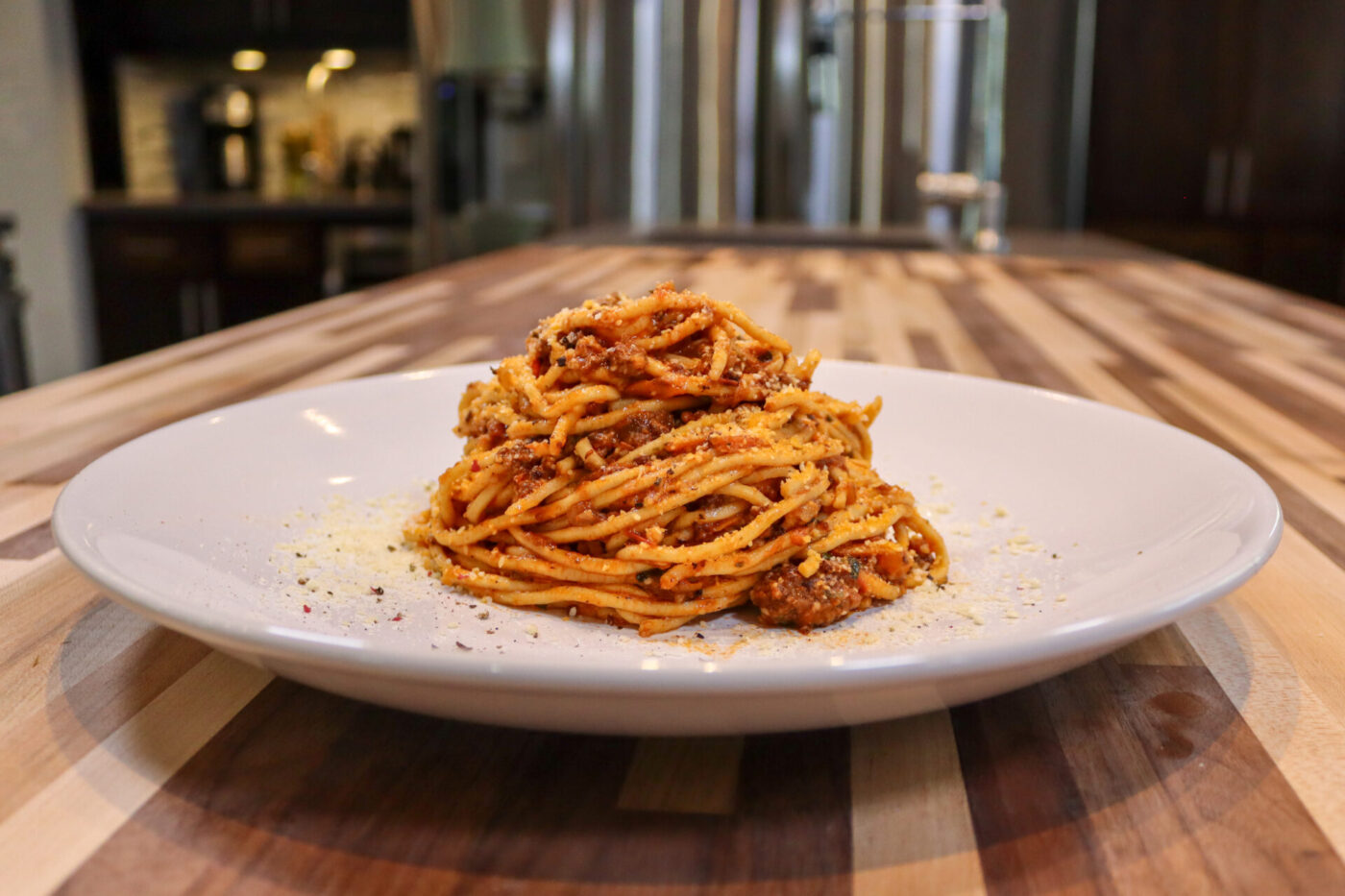
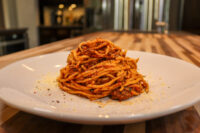
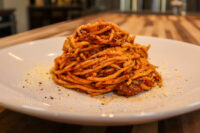
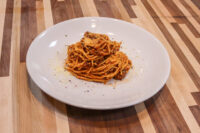
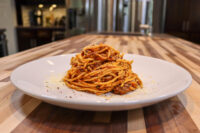
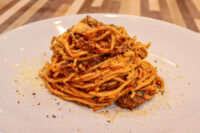
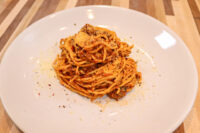
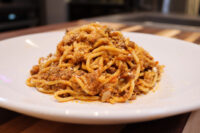
To finish the Spaghetti Bolognese, I take the pan off the burner and add a full cup of grated parmesan cheese. Using tongs, I thoroughly stir it together. The residual heat melts the parmesan cheese into the sauce, creating a creamy bind between the pasta and the ground beef. For serving, I use my tongs to place the pasta in the center of the plate, trying to create a “twist effect” for a beautiful presentation. A final sprinkle of extra parmesan cheese, salt, and freshly ground pepper completes the dish. This attention to detail in the final moments is what makes this Spaghetti Bolognese truly stand out.
Spaghetti Bolognese
Ingredients:
Click any ingredient to learn moreMain ingredients:
4 servings of spaghetti (store-bought or recipe here, Optionally substitute with pappardelle, linguine fini, or another kind of pasta)
6 TBSP of frying oil (any kind) (adjust if needed)
1 onion - peeled and finely chopped (defrost in microwave)
1 carrots - peeled and shredded
4 clove of garlic - pealed and thin sliced
1 LB of 85/15 ground beef meat
1 cup of red wine of your choice (adjust if needed)
½ stick of unsalted butter (2 OZ)
4 cups of marinara sauce - ideally freshly ground (store-bought or recipe here)
¼ cup of basil - fresh and finely chopped (or 1 TBSP of dried)
1 TSP of oregano - dried
1 TSP of salt
½ TSP of pepper - ideally freshly ground
1 cup of parmesan cheese - grated
Final touch:
4 TBSP of parmesan cheese - grated (adjust if needed, or shavings of fresh one)
pepper - ideally freshly ground
Nutrition per 1 Serving:(recipe split into 4 servings)
EstimatedCalories 924
Protein 38.6 g
Fat 61.4 g
Saturated fat 20.5 g
Carbohydrate 51.9 g
Sugars 11.9 g
Fiber 5.3 g
Sodium 1942 mg
Cholesterol 138 mg
Estimated. Worked out from the ingredients above using the United States Department of Agriculture’s FoodData Central reference data. An estimate, not a measurement — brands, sizes and how much of a marinade actually ends up on the plate all move it.
Directions:
1.Pasta:
Let’s start the preparation of Spaghetti Bolognese.
1.1.
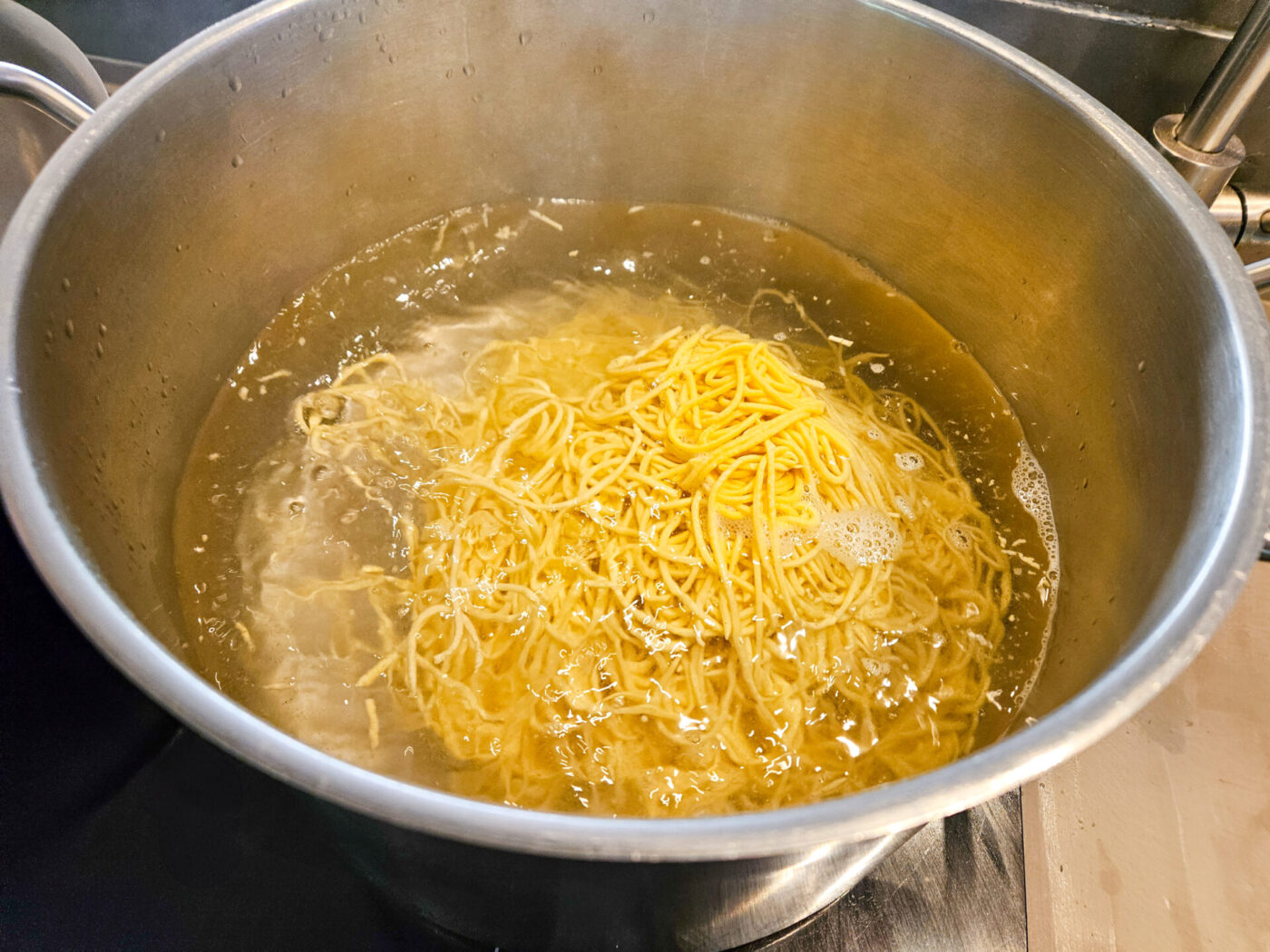
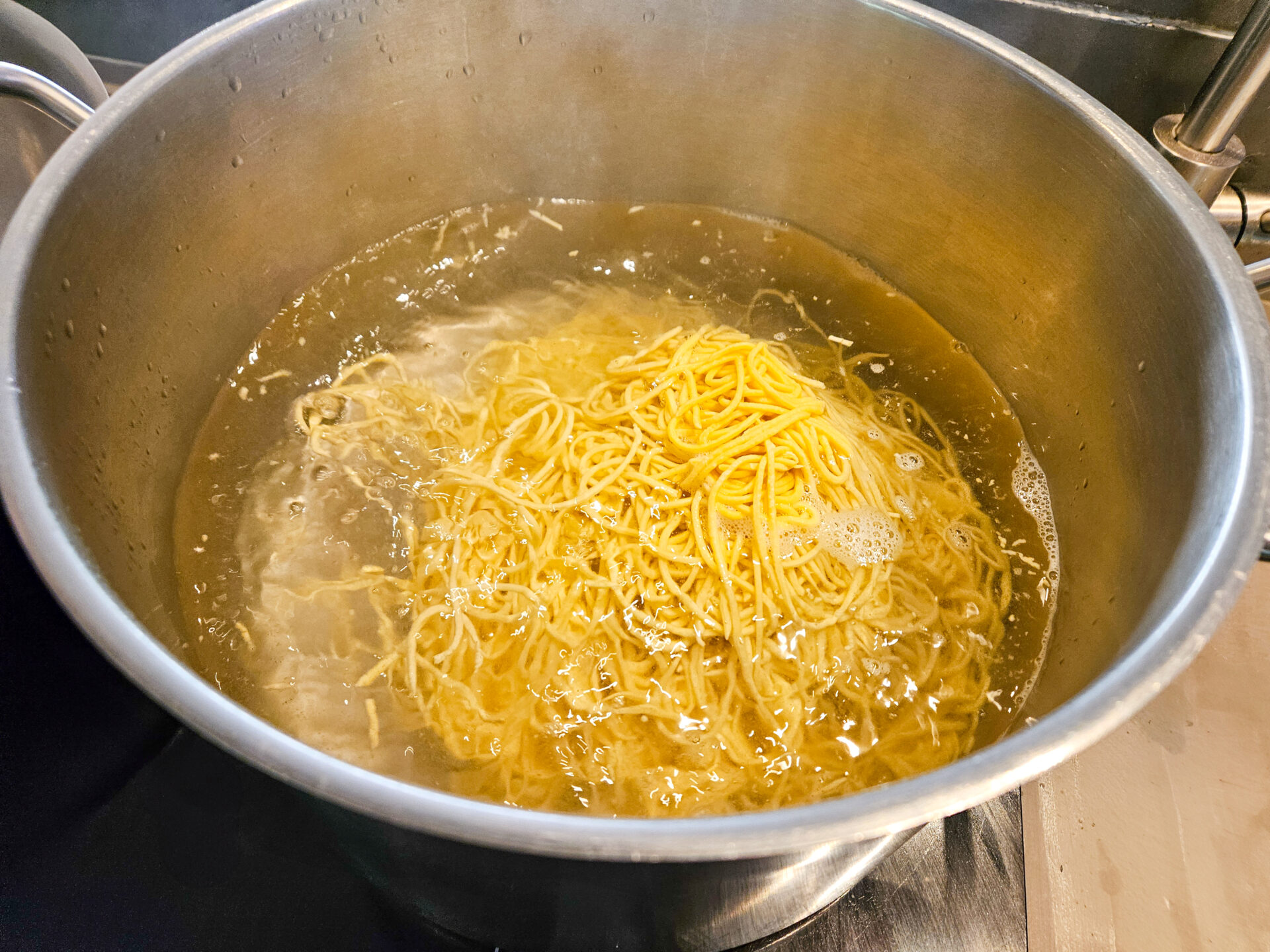
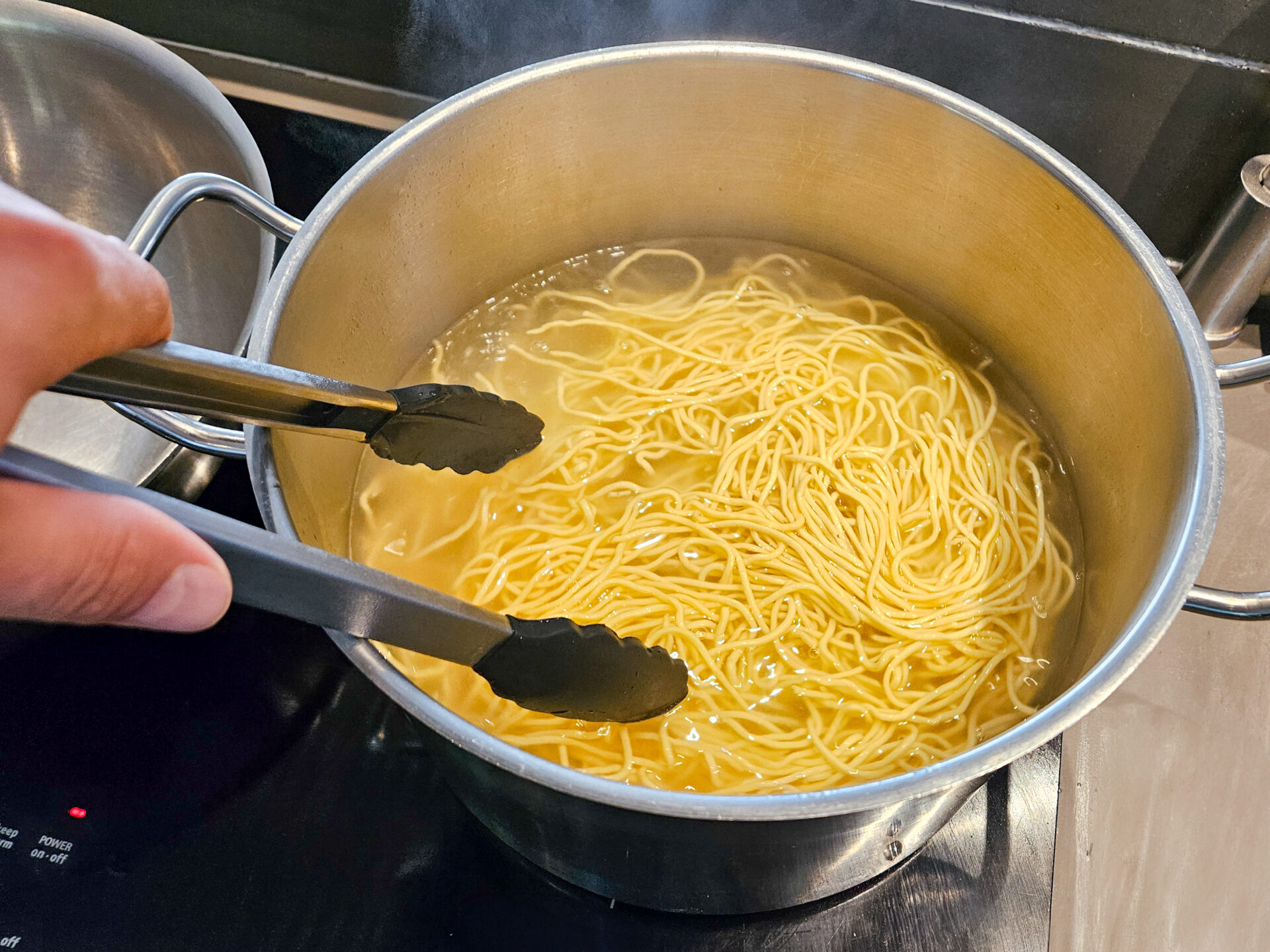
If you are using store-bought pasta, set pasta to cook based on the requirements on the packaging. *
Important:
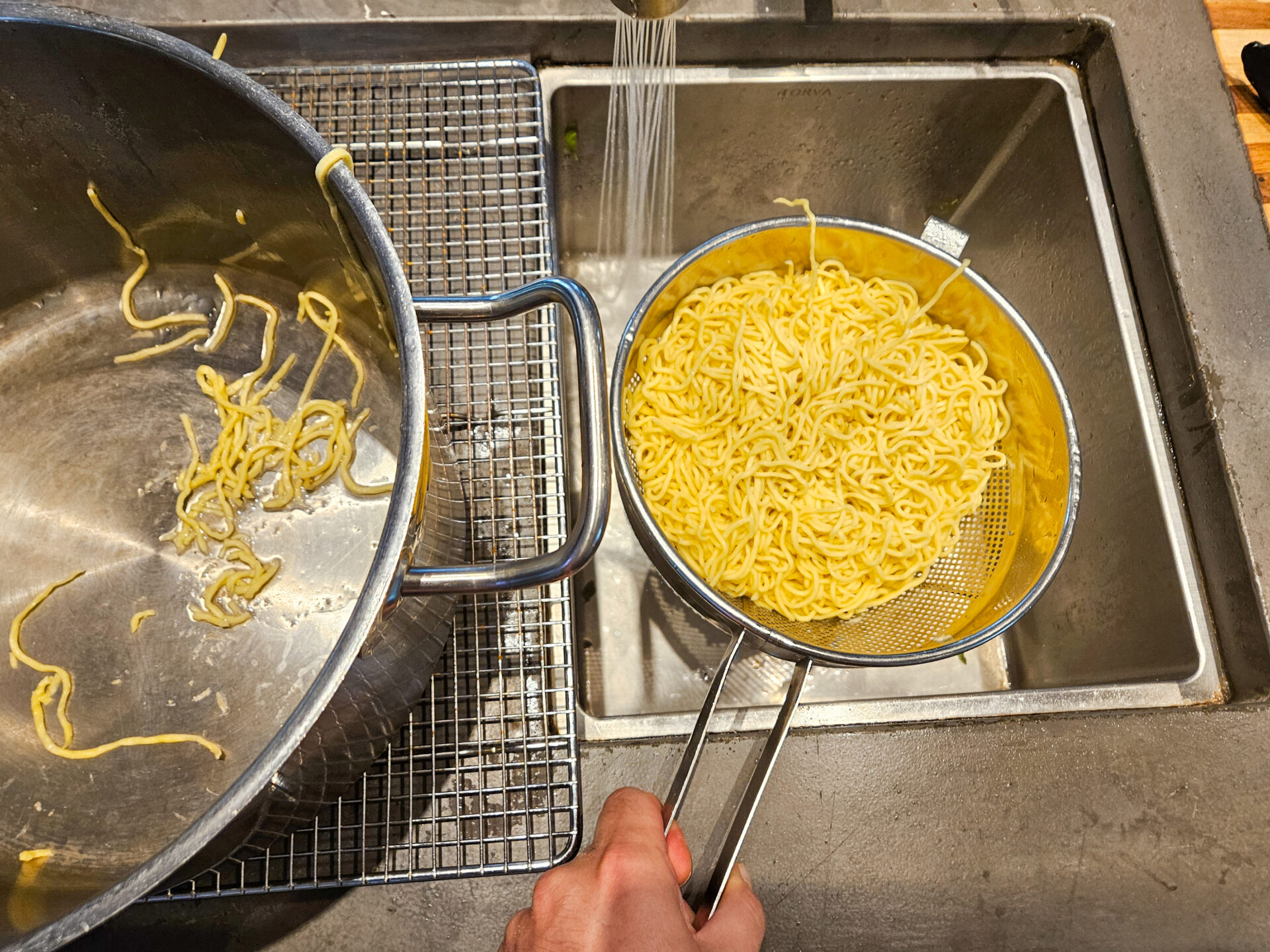
Do not leave pasta to rest in the colander. It is still cooking (because of the hot temperature of pasta) and you can end up with overcooked pasta. Use the pasta immediately in the next step or place them to cool on baking sheet if you need more time.
2.Bolognese Sauce:
2.1.
Preheat the stir fry pan on high heat with 4 TBSP of frying oil and add:
1 medium onion – finely chopped
1 medium carrot – shredded
4 cloves of garlic – sliced
Sauté with occasional stirring until onions are glossy (about 4 – 5 minutes).
2.2.
Lower heat to medium-high and then add:
1 LB of ground beef
Use a wooden spoon to separate the meat while sautéing. Sauté until fully cooked (about 3- 5 minutes).
2.3.
Add:
½ stick of butter
Let it melt and fully incorporate with constant stirring.
2.4.
Then add:
1 cup of red wine
Cook with constant stirring until the wine is reduced to about half (about 1-2 minutes).
2.5.
Add:
4 cups of marinara sauce
¼ cup of fresh basil – finely chopped
1 TSP of oregano
1 TSP of salt
½ TSP of ground pepper
Briefly stir and let it cook until all ingredients are nicely blended together (about 1 – 2 minutes).
2.6.
Put aside into a medium mixing bowl for use in a later step (the stir fry pan is empty for later steps; leave residue in the pan).
3.Finish Pasta Preparation:
3.1.
Finish cooking your store-bought pasta and then drain water by pouring pasta over a colander. *
3.2.
Or process rested pasta dough into spaghetti and cook it in boiling water. Drain water by pouring pasta over the colander. *
4.Complete the Spaghetti Bolognese:
4.1.
Preheat the stir fry pan with 2 TBSP of frying oil (use the pan that you used for cooking the sauce with meat), and on medium heat and add:
Cooked pasta
Sauté for about 1- 2 minutes while constantly turning with tongs (to prevent sticking).
4.2.
Then, add:
Sauce with meat
Cook while constantly turning with tongs until it’s nicely combined (about 1 minute). Ideally the sauce should coat the pasta and become part of the pasta.
Note:
Pasta should not “swim” in the sauce. However, it is totally up to you if you try to reach this recommendation or go with pasta with more sauce (if you wish, add sauce in any step).
4.3.
Take the pan off the burner and add:
1 cup of grated parmesan
Thoroughly stir together using tongs.
4.4.
Taste and add salt or pepper if needed.
5.Serving the Spaghetti Bolognese:
5.1.
Place pasta in the center of the plate using tongs (try to create a twist effect during plating).
5.2.
Sprinkle with grated parmesan and freshly ground salt and pepper.
Kitchen Guide
Ground Meat With the Exception of Poultry
The USDA minimum safe internal temperature is 160°F.
Read More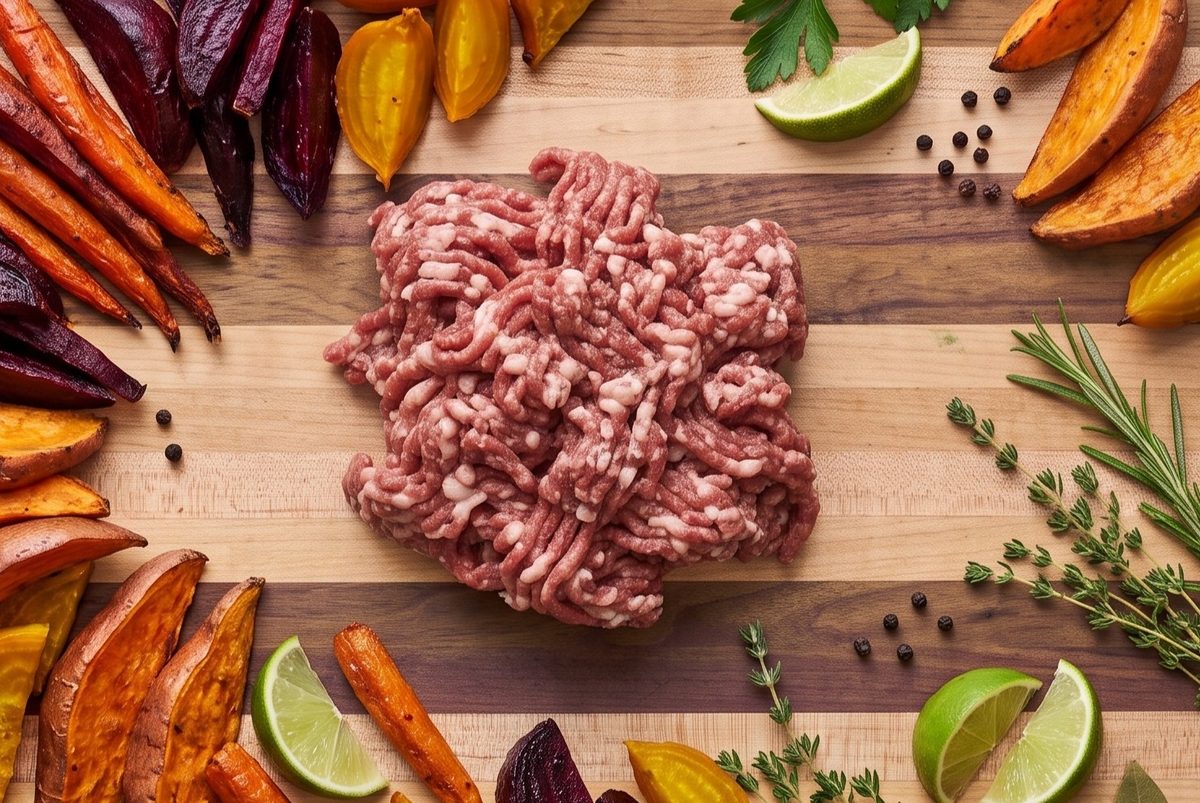
Popular questions
Why do you add butter to the meat sauce in this Spaghetti Bolognese recipe?
In my Spaghetti Bolognese, adding half a stick of unsalted butter after the ground beef is cooked creates a luxurious, velvety texture. It helps to emulsify the marinara sauce and red wine, providing a rich mouthfeel that balances the acidity of the tomatoes and enhances the overall flavor of the meat sauce.
Share
Click on the icons below to share "Title of the item to share"