
Main Course Recipes
Salmon in Mustard Sauce
4 servings
I am thrilled to share my Salmon in Mustard Sauce, a dish that represents the perfect marriage of popular fish, mustard spiciness, and a gentle cream tone. By combining three distinct types of mustard with a silky water bath reduction, I have created a sophisticated yet accessible meal that transforms simple salmon fillets into a gourmet experience in just about 60 minutes. Read More
Main Course Recipes
Gluten-freeLow-carb
Before You Start
Let’s talk about important parts of the recipe before you start…
A Masterclass in Flavor: Salmon in Mustard Sauce
Welcome to my kitchen, where I love to explore flavors that bring out the best in fresh ingredients. My Salmon in Mustard Sauce is a recipe I am particularly proud of because it balances the rich, fatty texture of premium fish with the sharp, acidic, and textured notes of yellow, Dijon, and whole grain mustard. This dish isn’t just about the flavor; it’s about the technique of searing and finishing in the oven to ensure a moist, flaky result every single time. Join me as I walk you through how to master this elegant heavy cream sauce and perfectly prepared salmon fillets.
The Triple Mustard Marinade Foundation
In my Salmon in Mustard Sauce, the foundation of flavor begins with a very specific blend of three mustards. I use a quarter cup of yellow mustard for that classic tang, a quarter cup of Dijon mustard for a sharp, sophisticated kick, and two tablespoons of whole grain mustard to provide a wonderful popping texture. When I whisk these together with extra virgin olive oil, frying oil, lemon juice, salt, and pepper, I am not just making a marinade for the fish fillets; I am creating the actual base for the final sauce. This dual-purpose mixture ensures that the salmon fillets are deeply infused with flavor during the resting period, while also providing the structural integrity needed for the heavy cream-based finish later on.
Proper Preparation of Fish Fillets
Before I ever let a marinade touch the fish, I emphasize the importance of correct preparation. For this Salmon in Mustard Sauce, I start by ensuring the four salmon fillets—which should be skinless and weigh about 1.5 pounds total—are properly rinsed under cold water. This is a regular step for any cook to remove unwanted particles. Once cleaned and patted dry, I place the fish fillets into the marinade, using a silicone spatula to gently cover every surface. This step is crucial because the salmon fillets need at least 30 minutes, or ideally overnight in the refrigerator under plastic wrap, to fully absorb the acidity of the lemon and the spice of the mustard blend.
Searing for Texture and Flavor
When it is time to cook the Salmon in Mustard Sauce, I use a high-heat searing method. I preheat a large sauté pan (which must be ovenproof) with two tablespoons of frying oil on high heat. I place the fish fillets in, still covered with the residue of the marinade. I briefly sear them for only 1 to 2 minutes on each side. The goal here is to reach a nice sear that locks in moisture and creates a slight crust on the outside of the salmon fillets. This high-heat contact develops a complex flavor profile that simple baking cannot achieve, making the final dish much more robust and professional.
The Precision Oven Finish
To ensure the salmon fillets stay juicy, I transition them from the stove to a preheated oven at 350°F. This finishing in the oven technique allows for even heat distribution. I cook the fish for about 5 minutes, but the real secret is using a food thermometer. I always check to make sure the internal temperature reaches at least 145°F, which is the USDA minimum safe internal temperature. Whether you prefer your fish at 110°F for rare or up to 155°F for medium, finishing the Salmon in Mustard Sauce in the oven gives me total control over the final texture, ensuring the fish never becomes dry or rubbery.
The Water Bath Sauce Technique
The hallmark of my Salmon in Mustard Sauce is the velvety texture of the topping, achieved through a water bath or double boiler method. While the fish is finishing in the oven, I take a medium pot with 1.5 inches of boiling water and place the mixing bowl containing the remaining marinade on top. I add one cup of heavy cream and one large egg, then vigorously whisk. This gentle, indirect heat allows the egg and heavy cream to emulsify with the mustard without curdling. I continue whisking until the mixture thickens and reaches 165°F. This creates a thick, luxurious sauce that perfectly complements the seared salmon fillets.
Final Plating and Seasoning
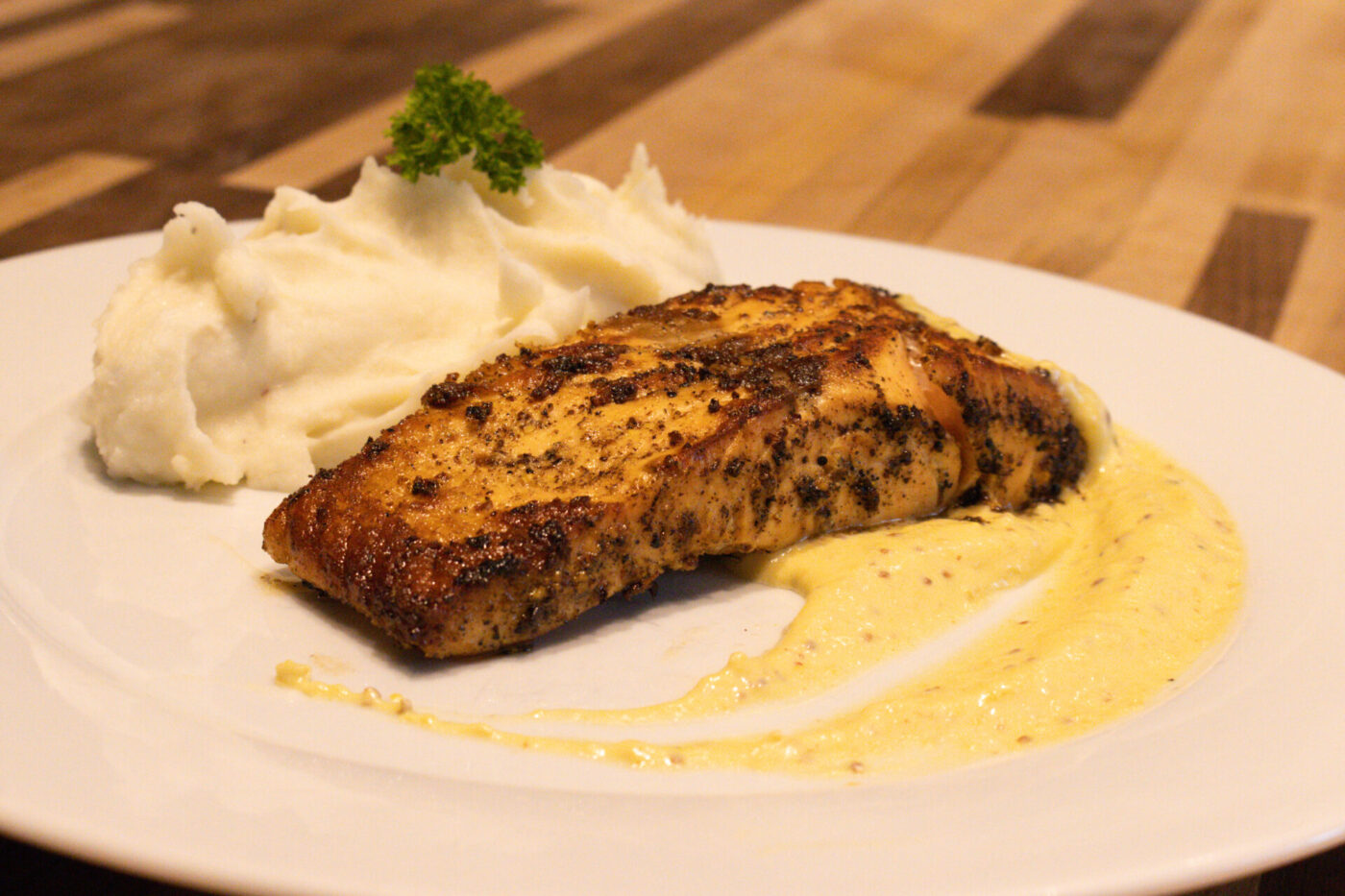
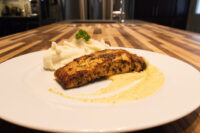
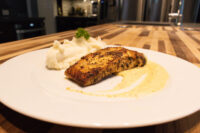
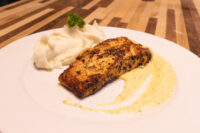
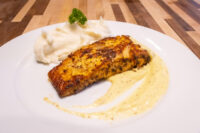
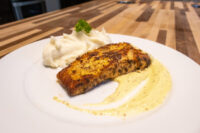
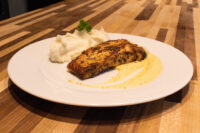
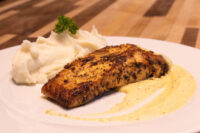
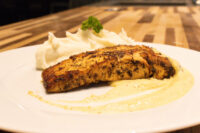
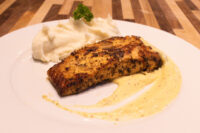
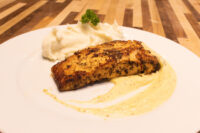
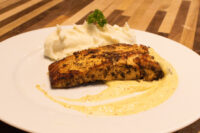
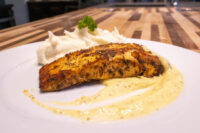
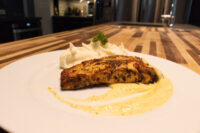
The presentation of the Salmon in Mustard Sauce is the final step in this culinary journey. I place the fillets on plates and partially cover each with the warm, thickened sauce I prepared in the water bath. To elevate the flavors right before serving, I sprinkle the dish with additional salt and pepper, ideally freshly ground for the best aroma. I personally recommend serving this with creamy mashed potatoes, easy sautéed asparagus, or fondant potatoes. These sides are perfect for soaking up any extra mustard sauce and rounding out a meal that is as beautiful to look at as it is delicious to eat.
Salmon in Mustard Sauce
Ingredients:
Click any ingredient to learn moreMain ingredients:
3 TBSP of Extra Virgin Olive Oil
5 TBSP of frying oil (any kind) (adjust if needed)
½ TSP of salt
¼ TSP of pepper - ideally freshly ground
¼ cup of yellow mustard
¼ cup of Dijon mustard
2 TBSP of wholegrain mustard
2 eggs
4 fillets of salmon - skinless (about 1 ½ LB)
1 cup of heavy cream
Final touch:
salt - ideally freshly ground
pepper - ideally freshly ground
Nutrition per 1 Serving:(recipe split into 4 servings)
EstimatedCalories 799
Protein 39.9 g
Fat 69.5 g
Saturated fat 22.7 g
Carbohydrate 3.8 g
Sugars 2.2 g
Fiber 1.3 g
Sodium 608 mg
Cholesterol 246 mg
Gluten-freeLow-carb
Estimated. Worked out from the ingredients above using the United States Department of Agriculture’s FoodData Central reference data. An estimate, not a measurement — brands, sizes and how much of a marinade actually ends up on the plate all move it.
Directions:
1.Marinade:
1.1.
Place into a medium mixing bowl:
3 TBSP of Extra Virgin Olive Oil
3 TBSP of frying oil (part of total amount)
Juice from one lemon
½ TSP of salt
¼ TSP of ground pepper
Thoroughly whisk together until all ingredients are fully incorporated (about 1 minute).
1.2.
Add:
¼ cup of yellow mustard
¼ cup of Dijon mustard
2 TBSP of whole grain mustard
1 large Egg (1 of two eggs)
Thoroughly whisk together until fully incorporated (about 1 minute).
Note:
Now you have created a mixture which will be used for marinating and later will be a base for the sauce.
2.Fish Preparation:
2.1.
Make sure that the fish fillets are properly rinsed under cold water.
2.2.
Place the fish fillets into the marinade and gently cover with the remaining marinade (using a spatula).
2.3.
Cover the bowl with the plastic wrap and let rest in the refrigerator for at least 30 minutes (ideally overnight).
3.Pan Sear with Finishing in the Oven:
3.1.
Set oven to 350°F.
3.2.
Preheat fry pan on high heat with 2 TBSP of frying oil.
3.3.
Place fish fillets with residue of marinade in.
3.4.
Briefly sear to reach a nice sear (about 1 – 2 minutes on each side).
3.5.
Finish in a preheated oven until the fish is fully cooked (about 5 minutes). *
4.Sauce Preparation:
4.1.
While the fish is finishing in the oven, prepare the sauce in water bath using a medium mixing bowl with the marinade as the top of the water bath.
4.2.
Prepare a water bath by placing about 1 ½” of water into a medium pot.
4.3.
Bring the water to a boil on high heat (without the mixing bowl on top).
4.4.
Place the mixing bowl with the marinade (from the fish) on the top of the pot.
4.5.
Add:
1 cup of heavy cream
1 large Egg
And vigorously whisk until the mixture thickens and reaches at least 165°F while water is boiling (check with the food thermometer).
4.6.
When done place mixing bowl with a sauce aside for later steps.
5.Plating:
5.1.
Place the fillets on plates and partially cover each with the sauce.
5.2.
Sprinkle with salt and pepper.
5.3.
Serve with the side of your choice.
Kitchen Guide
Fish
USDA minimum safe internal temperature is 145°F
Popular serving temperatures:
- 110 – 125°F – Rare
- 125 – 140°F – Medium Rare
- 145 – 155°F – Medium
Popular questions
How do I ensure the sauce for the Salmon in Mustard Sauce doesn't break or curdle?
The key to a perfect sauce in my Salmon in Mustard Sauce recipe is the water bath method. By placing the mixing bowl over a pot of boiling water rather than directly on the stove, you use indirect heat. You must whisk the heavy cream and egg into the marinade vigorously and constantly until it thickens. Using a food thermometer to ensure it reaches 165°F helps you achieve the perfect consistency without the high heat of a burner causing the proteins to separate.
Share
Click on the icons below to share "Title of the item to share"