
Appetizers and Party Food Recipes
Pickled Sausage Utopenec
6 – 8 servings
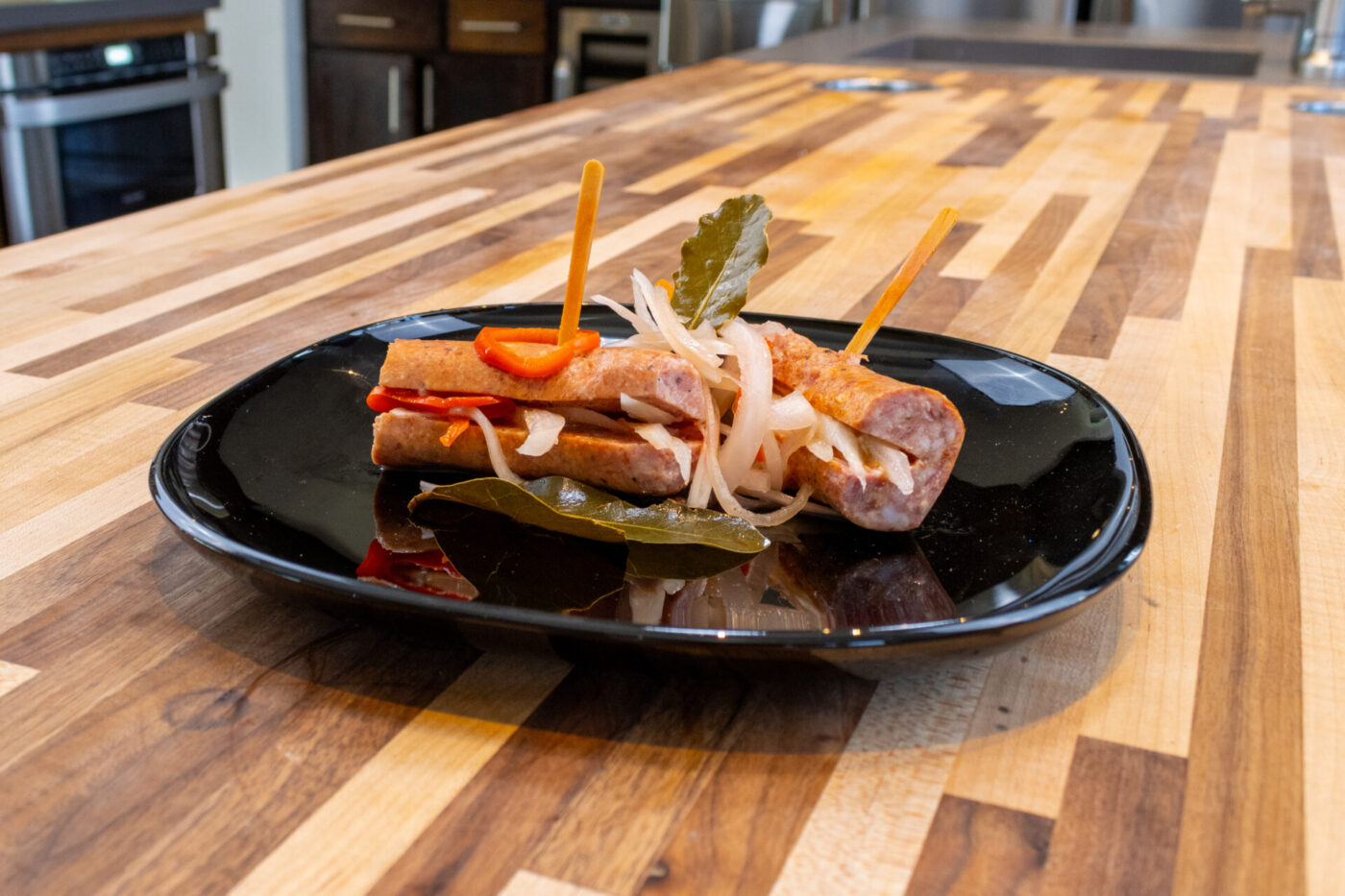
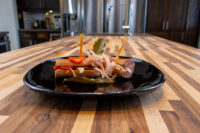
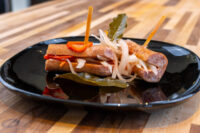
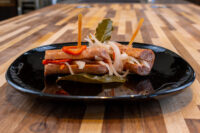
I am excited to share this Pickled Sausage Utopenec, a one-of-a-kind appetizer from the Czech and Slovak Republics. This cold cuisine classic features Polish kielbasa pickled with sliced onion, garlic, and Fresno peppers in a savory pickling juice. Whether you are enjoying it as a pub-style appetizer or a filling snack, this utopenec recipe relies on distilled white vinegar, bay leaves, and allspice to create a deep umami flavor. Learn my traditional pickling method to master this unique dish that is best served with a pilsner style beer. Read More
Appetizers and Party Food Recipes
Gluten-freeDairy-free
Before You Start
Let’s talk about important parts of the recipe before you start…
The Authentic Taste of Pickled Sausage Utopenec
Welcome to my kitchen, where I’ll guide you through making Pickled Sausage Utopenec, the ultimate pub-style appetizer. This cold cuisine staple is a beloved tradition where Polish kielbasa is transformed through a pickling juice of distilled white vinegar and aromatic spices. By stuffing the kielbasa with sliced onion and Dijon mustard, we create a complex flavor profile that only gets better after a week of resting. If you appreciate a savory, tangy, and slightly spicy appetizer, this utopenec recipe is exactly what you need to accompany your favorite pilsner style beer.
Crafting the Perfect Pickling Juice for Pickled Sausage Utopenec
In my Pickled Sausage Utopenec, the pickling juice is the most critical component. I combine 4 cups of water with 2 cups of distilled white vinegar, adding 5 bay leaves, peppercorns, and allspice to build a complex base. This pickling juice must be brought to a boil and then simmered for 3 minutes to extract the oils from the spices. As the author of this utopenec recipe, I ensure that the granulated sugar and salt are perfectly dissolved to create the balanced acidity required for cold cuisine. Cooling this liquid properly is essential before it meets the Polish kielbasa to prevent the meat from overcooking or losing its snap.
Preparation and Peeling of Polish Kielbasa
When I prepare the Polish kielbasa for Pickled Sausage Utopenec, I recommend peeling all 4 sausages. While this step is optional, I find that peeling the collagen or animal casing allows the pickling juice to be absorbed much more effectively into the meat. After peeling, I cut a horizontal pocket into each kielbasa, going almost but not totally through. This preparation is a hallmark of an authentic utopenec recipe, as it creates space for the sliced onion and spices to penetrate the center of the sausage, enhancing the overall umami flavor of this traditional pub-style appetizer.
The Art of Filling and Securing the Sausage
To give the Pickled Sausage Utopenec its signature kick, I spread Dijon mustard and sprinkle ground paprika inside the kielbasa pockets. I then stuff them with as much sliced onion as possible. To keep the filling from falling out during the pickling process, I use two toothpicks to secure the top and bottom of each Polish kielbasa. This step ensures that the flavors of the Dijon mustard and onion remain trapped inside the meat while it sits in the distilled white vinegar solution. It is a detail that makes this cold cuisine dish stand out in quality and presentation.
Creating the Vegetable Mixture and Aromatics
The vegetable mixture in Pickled Sausage Utopenec provides both flavor and texture. I use a combination of remaining sliced onion, 5 cloves of sliced garlic, and optional Fresno peppers for heat. By mixing these in a large bowl before assembly, I ensure a consistent distribution of heat and aroma throughout the jar. These fresh ingredients work alongside the bay leaves and allspice in the pickling juice to create a vibrant environment for the Polish kielbasa. In this utopenec recipe, the garlic and peppers are just as important as the meat for achieving a true pub-style appetizer taste.
Strategic Assembly and Submerging in the Jar
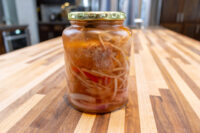
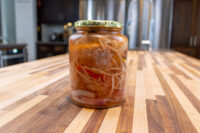
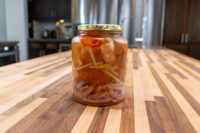
Assembling the Pickled Sausage Utopenec requires care to ensure everything pickles evenly. I place a layer of the vegetable mixture at the bottom of a large pickling jar before adding the filled Polish kielbasa. You can choose a horizontal layered method or a vertical arrangement depending on your jar size. The final step is pouring the cooled pickling juice—including the bay leaves and whole spices—over the top until everything is fully submerged. This is a vital rule in cold cuisine pickling to prevent spoilage and ensure the distilled white vinegar can preserve the fresh ingredients effectively.
The Essential Resting Period for Maximum Flavor
Patience is the secret ingredient in my Pickled Sausage Utopenec. After sealing the jar, it must rest in the refrigerator for at least 1 week, though I strongly prefer 2 weeks for the flavors to fully develop. This resting period allows the pickling juice to penetrate the Polish kielbasa and soften the sliced onion. While you could eat it sooner if in a rush, the true umami flavor of a pub-style appetizer only emerges with time. Following this resting step in the utopenec recipe guarantees that the distilled white vinegar and spices have worked their magic on the cold cuisine dish.
Serving Traditions and Beer Pairings
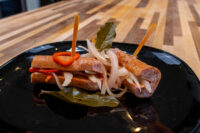
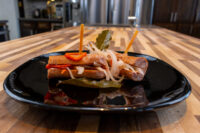
When it is time to serve the Pickled Sausage Utopenec, I plate it with a generous portion of the pickled onions and garlic from the jar. This appetizer is traditionally served with Czech rye bread or rohliky to soak up the flavorful pickling juice. As the creator of this utopenec recipe, I always suggest pairing it with a pilsner style beer. The crispness of the beer cuts through the richness of the Polish kielbasa and the acidity of the distilled white vinegar. It is a classic cold cuisine experience that brings the spirit of a Czech pub directly to your table.
Pickled Sausage Utopenec
Ingredients:
Click any ingredient to learn morePickling juice:
4 cups of water
2 cups of distilled white vinegar
5 leaves of bay leaves - fresh or dry
1 TSP of peppercorns
1 TSP of allspice
2 TBSP of granulated sugar
1 TSP of salt
½ TSP of pepper
For Kielbasa preparation:
2 onion - peeled and sliced (large *)
5 cloves of garlic - peeled and sliced
Optionally: 2 PCS of Fresno peppers (chili) - sliced (spicy **)
4 PCS of Polish kielbasa (***)
2 TSP of ground paprika (adjust if needed)
2 TBSP of Dijon mustard (adjust if needed)
* Preferably 1 red onion and 2 yellow onions but you can use any onion that you have available – including white.
** You can substitute with other kinds of chiles or if you prefer not spicy, you can substitute with pepperoncini peppers (you can purchase pickled and drain the liquid).
*** I usually buy individual kielbasas that are about 5 – 6” long each. Optionally, you can purchase longer versions of kielbasa – these will need to be additionally cut into smaller segments.
Tools:
Click any tool to learn more1x Chef’s knife
1x Large Pickling Jar or 2 Medium ((needs to be able to fit all 4 Polish kielbsas. If you use small jars, the kielbasas can be cut in half as needed).)
12x Toothpicks
Nutrition:(recipe split into 6 servings)
Gluten-freeDairy-free
Nutrition is not available for this recipe — the figures its ingredients give did not pass our accuracy checks, so we would rather show nothing than a number we cannot stand behind.
Directions:
1.Pickling Juice:
1.1.
Place into a medium pot:
4 cups of water
2 cups of distilled white vinegar
5 bay leaves
1 TSP of whole peppercorns
1 TSP of whole Allspice
2 TBSP of granulated sugar
1 TSP of salt
½ TSP of chili powder
Place the pot on high and bring to a boil with occasional stirring.
1.2.
Lower heat to medium and cook for an additional 3 minutes with occasional stirring.
1.3.
Place aside and let it cool for the next step.
Notes:
- Leave it in the pot while cooling.
- Needs to be just partially cooled but can be cooled totally for the next step
2.Kielbasa Preparation:
2.1.
Peel all 4 kielbasas.
Notes:
- This step is optional but if you complete this step, the pickling juice will have a better chance to get absorbed by the kielbasa. Even just a partial peeling will be beneficial.
- Kielbasa in collagen casing is usually easier to peel in comparison to animal casing. I usually prefer animal casing.
- Try to always peel by hand as much as you can and then proceed using a paring knife. In some cases, you will be able to peel it all without a paring knife.
2.2.
Cut a pocket into each kielbasa for the following filling by performing a horizontal cut right in the center of each kielbasa with the intention of getting almost but not totally through.
3.Fill Kielbasas:
3.1.
Spread Dijon mustard on both inner parts of the kielbasas.
3.2.
Sprinkle paprika on both inner parts of the kielbasa.
3.3.
Put part of the sliced onion in each kielbasas.
Notes:
- The amount of onion you put in is up to you, but I usually put as much as I can – in case some onions falls out later on.
- After all kielbasas are filled with onion, you are going to have some onion left, it will be needed in the following step 4.
3.4.
Use 2 toothpicks to help the onion stay in the kielbasa (run each toothpick through the top part of the kielbasa, onion, and the bottom part of the kielbasa).
4.Vegetable Mixture:
4.1.
Place Into a large mixing bowl:
Onions – sliced (the remaining amount)
5 cloves of garlic –sliced
Optional: 2 – 3 Fresno chiles – sliced
And thoroughly stir.
5.Assemble:
5.1.
Place a little part of the vegetable mixture into the pickling jar.
5.2.
Then place the kielbasas in the jar inusing one of two methods below. (Select your method based on your preference or the size/shape of your pickling jar):
A. Horizontal: Alternate layers of kielbasas with layers of vegetable mixture.
B. Vertical: Place all kielbasas in vertically and squeeze the vegetable mixture in between the sausages and place the rest on the mixture on the top.
Note: Keep in mind that you can optionally cut each kielbasa into halves to better fit to your selected method.
5.3.
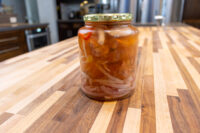
Pour the cooled pickling juice over (including bay leaves, peppercorn, and Allspice) to make sure that the kielbasas and vegetables will be fully submerged.
5.4.
Tightly close with a lid.
6.Resting:
6.1.
To let fully develop the flavor, let the jar rest in the refrigerator for at least 1 week but preferably 2.
Note: If you are in rush, let rest in your refrigerator at least overnight.
7.Serving
7.1.
Plate on a plate with part of the onion and other ingredients from the jar.
7.2.
Serve with bread of any kind and with a pilsner style of beer.
Popular questions
What kind of sausages are best for Pickled Sausage Utopenec?
For my Pickled Sausage Utopenec, I always use 4 pieces of high-quality Polish kielbasa, approximately 5-6 inches long. While you can use longer versions and cut them down, the key is the casing; I prefer animal casing, though collagen casing is easier to peel. Peeling the sausages is a vital step in this utopenec recipe as it helps the pickling juice, enriched with distilled white vinegar and allspice, to penetrate the meat, creating that perfect umami flavor found in a traditional cold cuisine pub-style appetizer.
Share
Click on the icons below to share "Title of the item to share"