
Appetizers and Party Food Recipes
Pickled Brie Cheese Nakladany Hermelin
8 servings
Let me share my amazing Pickled Brie Cheese recipe, inspired by the famous Czech cheese called Hermelín. This delightful cold cuisine appetizer involves layering creamy cheese with garlic, paprika, and onion, then soaking it in a rich pickling oil made with Extra Virgin Olive Oil, fresh rosemary, and spices. It is the perfect make-ahead dish that needs just a bit of resting time in the refrigerator to fully develop its deep, savory flavors. Read More
Appetizers and Party Food Recipes
VegetarianGluten-freeLow-carb
Before You Start
Let’s talk about important parts of the recipe before you start…
Welcome to my guide for Pickled Brie Cheese
I am so excited to share my Pickled Brie Cheese recipe with you all today. As a chef who loves cold cuisine, I have always been fascinated by traditional European appetizers, especially the famous Czech cheese called Hermelín. The original Hermelín was created in the Czech Republic as a fantastic alternative to popular white mold cheeses, and my version captures that incredible essence. I have developed this recipe to bring those authentic flavors straight into your kitchen. By carefully preparing the cheese with grated garlic, a touch of paprika, and fresh onion, and then immersing it in a beautifully spiced pickling oil featuring Extra Virgin Olive Oil and Fresno chiles, I create an appetizer that is truly unforgettable. It takes a little patience to let it rest, but I promise the results are well worth the wait. Let’s dive into making this wonderful marinated cheese!
Preparing the cheese halves for my Pickled Brie Cheese
The first critical step in my Pickled Brie Cheese recipe involves getting the cheese ready to absorb all the wonderful flavors. I start by taking two pieces of cheese, each weighing about seven to eight ounces, and carefully cutting them horizontally to create four halves in total. If you cannot find the standard size, as a modification that is not part of the base recipe, you could use a larger sixteen-ounce piece or substitute it with Camembert, but you would just need to adjust your cuts accordingly. Once I have my halves, I use a handy silicone brush to evenly distribute grated garlic over the cut sides. I then sprinkle a pinch of salt, black pepper, and ground paprika onto each. This ensures that the beautiful garlic and paprika flavors penetrate deep into the center of our cold cuisine dish, rather than just sitting on the outside.
Creating the layered sandwiches for the Czech appetizer
After seasoning the halves, I move on to building the flavorful core of my Pickled Brie Cheese. I take a large, peeled, and sliced onion—I usually prefer a red onion or a combination of red and yellow, though any onion will do—and I place a generous layer about half an inch thick onto two of the cheese halves. Then, I take the remaining two halves that do not have any onion on them and place them on top, creating what I like to call a cheese sandwich. This specific technique is essential because it traps the sharp, fresh bite of the onion right against the seasoned garlic and paprika center. As it sits, the juices from the onion will meld with the cheese, recreating the authentic taste you would expect from a classic Hermelín preparation.
Using toothpicks to secure the marinated cheese
One of the most practical tricks I use when making this Pickled Brie Cheese is the strategic placement of toothpicks. Before I even attempt to cut my newly formed cheese and onion sandwiches into smaller portions, I carefully insert four toothpicks into each one. Only after securing them do I take my chef’s knife and cut the sandwiches into even quarters, giving me eight neat triangles in total. I do this to greatly simplify handling the cheese later on; otherwise, the slippery layers might slide apart when submerged in the pickling oil. I always remind my guests and readers to be extremely careful not to hurt themselves with the sharp part of the toothpick during any time of the preparation or when serving this delicious appetizer.
Whisking the ultimate pickling oil
The true magic of my Pickled Brie Cheese lies in the liquid it rests in, which I refer to as the pickling oil. In a medium mixing bowl, I pour one cup of basic oil, like canola or sunflower, and combine it with one cup of rich Extra Virgin Olive Oil. To build an incredible flavor profile, I add four more cloves of grated garlic, two teaspoons of paprika, whole peppercorns, whole allspice, and a half teaspoon of salt. I take my piano whisk and stir this mixture thoroughly for about a minute until it is fully combined. Then, I gently stir in the leftover sliced onion, five fragrant bay leaves, and two sliced Fresno chiles. If you prefer less heat, a modification that is not part of the original recipe is to substitute the Fresno chiles with drained, pickled pepperoncini peppers. This spiced oil is what transforms the ordinary dairy into a spectacular marinated cheese.
Layering the Pickled Brie Cheese in the jar
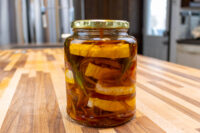
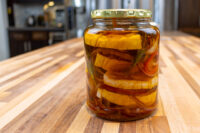
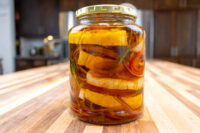
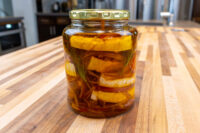
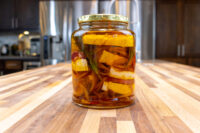
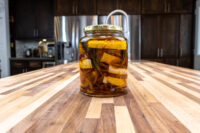
Assembly is a very visual and satisfying process for me. I start by pouring about one-third of my spiced pickling oil, making sure to include an even amount of the vegetables, straight into the bottom of a regular pickling jar. Next, I carefully place four of the cheese triangles into that layer of oil, making sure the toothpicks are pointing straight up. For a stunning visual effect, I slide two whole fresh sprigs of rosemary down the sides so they touch the glass. I follow this with another third of the oil and vegetables, place the remaining four cheese triangles on top, and finish by pouring the last of the Extra Virgin Olive Oil mixture over everything. It is incredibly important that the cheese and vegetables are completely covered with oil; the only things that should peek above the surface are the tips of the toothpicks. If I need to, I just top it off with a little extra basic oil.
The essential resting phase for the cold cuisine
The hardest part of my Pickled Brie Cheese recipe is the waiting, but I assure you it is absolutely necessary. Once my jar is tightly closed with a lid, I place it in the refrigerator to rest. To let the complex flavors of the garlic, onion, and spices fully develop and permeate the cheese, I let it rest for at least one week, though two weeks is my absolute preference. This extended resting time allows the Hermelín inspired dish to achieve its signature soft, spreadable texture and robust, savory flavor profile. If you are in a massive rush, you can let it rest in your refrigerator for at least overnight, but giving it that full week truly elevates it into a masterpiece of cold cuisine.
Pickled Brie Cheese Nakladany Hermelin
Ingredients:
Click any ingredient to learn moreFor Brie preparation:
2 PCS of Brie cheese (7 -8 OZ each* )
4 cloves of garlic - peeled and grated (or pressed)
Pinch of ground paprika
Pinch of salt
Pinch of pepper
1 onion - peeled and sliced (large **)
Pickling oil:
1 cup of basic oil (adjust if needed, (for example, Canola, vegetable, sunflower, or even avocado) )
1 cup of Extra Virgin Olive Oil
4 cloves of garlic - peeled and grated (or pressed)
2 TSP of ground paprika
1 TSP of peppercorns
1 TSP of allspice
½ TSP of salt
5 bay leaves - fresh or dry
2 Fresno pepper (chili) - sliced (***)
2 sprigs of rosemary - fresh and whole
* Optionally substitute with Camembert, which is a similar cheese. You can also purchase a 16 OZ Brie that would be an equal amount alternative (2 x 8 OZ). If you do so, you will have to cut the cheese into 8 even pcs instead of 4 in future steps (1.5.).
** Preferably 1 red or a combination of ½ red onion and ½ yellow onion, but you can use any onion that you have available – including white.
*** You can substitute with other kinds of chiles or if you prefer that it not be spicy. You can substitute it for pepperoncini peppers (you can purchase pickled and drain the liquid).
Tools:
Click any tool to learn more1x Chef’s knife
1x Piano Whisk
1x Regular Pickling Jar or 2 small (needs to be able to fit both brie cheeses after they are cut in half)
8x Toothpicks
Nutrition per 1 Serving:(recipe split into 8 servings)
EstimatedCalories 498
Protein 0.6 g
Fat 54.7 g
Saturated fat 6.2 g
Carbohydrate 3.7 g
Sugars 0.7 g
Fiber 1.0 g
Sodium 102 mg
Cholesterol 0 mg
VegetarianGluten-freeLow-carb
Estimated. Worked out from the ingredients above using the United States Department of Agriculture’s FoodData Central reference data. An estimate, not a measurement — brands, sizes and how much of a marinade actually ends up on the plate all move it.
Directions:
1.Brie Preparation:
1.1.
Cut both brie cheeses horizontally into 2 halves (you will end up with 4 halves total).
1.2.
Season the cut side of each half:
1.2.1.
Using a silicone brush, evenly distribute:
1 clove of garlic – grated
1.2.2.
Sprinkle with:
Pinch of paprika
Pinch of salt
Pinch of ground pepper
1.2.3.
Repeat with the remaining 3 halves.
1.3.
On two halves, place part of the sliced onion and leave the other two halves without onion.
Notes:
- The amount of onion is up to you, but I usually put a layer about ½” thick.
- You are going to have some leftovers, which will be needed in the following step 4.
1.4.
Cover the onion half with another half (without onion) to create a “brie sandwich.” Repeat with the remaining two halves.
1.5.
We are going to cut both “brie sandwiches” into even quarters – triangles. Before we do so, place 4 toothpicks into each of the sandwiches to simplify the manipulation after cutting.
Note:
Be careful not to hurt yourself with the sharp part of the toothpick during any time of the preparation and serving of this appetizer.
1.6.
After cutting both sandwiches, you will end up with a total of 8 pcs.
2.Pickling Oil:
2.1.
Place into a medium mixing bowl:
1 cup of basic oil
1 cup of Extra Virgin Olive Oil
4 cloves of garlic – grated
2 TSP of paprika
1 TSP of whole peppercorns
1 TSP of whole Allspice
½ TSP of salt
And thoroughly stir using a whisk until fully combined (about 1 minute).
2.2.
Then gently stir in:
Onions – sliced (remaining amount)
5 bay leaves
2 Fresno chiles – sliced
3.Assemble:
3.1.
Pour about 1/3 of the oil (with an even amount of vegetables) into the bottom of the jar.
Important:
Simply estimate about 1/3 of the oil with an even amount of vegetables. No need to be exact since you can add more basic oil at anything if you end up not having oil in later steps.
3.2.
Place 4 brie triangles (including the toothpicks) into the layer of oil with the toothpick pointing up.
3.3.
Place in 2 springs of rosemary and make sure that they are touching the side of the glass – for a better visual effect.
3.4.
Then pour another 1/3 of the oil with vegetables on the brie triangles.
3.5.
Place the remaining 4 brie triangles on the top.
3.6.
Pour the remaining 1/3 of the oil on the top.
Important:
Cheeses and vegetables should be covered with oil – the only part that can be above the oil level are toothpicks. If not covered, add a little bit of the basic oil.
3.7.
Tightly close with a lid.
4.Resting:
4.1.
To let the flavor fully develop, let rest in the refrigerator for at least 1 week but preferably 2.
Note: If you are in a rush, let it rest in your refrigerator for at least overnight.
5.Serving:
5.1.
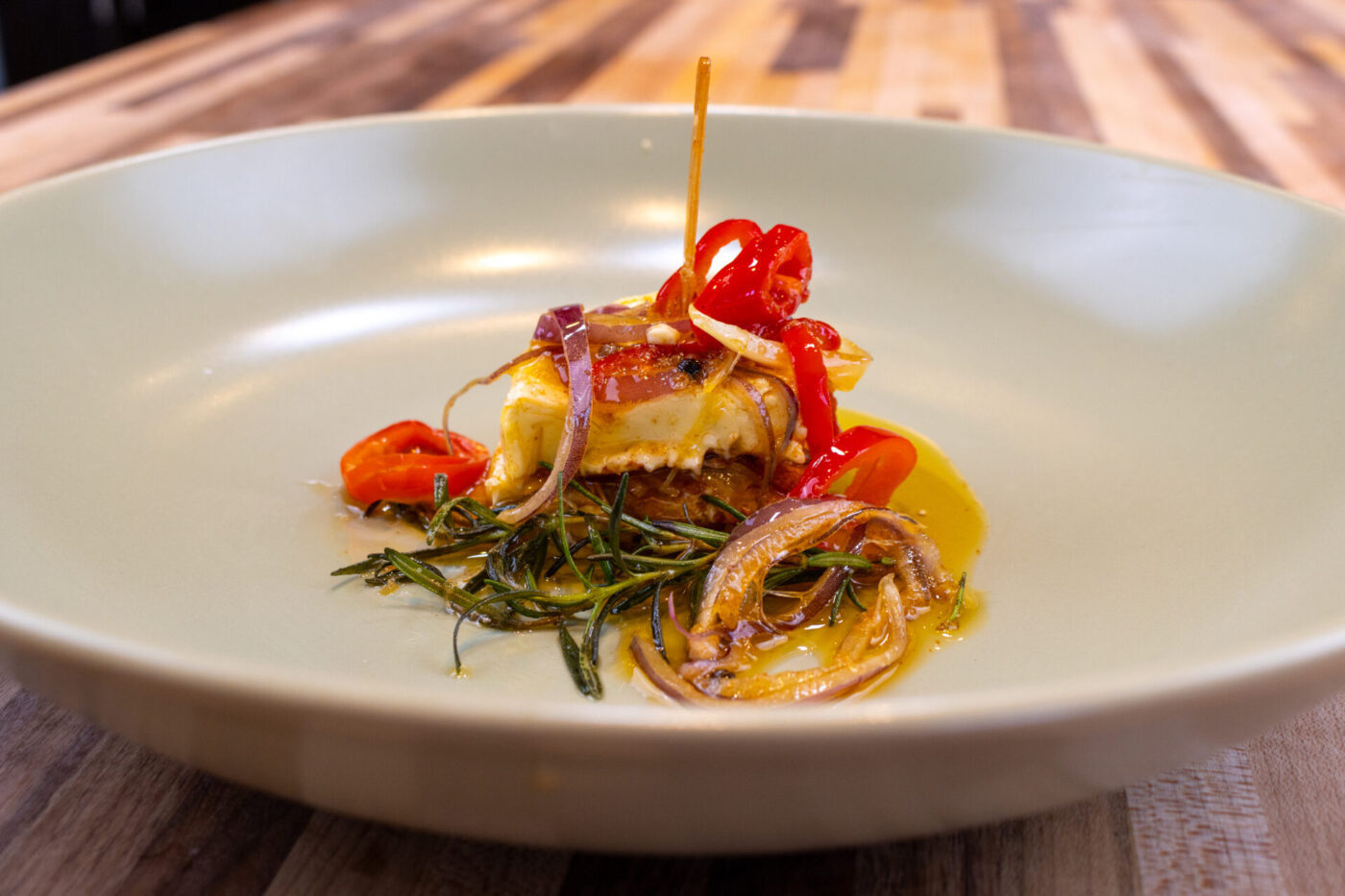
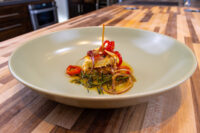
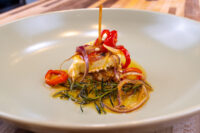
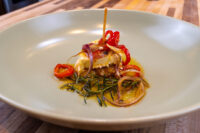
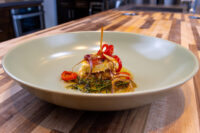
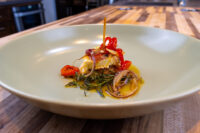
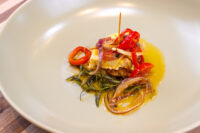
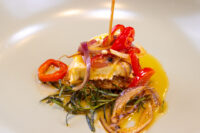
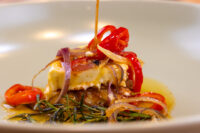
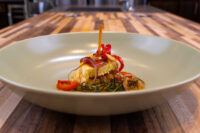
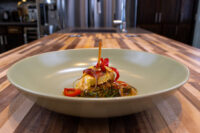
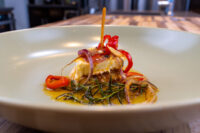
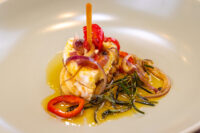
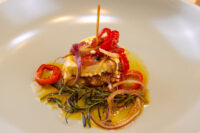
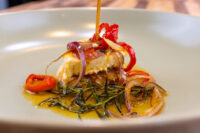
Plate on a plate with part of the onion and other ingredients from the jar.
5.2.
Gently drizzle with a little bit of oil from the jar
5.3.
Serve with bread of any kind and with wine (preferably dry white wine).
Place this meal on single plates or serve in martini glasses.
Popular questions
How long do I need to let the Pickled Brie Cheese rest in the refrigerator before serving?
Based on my experience, to let the flavor fully develop, you should let the Pickled Brie Cheese rest in the refrigerator for at least one week, but preferably two weeks. The pickling oil, garlic, and onion need this time to properly infuse the cheese and soften its texture, giving you that authentic Hermelín style experience. However, if you are in a rush and cannot wait a full week, you can let it rest in your refrigerator for at least overnight, though the flavors will be much milder.
Share
Click on the icons below to share "Title of the item to share"