
Main Course Recipes
Herb-crusted Pork Tenderloin
4 servings
When I prepare this Herb-crusted Pork Tenderloin, I always think about how anything coated with a beautiful green herb crust looks fresh and very appetizing. It is a great way to elevate multiple kinds of proteins because the fresh herbs nicely support the meat's flavor. In this recipe, I will show you how to use extra virgin olive oil, whole grain mustard, and fresh herbs to create a masterpiece. We will pan sear the pork tenderloin first, then apply mayonnaise and breadcrumbs to build the herb crust, and finally finish in the oven. Using a food thermometer ensures the internal temperature is perfectly safe and juicy. This Herb-crusted Pork Tenderloin recipe is a staple in my kitchen, and I know you will love the combination of the pan sear and the oven finish. Read More
Main Course Recipes
Before You Start
Let’s talk about important parts of the recipe before you start…
Welcome to My Herb-crusted Pork Tenderloin Recipe
Hello everyone, I am so excited to share my Herb-crusted Pork Tenderloin with you today. As a chef, I believe that a perfect herb crust can transform a simple pork tenderloin into a restaurant-quality meal. By utilizing extra virgin olive oil and whole grain mustard in our marinade, we build a spectacular flavor foundation. Then, we blend fresh herbs and breadcrumbs to create a vibrant green coating. We will pan sear the meat to lock in those juices, and finish in the oven for that perfect internal temperature. Always remember to use your food thermometer! Let’s dive into making this wonderful Herb-crusted Pork Tenderloin together.
1. Preparing the Marinade with Extra Virgin Olive Oil and Whole Grain Mustard
The first critical step in my Herb-crusted Pork Tenderloin recipe is creating a robust marinade. I like to start by placing extra virgin olive oil, the juice from one large lemon, two cloves of grated garlic, whole grain mustard, salt, and pepper into a medium mixing bowl. It is essential to thoroughly stir this with a whisk until it is fully combined. This marinade is what gives the pork tenderloin its deep, foundational flavor before we even think about the herb crust. Letting the pork tenderloin sit in this extra virgin olive oil and whole grain mustard blend for about 30 minutes at room temperature, or overnight in the refrigerator, ensures the meat absorbs all those beautiful flavors.
2. Blending the Perfect Herb Crust with Fresh Herbs and Breadcrumbs
Creating the herb crust is one of my favorite parts of this Herb-crusted Pork Tenderloin recipe. I use a kitchen food processor to first blend regular breadcrumbs on high speed until they reach a fine texture. Then, I add my fresh herbs—I love using a combination like sage, rosemary, parsley, chives, and oregano. I process the fresh herbs, breadcrumbs, salt, and pepper on high speed until I reach a nice, fine, green-looking herb crust. If the color of the herb crust is not bright green after processing, a modification you can add that is not strictly part of the base recipe is to simply add more fresh herbs and process again. This ensures your pork tenderloin will look absolutely stunning.
3. The Crucial Pan Sear Step
Before we apply the herb crust to the pork tenderloin, we must pan sear the meat. I preheat a large sauté pan or stir fry pan on medium-high heat with frying oil. I briefly pan sear the pork tenderloin to reach a nice sear, which usually takes about one to two minutes on each side. This pan sear step is vital because it creates a beautiful texture and locks in the moisture before we move on. After the pan sear, I remove the pork tenderloin from the pan and let it partially cool on a cutting board for about ten minutes so it is ready for the herb crust.
4. Applying the Herb Crust to the Pork Tenderloin
Once the pork tenderloin has cooled after the pan sear, it is time to build our herb crust. I brush each piece of the pork tenderloin from all sides with mayonnaise using a silicone brush. The mayonnaise acts as the perfect binder for our breadcrumbs and fresh herbs. Immediately after brushing, I gently place the pork tenderloin into the mixing bowl containing our green herb crust mixture and cover it from all sides. The best technique is to try to gently roll it in the mixture. Then, I place the beautifully coated pork tenderloin onto a baking sheet lined with parchment paper.
5. How to Finish in the Oven and Monitor Internal Temperature
The final cooking stage for our Herb-crusted Pork Tenderloin is to finish in the oven. I place the baking sheet with the crusted pork tenderloin into an oven preheated to 350 degrees Fahrenheit. It will finish in the oven until fully cooked, which takes about ten to fifteen minutes. For the best results, I turn the meat to the opposite side after the first five to seven minutes. To ensure safety and perfection, I always check with a food thermometer to make sure I have reached the desired internal temperature. The minimum recommended safe serving temperature for pork is 145 degrees Fahrenheit. Using a food thermometer takes out all the guesswork!
Herb-crusted Pork Tenderloin
Ingredients:
Click any ingredient to learn moreTenderloin
4 TBSP of Extra Virgin Olive Oil
2 cloves of garlic
2 TBSP of wholegrain mustard
½ TSP of
½ TSP of pepper
2 PCS of pork tenderloin - whole ((about 2 LB) )
Herb crust:
½ cup of breadcrumbs (regular)
¾ cup of fresh herbs of your choice (*)
¼ TSP of
¼ TSP of pepper
6 TBSP of mayonnaise (adjust if needed)
* Use whole herbs that you have available (remove the stem from herbs with hard stems, such as rosemary. Other preparation, such as chopping, is not necessary since the herbs will be processed in a kitchen food processor. I love the combination of sage, rosemary, parsley, chives, and oregano.
Tools:
Click any tool to learn more1x Chef’s knife
1x Lemon Squeezer (Optional)
1x Whisks
1x Plastic Wrap
1x Tongs
Nutrition per 1 Serving:(recipe split into 4 servings)
EstimatedCalories 294
Protein 1.7 g
Fat 28.4 g
Saturated fat 4.0 g
Carbohydrate 9.1 g
Sugars 1.0 g
Fiber 0.8 g
Sodium 168 mg
Cholesterol 0 mg
Estimated. Worked out from the ingredients above using the United States Department of Agriculture’s FoodData Central reference data. An estimate, not a measurement — brands, sizes and how much of a marinade actually ends up on the plate all move it.
Directions:
1.Marinade:
1.1.
Place into a medium mixing bowl:
4 TBSP of Extra Virgin Olive Oil
Juice from 1 large lemon
2 cloves of garlic – grated
2 TBSP of whole grain mustard
½ TSP of salt
½ TSP of pepper
And thoroughly stir with a whisk until fully combined.
1.2.
1.3.
1.2. Leave in a mixing bowl and place aside for a later step.
2.Meat Preparation:
2.1.
Make sure that the meat is properly rinsed under cold water and the unwanted parts are removed if needed – pork tenderloins usually have a side membrane that needs to be removed.
2.2.
Cut each tenderloin into halves so you end up with 4 even portions of meat.
2.3.
Add the tenderloins into the mixing bowl with the marinade and thoroughly stir with a spatula until all 4 pieces are evenly coated.
2.4.
Cover with plastic wrap and marinate at room temperature for about 30 minutes (or overnight in the refrigerator with the last 30 – 60 minutes at room temperature).
3.Herb Curst Preparation:
3.1.
Place into a kitchen processor:
½ cup of breadcrumbs
And process on high speed until you reach a fine texture (about 1 minute).
3.2.
Then add:
¾ cup of fresh herbs of your choice
¼ TSP of salt
¼ TSP of pepper
And process on high speed until you reach a nice fine green looking breadcrumb – herb crust.
Note: If color of the herb crust is not bright green after processing, simply add more fresh herbs and process again.
3.3.
Place into a mixing bowl for the later step.
4.Set oven to preheat at 350°F.
5.Pan Sear the Tenderloin:
5.1.
Preheat the fry pan on medium-high heat with 2 TBSP of frying oil.
5.2.
Briefly sear to reach a nice sear (about 1 – 2 minutes on each side).
5.3.
Remove from the pan and place onto a cutting board to let it partially cooled for about 10 minutes.
6.Herb-crust the Tenderloin:
6.1.
Brush each tenderloin with mayonnaise from all sides using a silicone brush.
6.2.
Then immediately place into the mixing bowl with herb crust and cover from all sides (be gentle, best is to try to roll it in).
6.3.
Place on the baking sheet with a parchment paper and continue until all 4 pieces are crusted.
7.Finish in the Oven:
7.1.
Place the baking sheet with herb-crusted tenderloins into a preheated oven until fully cooked (about 10 – 15 minutes).*
7.2.
For best results, turn to the opposite side after about the first 5 – 7 minutes.
7.3.
Remove the tenderloin from the baking sheet and let rest on a cutting board for about 2 minutes before cutting and plating.
8.Plating and Serving:
8.1.
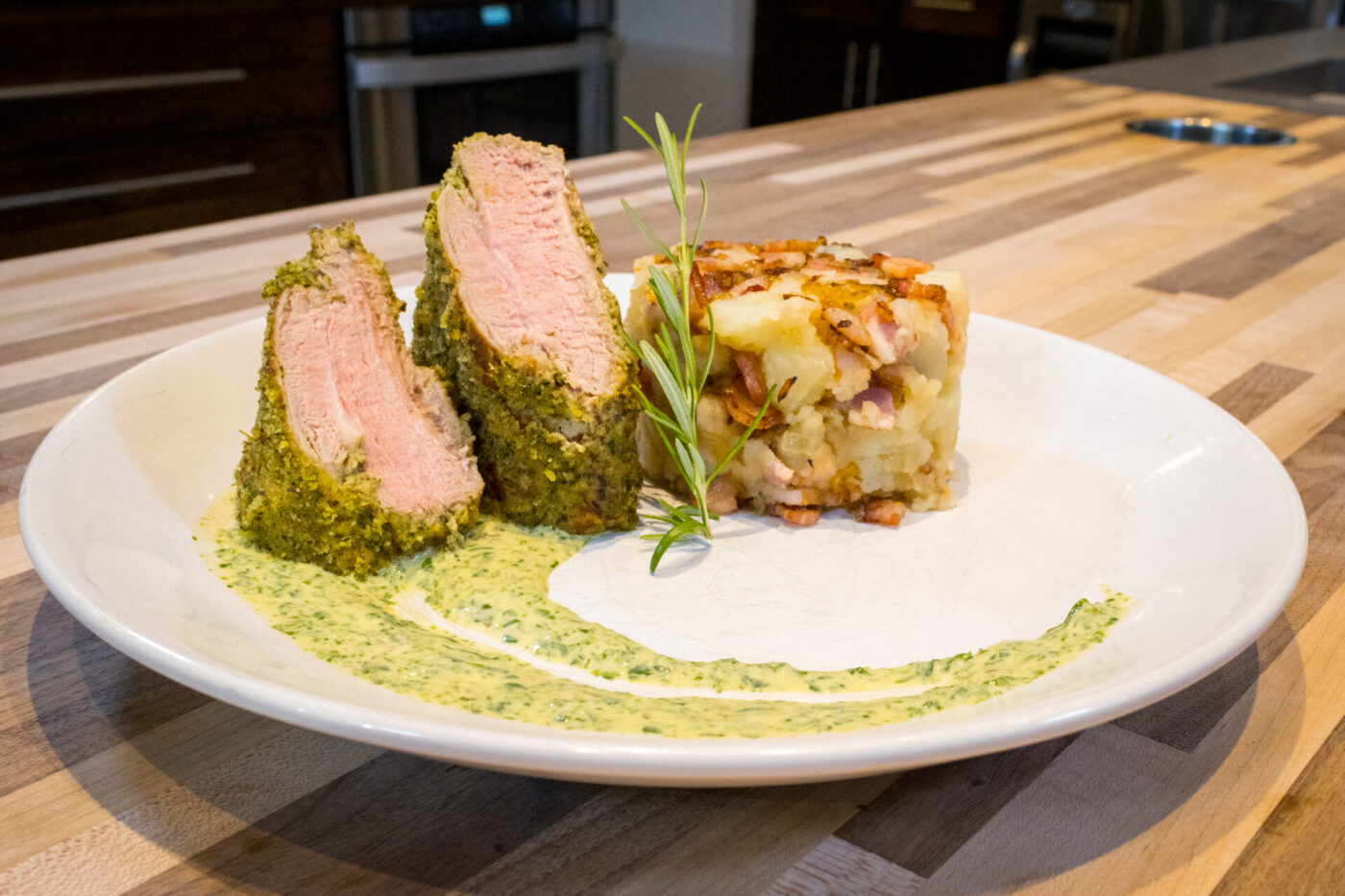
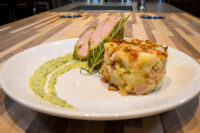
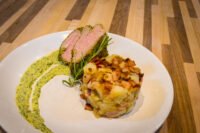
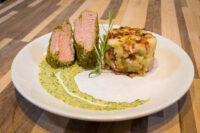
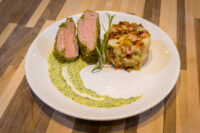
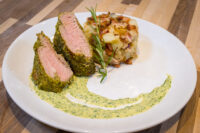
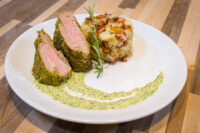
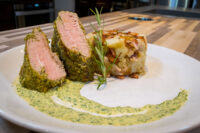
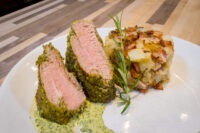
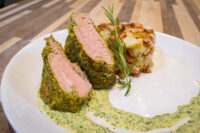
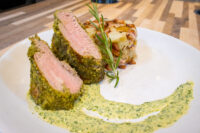
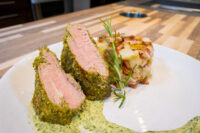
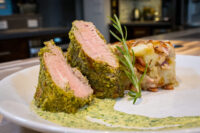
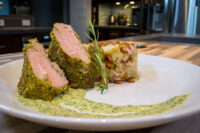
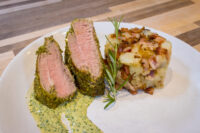
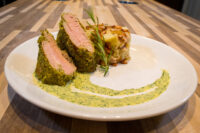
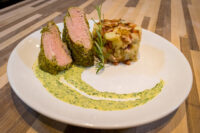
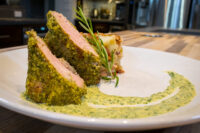
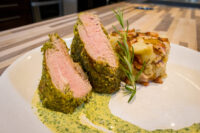
Cut each piece diagonally to create a “tower effect” or slice it for serving:
8.1.1.
Tower Effect:
8.1.1.1.
First cut each side to make sure that your towers will stand (the ends are perfect for immediate tasting since they will be not served 😊).
8.1.1.2.
Then cut diagonally and try to make sure that one part is shorter.
8.1.1.3.
Place on the plate right next to each other on the plate.
8.1.2.
Slice it:
8.1.2.1.
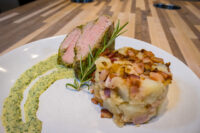
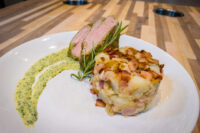
Serve sliced into about 7 – 9 slices.
8.2.
Serve with creamy spinach sauce and rustic crushed potatoes with bacon and onion, or creamy mashed potatoes.
Creamy spinach sauce recipe here.
Crushed potatoes with bacon and onion recipe here.
Herb-Crusted Pork Tenderloin: A Symphony of Flavors
Read moreForget everything you thought you knew about pork tenderloin. This Herb-Crusted Pork Tenderloin recipe, inspired by Czech cuisine, is about to redefine your weeknight dinner game. It’s a dish that’s as visually stunning as it is delicious, perfect for impressing guests or simply treating yourself to a meal that tastes like it came from a gourmet restaurant.
What makes this Herb-Crusted Pork Tenderloin so special? It’s all about the layers of flavor. We start with a vibrant marinade that infuses the tenderloin with a zesty punch. Then, we encrust the meat in a fragrant blend of fresh herbs and breadcrumbs, creating a crispy, flavorful exterior that gives way to a juicy, tender interior.
Let’s break down the magic behind this Herb-Crusted Pork Tenderloin.
The Marinade: A Zesty Foundation
The marinade is where the flavor journey begins. A simple yet powerful blend of extra virgin olive oil, lemon juice, garlic, wholegrain mustard, salt, and pepper creates a symphony of zesty, savory notes that penetrate deep into the pork tenderloin. This marinade not only adds flavor but also helps to tenderize the meat, ensuring a melt-in-your-mouth experience.
The Herb Crust: A Symphony of Freshness
The herb crust is the star of the show. A medley of fresh herbs like sage, rosemary, parsley, chives, and oregano are blended with breadcrumbs to create a vibrant green coating that bursts with flavor. This crust not only adds a visual appeal but also infuses the pork tenderloin with an aromatic herb essence that elevates the dish to a whole new level.
The Cooking Process: A Balancing Act
The cooking process is crucial to achieving the perfect Herb-Crusted Pork Tenderloin. We start by searing the tenderloin in a hot pan to lock in the juices and create a beautiful crust. Then, we finish it in the oven to ensure that it’s cooked through evenly. The result is a tenderloin that’s juicy on the inside and crispy on the outside, with a flavor that’s both delicate and robust.
Plating: The Final Flourish
The way you plate your Herb-Crusted Pork Tenderloin can elevate the dining experience. Whether you choose to create a “tower effect” by cutting the tenderloin diagonally or slice it for serving, the presentation should be as enticing as the dish itself.
This Herb-Crusted Pork Tenderloin is a culinary masterpiece that’s surprisingly easy to make. With a little bit of effort, you can create a dish that’s worthy of a Michelin-star restaurant. So, why not impress your friends and family with this show-stopping recipe? They’ll be raving about your culinary skills for weeks to come.
Read less
Kitchen Guide
Pork and Veal (steaks, chops, roast)
The USDA minimum safe internal temperature is 145°F.
Popular serving temperatures:
- 120 – 130°F – Rare
- 130 – 135°F – Medium Rare
- 135 – 145°F – Medium (most popular, especially by chefs)
- 145 – 155°F – Medium Well
- 155°F and more – Well Done
Popular questions
How do I know when my Herb-crusted Pork Tenderloin is fully cooked and safe to eat?
As I always say when preparing this Herb-crusted Pork Tenderloin, the most reliable method is to finish in the oven and use a food thermometer to check the internal temperature. After the pan sear and applying the fresh herbs and breadcrumbs to make the herb crust, the pork tenderloin goes into the oven. You should insert your food thermometer into the thickest part of the meat. The USDA minimum safe internal temperature for pork tenderloin is 145 degrees Fahrenheit, which will give you a beautiful medium cook. Whether you marinated it in extra virgin olive oil and whole grain mustard or not, hitting that perfect internal temperature is key to a juicy result.
Share
Click on the icons below to share "Title of the item to share"