
Soup Recipes

French Onion Soup

4 - 6 servings

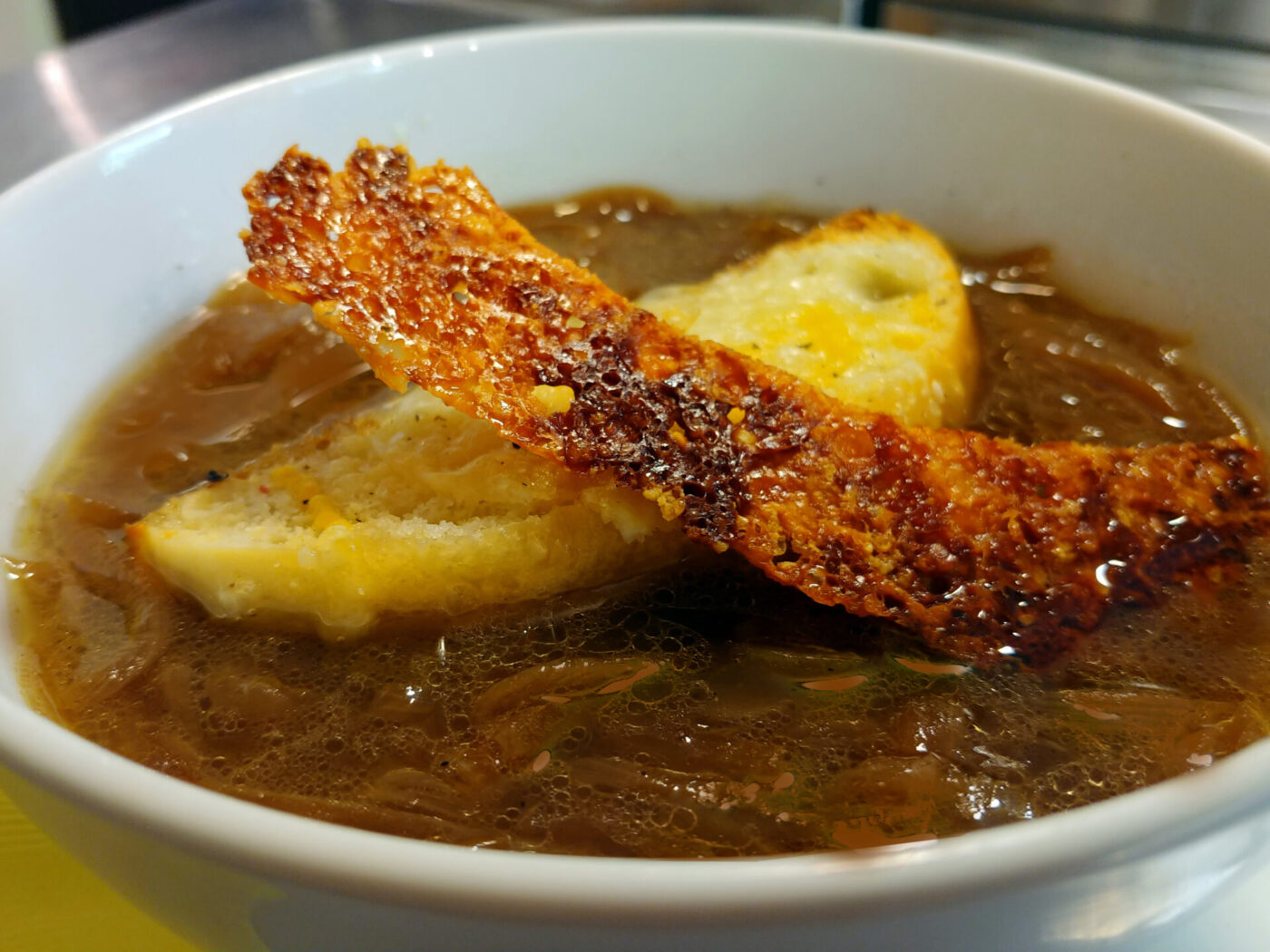
Experience the ultimate comfort food with my French Onion Soup, a beloved restaurant staple known for its rich beef broth, caramelized yellow onions, and a touch of red wine. This easy-to-follow recipe is perfect for beginners and seasoned cooks alike, delivering a savory, simmering masterpiece topped with melty gruyere cheese and crispy large croutons. Read More

☆☆☆☆☆0x(write a review)👁510x
Published: 3.17.2026
45 min.
45 min.
1/5
268 calories Per Serving (of 4) Read More

Before You Start

Let’s talk about important parts of the recipe before you start…

Jump to Recipe

Welcome to My Kitchen: The Secret to the Perfect French Onion Soup

Hello! I am Tom the Chef, and today I am sharing one of my all-time favorites: French Onion Soup. This soup stands as one of the most beloved choices in restaurants across the USA, renowned for its simplicity and delicious taste. It is incredibly easy to prepare, making it the perfect option for those who have not ventured much into the world of soups. Whether you are a beginner looking to dip your toes into homemade stocks or a pro looking for a reliable classic, this French Onion Soup delivers every time. We will be using yellow onions, unsalted butter, and a splash of red wine to create a deep, complex flavor that warms the soul. Let us get to simmering and make some magic with this French Onion Soup!

Selecting the Right Ingredients for French Onion Soup

To start my French Onion Soup, I focus on the foundation. I use five yellow onions, though white onions work too, to provide that essential sweetness. For the fat, I use a combination of a quarter cup of frying oil and two tablespoons of unsalted butter. It is important to note that my recipe assumes you are working with a sodium-free beef broth. If your beef broth has salt, you must adjust the one teaspoon of salt accordingly. This ensures the French Onion Soup remains perfectly balanced and not overly salty after the simmering process.

The Art of Sautéing Onions

The first active step in my French Onion Soup involves high heat. I preheat a medium pot with the frying oil and add the sliced yellow onions. I sauté onions with occasional stirring for about four to five minutes until they are glossy. This initial stage is crucial for softening the onions and preparing them to absorb the flavors of the red wine and beef broth that follow in the later stages of the French Onion Soup preparation.

Deglazing and Reducing with Red Wine

Once the yellow onions are glossy, I lower the heat to medium-high to introduce the wine element to the French Onion Soup. I add the unsalted butter and one cup of red wine. The goal here is constant stirring until the butter dissolves and the red wine reduces by about half, which usually takes two to three minutes. This reduction concentrates the sugars and acidity of the wine, providing that signature depth of flavor that makes French Onion Soup so iconic and savory.

Establishing the Simmering Base

After the red wine has reduced, I move into the finishing phase of the French Onion Soup. I add four cups of beef broth, two cups of water, two bay leaves, salt, and ground pepper. I briefly stir and cover with a lid, bringing the mixture to a simmer at approximately 195 degrees Fahrenheit. Keeping the French Onion Soup at a simmering state rather than a rolling boil allows the flavors of the bay leaves and beef broth to meld gently without breaking down the structure of the onions too quickly.

The Long Simmer for Maximum Flavor

Patience is key for a great French Onion Soup. I lower the heat to medium and let it cook for thirty minutes, stirring occasionally. During this time, the liquid may evaporate. If it evaporates more than it should, I add a bit more water or beef broth and cook for an additional three minutes. This ensures the French Onion Soup maintains the perfect consistency and volume before I remove the bay leaves and do a final taste test for seasoning.

Perfect Plating with Gruyere Cheese and Large Croutons

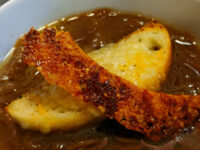
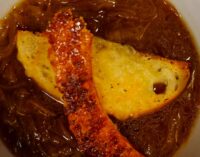
The final touch for my French Onion Soup is the presentation. I serve it with large croutons, either directly in the soup or on the side. I love to sprinkle gruyere cheese or cheddar cheese on top. While the recipe calls for these specific toppings, as a modification that is not part of the original recipe, you could also use a slice of toasted sourdough if you do not have a fresh baguette. However, for the authentic experience, stick to the large croutons with gruyere cheese to complete your French Onion Soup.

Popular questions

Can I make this French Onion Soup vegetarian?

Yes, you can! To make a vegetarian version of this French Onion Soup, simply substitute the four cups of beef broth with a high-quality vegetable broth as mentioned in my ingredients list. All other steps, including sautéing the yellow onions and reducing the red wine, remain exactly the same to ensure you get that rich, savory French Onion Soup taste without the meat products.

French Onion Soup

4 - 6 servingsPublished: 3.17.2026 ☆☆☆☆☆0x(write a review)👁510x
45 min.
45 min.
1/5
🖨Print

Ingredients:

Click any ingredient to learn more
Soup:
¼ cup of frying oil (any kind) (adjust if needed)
5 yellow onions (or white onion)
2 TBSP of unsalted butter (or salted butter)
4 cups of beef broth/stock (or vegetable broth)
2 cups of water
2 bay leaves - fresh or dry
1 TSP of salt (*)
½ TSP of pepper - ideally freshly ground
Optional topping:
Optionally: about ½ of the recipe large croutons with gruyere cheese (store-bought or recipe here, Optionally, substitute with slices of fresh baguette.)
Optionally: cheese of your choice - shredded (Gruyère, Cheddar, or any other shredded cheese you have available.)

* This recipe assumes you are working with a sodium-free broth (a broth with no salt added). If you are working with a broth that includes sodium, adjust the amount of salt based on your preference.

Nutrition per 1 Serving:(recipe split into 4 servings)

Estimated
Calories 268 Protein 6.4 g Fat 19.5 g Saturated fat 4.6 g Carbohydrate 16.3 g Sugars 7.1 g Fiber 2.5 g Sodium 884 mg Cholesterol 14 mg
Estimated. Worked out from the ingredients above using the United States Department of Agriculture’s FoodData Central reference data. An estimate, not a measurement — brands, sizes and how much of a marinade actually ends up on the plate all move it.
Directions:

1.Sauté Onions:

1.1.
Preheat a medium pot on high heat with ¼ cup of frying oil and add:

5 medium onions – sliced

Sauté with occasional stirring until glossy (about 4 – 5 minutes).

2.Wine Element:

2.1.
Lower the heat to medium-high and add:
2 TBSP butter
1 cup of red wine

Cook with constant stirring until the butter dissolves and about half of the wine reduces (about 2 -3 minutes).

3.Finishing Phase:

3.1.
Add:
4 cups of beef broth
2 cups of water
2 bay leaves
1 TSP of salt
½ TSP of ground pepper

Briefly stir and cover with a lid. Bring it to a simmer (about 195°F) with occasional stirring.

3.2.

Lower the heat to medium and cook for 30 minutes with occasional stirring.

3.3.

Optionally, add water or broth if the liquid evaporates more than it should and then cook for an additional 3 minutes.

3.4.

Remove the bay leaves, taste, and add salt and/or pepper if needed.

4.Plating & Serving:

4.1.

Serve with large cheesy croutons (in the soup or on the side).

4.2.

Sprinkle with gruyere or cheddar cheese.

French Onion Soup
French Onion SoupFrench Onion SoupFrench Onion SoupFrench Onion SoupFrench Onion Soup

Cook to safe temperatures and check for allergens. Nutrition values and results are estimates and may vary.

As an Amazon Associate I earn from qualifying purchases. Some of the ingredient and tool links above are affiliate links: if you buy through them the price is the same for you, and it helps keep these recipes free. #ad

Show moreShow less of the Disclaimer

Disclaimer

Last updated October 27, 2026

GENERAL INFORMATION

The content provided by Checked Solutions, LLC (doing business as Tom the Chef) ("we," "us," or "our") on https://www.tomthechef.com (the "Site") and through our related services — including recipes, articles, columns, live and recorded cooking classes, and other materials — is for general informational and educational purposes only and reflects the personal opinions and experience of the author. All information is provided in good faith; however, we make no representation or warranty of any kind, express or implied, regarding the accuracy, adequacy, validity, reliability, availability, or completeness of any information. Your use of the Site and your reliance on any information is solely at your own risk.

NO PROFESSIONAL ADVICE

Our content is not intended to provide, and does not constitute, professional dietary, medical, nutritional, or legal advice. Before making any health- or diet-related decision based on our content, consult a qualified medical or nutritional professional.

COOKING, FOOD SAFETY, AND YOUR RESPONSIBILITY

You are solely responsible for evaluating our recipes and instructions and using your own judgment before following them. To the fullest extent permitted by law, we are not responsible for any outcome or consequence resulting from your use of the Site or our content, including but not limited to:

  • Food Safety: any health risk related to food handling, food quality, cross-contamination, or failure to follow USDA recommendations (including minimum safe cooking temperatures).
  • Preparation Safety: the safe handling of cooking equipment, hot surfaces, sharp knives, or the suitability of tools for any task.
  • Allergies and Dietary Restrictions: any allergic reaction or health issue arising from ingredients in our recipes. You are responsible for ensuring that all ingredients and methods are safe and appropriate for your dietary restrictions, allergies, and health.
  • Recipe Outcomes: the final look, taste, yield, or success of a recipe, which may vary based on ingredients, equipment, oven temperatures, altitude, humidity, and skill.
  • Ingredients and Equipment: the sourcing, quality, and condition of ingredients, tools, or equipment.
  • Nutritional Information: the accuracy of any nutritional data, which is an estimate provided as a courtesy and should not be relied on as a guarantee.
  • Errors and Omissions: any errors, typos, or unclear directions in our content.

EXTERNAL LINKS

The Site may contain links to third-party websites or content, including in banners or other advertising. We do not investigate, monitor, or guarantee the accuracy or reliability of third-party sites. We are not responsible for them or for any transaction between you and a third party. Accessing third-party sites is at your own risk.

TESTIMONIALS, REVIEWS, AND COMMENTS

The Site may contain testimonials, reviews, and comments from users. These reflect the personal experiences and opinions of individual users and may not be representative of all users; your individual results may vary. Testimonials and reviews may be shortened for brevity or corrected for grammar. The views expressed belong solely to the individual. They are not intended as claims that our products or services diagnose, treat, cure, or prevent any disease or medical condition.

CONTENT OWNERSHIP

All content published by Tom the Chef is the intellectual property of Checked Solutions, LLC and its author, unless otherwise noted, and may not be used except as permitted in our Terms of Use.

AFFILIATE DISCLOSURE

As an Amazon Associate, we earn from qualifying purchases. Some ingredient and tool links on the Site are affiliate links. If you buy through them, the price is the same for you, and it helps support our content. We only recommend products we genuinely use and trust.

LIMITATION OF LIABILITY

Under no circumstances shall Checked Solutions, LLC or Tom the Chef have any liability to you for any loss or damage of any kind incurred as a result of the use of the Site or reliance on any information provided. This Disclaimer forms part of, and is subject to, our Terms of Use.