
Main Course Recipes
Dutch Schnitzel (Holandský Řízek)
About 4 – 5 servings
Dutch Schnitzel (Holandský Řízek) is the one of the most popular and delicious Czech & Slovak meals despite its’ name. The reason this dish is referred to as “Dutch” is because gouda cheese originated in Holland. Dutch Schnitzel, or “Holandský řízek” in Czech, is a combination of delicious pork meat with... Read More
Main Course Recipes
Before You Start
Let’s talk about important parts of the recipe before you start…
Introduction to Dutch Schnitzel (Holandský Řízek)
I find that Dutch Schnitzel (Holandský Řízek) is one of the most popular and delicious Czech & Slovak meals despite its name. The reason I refer to this dish as “Dutch” is because gouda cheese originated in Holland. Dutch Schnitzel (Holandský Řízek), or “Holandský řízek” in Czech, is a combination of delicious pork meat with shredded cheese and other savory ingredients. I usually serve this comfort food with creamy mashed potatoes, oven-roasted potato wedges, or tartar sauce.
Preparing the Dutch Schnitzel (Holandský Řízek) “Dough” Ingredients
To begin making Dutch Schnitzel (Holandský Řízek), I create what I call the “dough.” This is the core foundation of the recipe, consisting of 1 LB of ground pork sausage. While I prefer using plain pork sausage, I find that Italian sausage works too if you prefer that flavor profile. To this meat base, I add 2 cups of shredded cheese. I believe Gouda or any kind of yellow cheese such as cheddar or a Mexican mixture would be the best choice, but it will work great with any kind of shredded cheese. I also incorporate 2 large eggs, 2 tablespoons of heavy cream, and 2 cloves of grated garlic to bind and flavor the mixture. I season this savory blend with 2 tablespoons of dried parsley (or fresh if preferred), ½ teaspoon of salt, and ½ teaspoon of pepper. I stir these ingredients thoroughly in a medium mixing bowl until they are fully combined to ensure every bite of the Dutch Schnitzel (Holandský Řízek) is packed with flavor.
Resting the Mixture for Texture
Once the ground pork sausage and cheese mixture is fully combined, I do not rush immediately to cooking. I cover the bowl with food wrap and let it rest in the refrigerator. I recommend leaving it for 15 to 30 minutes, or optionally longer. This resting period allows the flavors to meld and the mixture to firm up slightly, which I find helpful for handling. After this step, I end up with about 30 OZ of Dutch Schnitzel (Holandský Řízek) “dough” ready for shaping. This patience ensures that the texture is just right before moving on to the breading station.
The Garlic-Infused Breading Station
I prepare a specific breading station to coat the patties. This involves three separate vessels. In the first plate, I place ½ cup of all-purpose flour. The second vessel is a medium mixing bowl where I prepare a unique egg mixture. I whisk together 2 eggs, ½ cup of milk, and importantly, 2 cloves of grated garlic. I whisk this for about 1 minute until combined; the garlic here adds an extra layer of savory depth to the Dutch Schnitzel (Holandský Řízek). In the third mixing bowl, I place 1 ½ cups of breadcrumbs. I prefer Panko or breadcrumbs from light bread for the best texture. This setup ensures that when I coat the meat, the breading adheres perfectly for deep frying, shallow frying, or air frying.
Forming Uniform Portions
When I form the Dutch Schnitzel (Holandský Řízek), I do it one-by-one, always completing one before starting the next. For perfect uniformity and good workflow, I believe it is best to scoop the dough with a disher. I find the best disher sizes are 5.33 FL OZ (yielding about 4–5 portions) or 4 FL OZ (yielding about 6–7 portions). I scoop the dough onto the plate with flour and lightly press it with my hands to partially form it. Then, I turn and evenly press it again to a final thickness of anywhere between 3/4” to 1” based on preference. This technique ensures even cooking times. I ensure the patty is fully coated with flour before moving it to the egg mixture and finally the breadcrumbs. If needed, I adjust the final shape by lightly pressing after the breading is complete.
Versatile Frying Methods
I offer three methods to cook this dish: deep frying, shallow frying, or air frying. For deep frying, I preheat ghee or oil to 320°F and fry the patties immersed until they reach a nice golden color, usually 4–8 minutes per side. For shallow frying, I use a skillet with ¼ to ½ inch of oil on medium heat, cooking for 6–9 minutes per side. If I choose air frying, I preheat the fryer to 370°F, drizzle the basket and the schnitzels with oil, and cook for about 7–8 minutes per side. Regardless of the method, I always let the excess oil drip off on a cooling rack for about one minute after cooking.
Food Safety and Serving Temperature
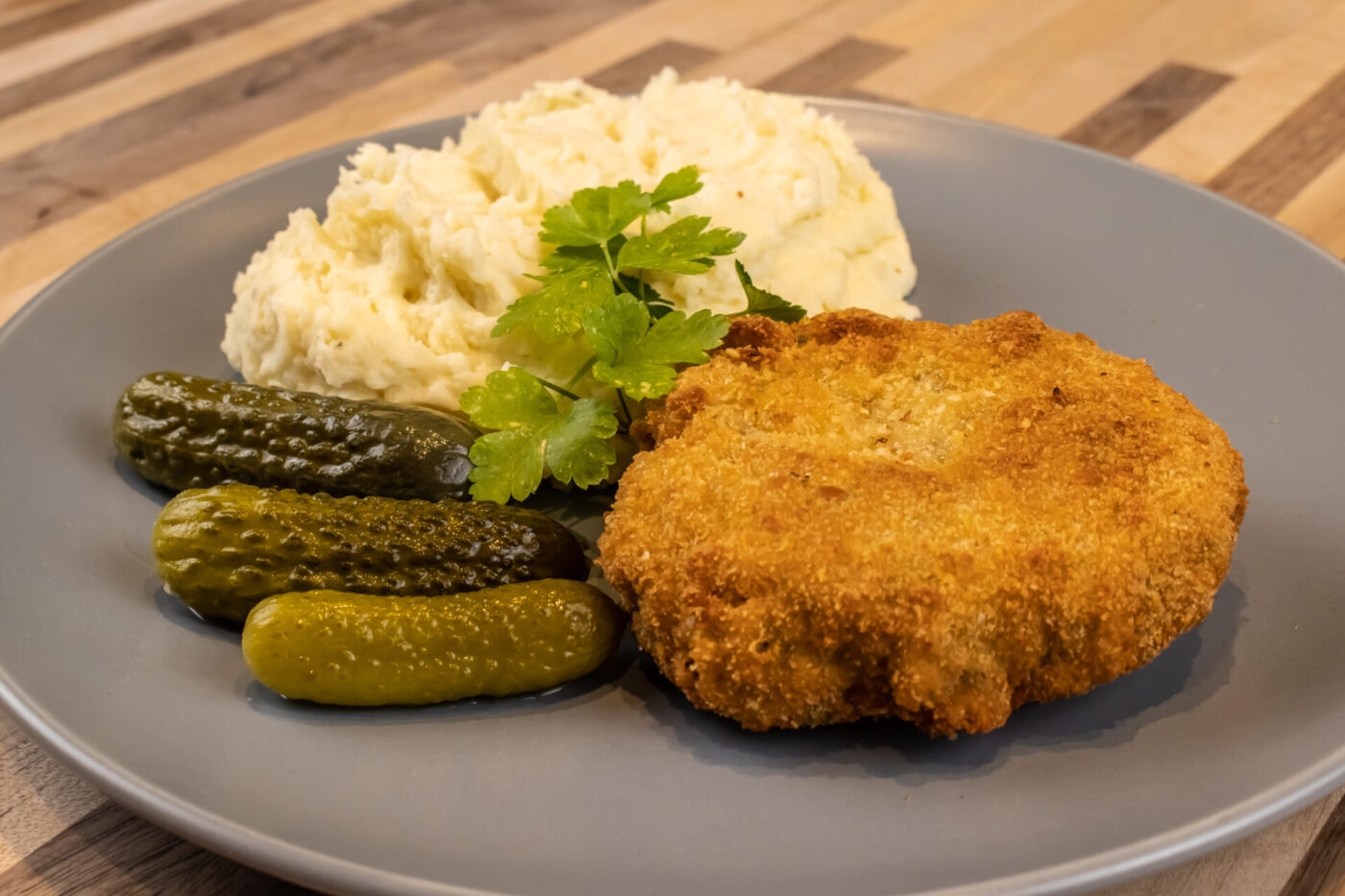
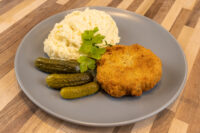
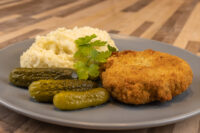
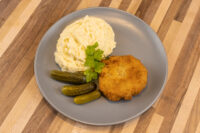
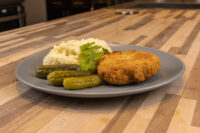
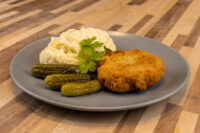
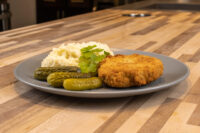
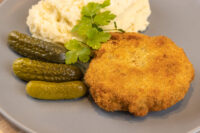
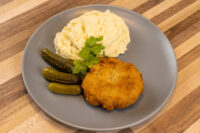
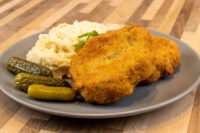
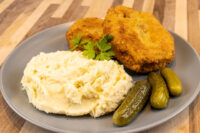
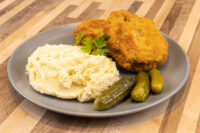
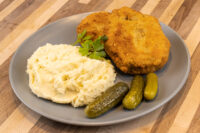
Because this recipe uses ground pork sausage, safety is paramount. I always check the internal temperature with a food thermometer (probe) to ensure the meat has reached the minimum recommended safe serving temperature of 160°F. This aligns with the USDA minimum safe internal temperature guidelines for ground meat. Once safe and golden brown, I plate the Dutch Schnitzel (Holandský Řízek), sprinkle it with salt and pepper, and serve it with dill pickles and mashed potatoes. I want to ensure the meal is not only delicious but safe for everyone to enjoy.
Dutch Schnitzel (Holandský Řízek)
Ingredients:
Click any ingredient to learn moreDutch schnitzel:
1 LB of plain pork sausage (preferably plain but Italian works too))
2 cups of cheese - shredded (*)
2 eggs
2 TBSP of heavy cream
2 cloves of garlic - peeled and grated (or pressed)
2 TBSP of parsley - dried (or 1/4 cup of fresh and chopped)
½ TSP of salt
½ TSP of pepper
Breading station:
½ cup of all-purpose flour (adjust if needed)
2 eggs (adjust if needed)
½ cup of milk (adjust if needed)
2 cloves of garlic - peeled and grated (or pressed) (adjust if needed)
1 ½ cups of breadcrumbs (regular) (adjust if needed, preferably Panko preferably breadcrumbs from light bread)
For frying:
(store-bought or recipe here, or frying oil)
Final touch:
pepper - ideally freshly ground
* Gouda or any kind of yellow cheese such as cheddar or a Mexican mixture would be the best choice, but it will work great with any kind of shredded cheese.
Tools:
Click any tool to learn more1x Chef’s knife
1x Plastic Wrap
2x Plate
1x Disher (large disher - referably 4 OZ FL OZ or 5.33 FL OZ, or scale)
1x French Whisk
1x Turner
Nutrition per 1 Serving:(recipe split into 4 servings)
EstimatedCalories 835
Protein 40.8 g
Fat 54.4 g
Saturated fat 23.4 g
Carbohydrate 43.9 g
Sugars 6.3 g
Fiber 2.1 g
Sodium 1484 mg
Cholesterol 325 mg
Estimated. Worked out from the ingredients above using the United States Department of Agriculture’s FoodData Central reference data. An estimate, not a measurement — brands, sizes and how much of a marinade actually ends up on the plate all move it.
Directions:
1.Dutch Schnitzel “Dough”:
1.1.
Place into a mixing bowl:
1 LB of ground pork sausage
2 cups of shredded cheese of your choice
2 large eggs
2 TBSP of heavy cream
2 cloves of garlic – grated
2 TBSP of dried parsley
½ TSP of salt
½ TSP of ground pepper
And thoroughly stir until fully combined.
1.2.
Cover with food wrap and let rest in the refrigerator for 15 – 30 minutes (optionally longer).
Note:
You will end up with about 30 OZ of Dutch Schnitzel “Dough”.
2.Breading Station:
2.1.
Place ½ cup of all-purpose flour on a plate.
2.2.
Prepare the egg mixture– place into a medium mixing bowl:
2 eggs
½ cup of milk
2 cloves of garlic – grated
Whisk together until combined (about 1 minute).
2.3.
Place 1 ½ cups of breadcrumbs into the second mixing bowl.
3.Form and Bread the Dutch Schnitzel:
Important:
- Form the Dutch Schnitzel one-by-one (always complete one before you start forming the next).
- Try to create even portions to get an even cooking time during the following steps.
- For perfect uniformity and good workflow, it is best to scoop the Dutch Schnitzel “dough” with a disher. The best disher sizes would be 5.33 FL OZ (about 4 – 5 portions, 6.2 OZ each) or 4 FL OZ (about 6 – 7 portions, 4.3 OZ each), but feel free to use other sizes of dishers as you wish.
3.1.
Scoop the dough and place it on a plate with flour.
3.2.
When on the plate with flour, lightly press with your hands (the Dutch Schnitzel will get partially formed).
3.3.
Then turn and evenly press again to a final thickness . The final thickness should be anywhere between 3/4” to 1” based on your preference.
Notes:
- After completing this step, the Dutch Schnitzel should be fully coated with flour.
- To ease further manipulation, you can optionally press the Dutch Schnitzel at this step only partially with the intent to finish pressing the final shape after breading is complete.
3.4.
Then place into an egg mixture and coat from both sides.
3.5.
Finally, coat in breadcrumbs and put aside on a plate for the following cooking.
Note:
After breading is completed, you can optionally adjust the final shape if needed by lightly pressing.
Tip:
Combine all the leftover breading ingredients, add about ¼ TSP of baking powder, and pan-fry on both sides until golden brown. This creates a perfect, crispy addition to many soups and helps prevent food waste. These fried breading pieces can also be frozen after cooking for later use.
4.Deep Fry or Shallow Fry or Air Fry:
Note:
Work in batches based on the size of your equipment – make sure that pockets are not touching.
4.1.
Deep fry:
Important:
Before you start, please read about the deep frying here.
4.1.1.
Set ghee or oil preheat to 320°F.
4.1.2.
Carefully place the Dutch Schnitzels into the fryer one-by-one.
4.1.3.
Fry immersed until a nice golden color is reached and the Dutch Schnitzel is fully cooked (usually about 4 – 8 minutes from each side based on the thickness you selected). *
4.1.4.
When done, remove to a cooling rack and let the excess oil drip off (about one minute).
4.2.
Shallow fry:
4.2.1.
Preheat a fry pan on medium heat with a layer of Ghee or frying oil (between ¼ to ½”).
4.2.2.
Shallow fry until a nice golden color is reached and the karbenátky are fully cooked (usually about 6 – 9 minutes from each side based on the thickness you selected). *
4.2.3.
When done, remove to a cooling rack and let the excessive oil drip off (about one minute).
4.3.
Air fry:
4.3.1.
Preheat your air fryer to 370°F.
4.3.2.
Drizzle the bottom of the air fryer basket with frying oil.
4.3.3.
Place Dutch Schnitzels in.
4.3.4.
Drizzle the top of the schnitzels with oil.
4.3.5.
Air fry until a nice golden color is reached (usually about 7 – 8 minutes from each side based on the thickness you selected).*
4.3.6.
Optionally, drizzle with more oil during air frying if needed.
5.Plating & Serving:
5.1.
Sprinkle with salt and pepper.
5.2.
Serve with mashed potatoes or fries and a few dill pickles.
Kitchen Guide
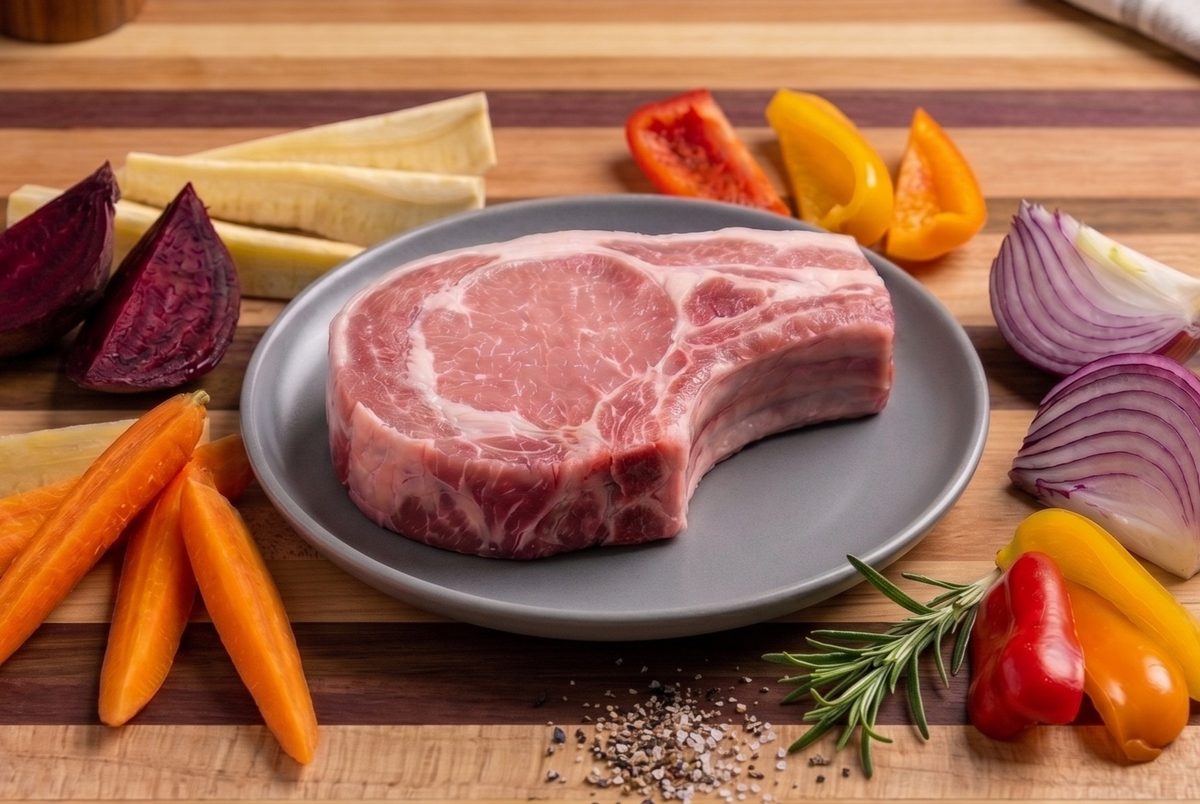
Pork and Veal (steaks, chops, roast)
The USDA minimum safe internal temperature is 145°F.
Popular serving temperatures:
- 120 – 130°F – Rare
- 130 – 135°F – Medium Rare
- 135 – 145°F – Medium (most popular, especially by chefs)
- 145 – 155°F – Medium Well
- 155°F and more – Well Done
Popular questions
Why is it called "Dutch" Schnitzel (Holandský Řízek) if it is a Czech dish?
The reason I refer to this dish as “Dutch” is that Gouda cheese, which is a key ingredient in the meat mixture, originated in Holland.
Share
Click on the icons below to share "Title of the item to share"