
Bread and Pastry Recipes
Bagel Recipe
12 bagels
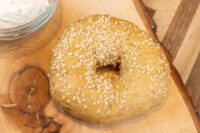
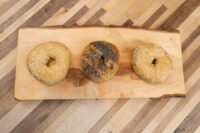
My Bagel Recipe will guide you through making 12 delicious bagels with a unique chewy texture and a signature hole in the middle. Using simple ingredients like bread flour, active dry yeasts, and barley malt syrup, you will discover the joy of creating a beloved staple right at home. From mixing the perfect dough ball to mastering the essential boiling bath and baking your creation on a silicone mat in a preheated oven, this step-by-step guide is all you need to bake bagels from scratch. You can even top them with sesame seeds! Read More
Bread and Pastry Recipes
Vegetarian
Before You Start
Let’s talk about important parts of the recipe before you start…
Welcome to My Bagel Recipe
I am so incredibly excited to share my beloved Bagel Recipe with you today. There is nothing quite like the unique chewy texture of a freshly baked bagel right out of a preheated oven. In this Bagel Recipe, I will walk you through the magical process of combining bread flour, active dry yeasts, and sweet barley malt syrup into the perfect dough ball. We will let it rest for the proper proofing time, give it a quick but necessary dip in a boiling bath, and place it on a silicone mat before baking. Whether you top yours with sesame seeds or leave them plain, I promise that this Bagel Recipe is truly straightforward and deeply rewarding to make at home.
Mixing and Kneading the Bagel Recipe Dough
When starting my Bagel Recipe, I always emphasize how crucial the initial mix is for developing the gluten. I use a kitchen mixer with a hook attachment to combine my bread flour, rye flour, active dry yeasts, granulated sugar, and salt. Then, I pour in warm water and barley malt syrup. I knead this on low speed until it is partially incorporated, and then I increase the speed to medium-high. I keep kneading until the dough is completely compact and stops sticking to the bowl. This takes about two to three minutes and is the absolute foundation for achieving our desired chewy texture.
Shaping the Perfect Dough Ball
After letting the dough rise until it is doubled in size, I place it on a non-floured countertop and separate it into 12 even pieces. The technique I use for every single dough ball in this Bagel Recipe is very specific. I place a bowl scraper at a slight angle against the bottom part of the dough, ensuring it touches my table. Keeping one hand on top, I push the scraper to move and stretch the dough. I repeat this, turning the dough 90 degrees each time, until a beautifully tight dough ball forms. You can optionally use the modification of rolling the dough between two hands to form the ball, but please note that this is a modification that is not part of my recommended recipe steps.
Forming the Signature Bagel Recipe Shape
To get that iconic, bakery-style look, I take each rested dough ball and penetrate it directly in the middle with my thumb. Leaving my thumb right there in the center of the dough ball, I start rotating the dough around it while gently stretching it outwards. I keep doing this until I achieve a center hole with approximately a one-inch diameter. If the dough rips during shaping, I simply form it back into a dough ball and try again, though this rarely happens when the bread flour and active dry yeasts have properly proofed.
Understanding the Proofing Time
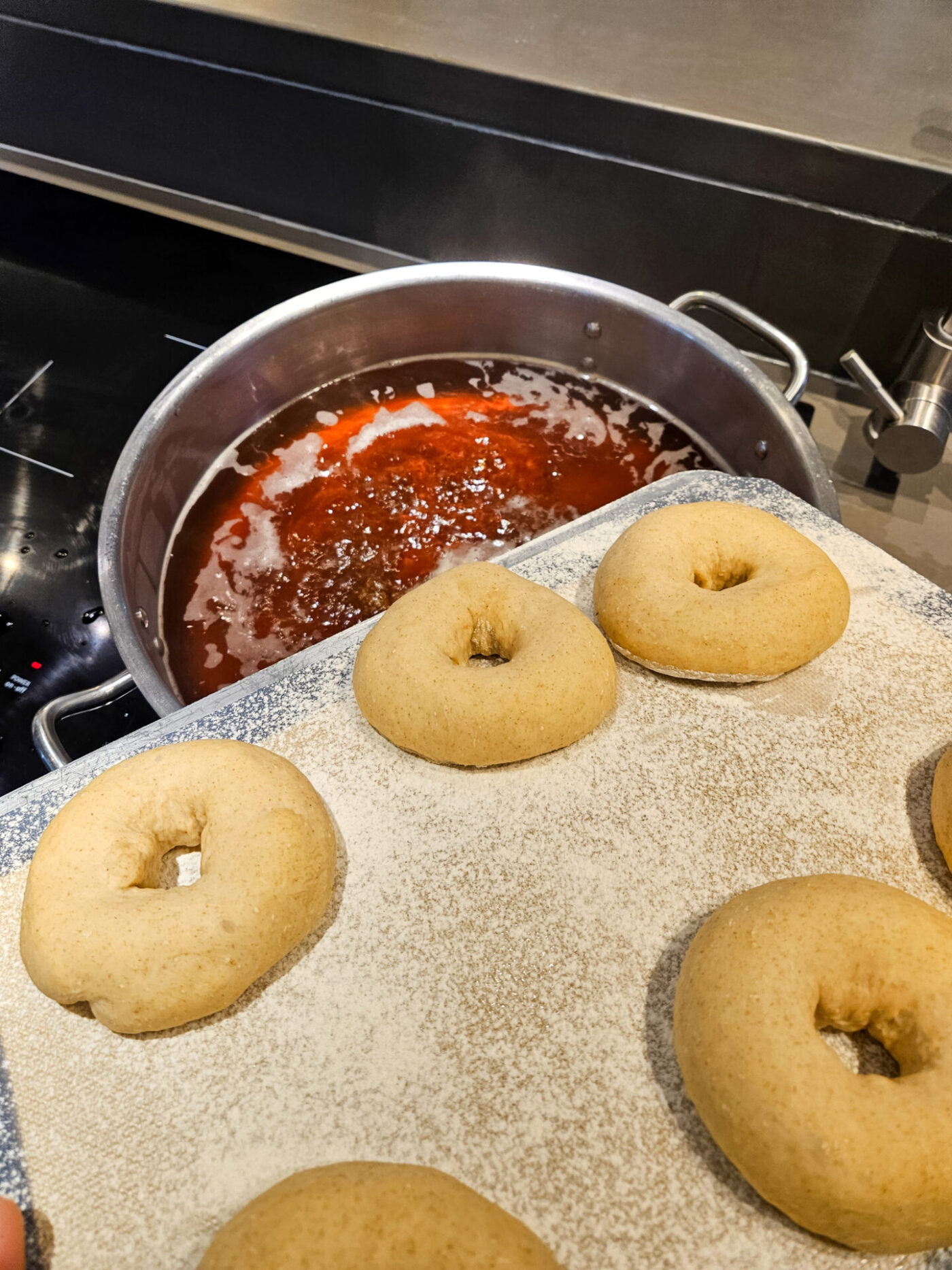
Once formed, I carefully place the bagels on an upside-down baking sheet lined with a generously floured silicone mat. It is highly essential to let all the bagels proof at room temperature for about 30 minutes, keeping the tray completely uncovered. During this proofing time, each dough ball will visibly increase in size. I do not focus too much on exactly how much they grow; the most important thing for this Bagel Recipe is that the dough recovers from the shaping process so they are fully ready and relaxed for the boiling bath.
Mastering the Boiling Bath
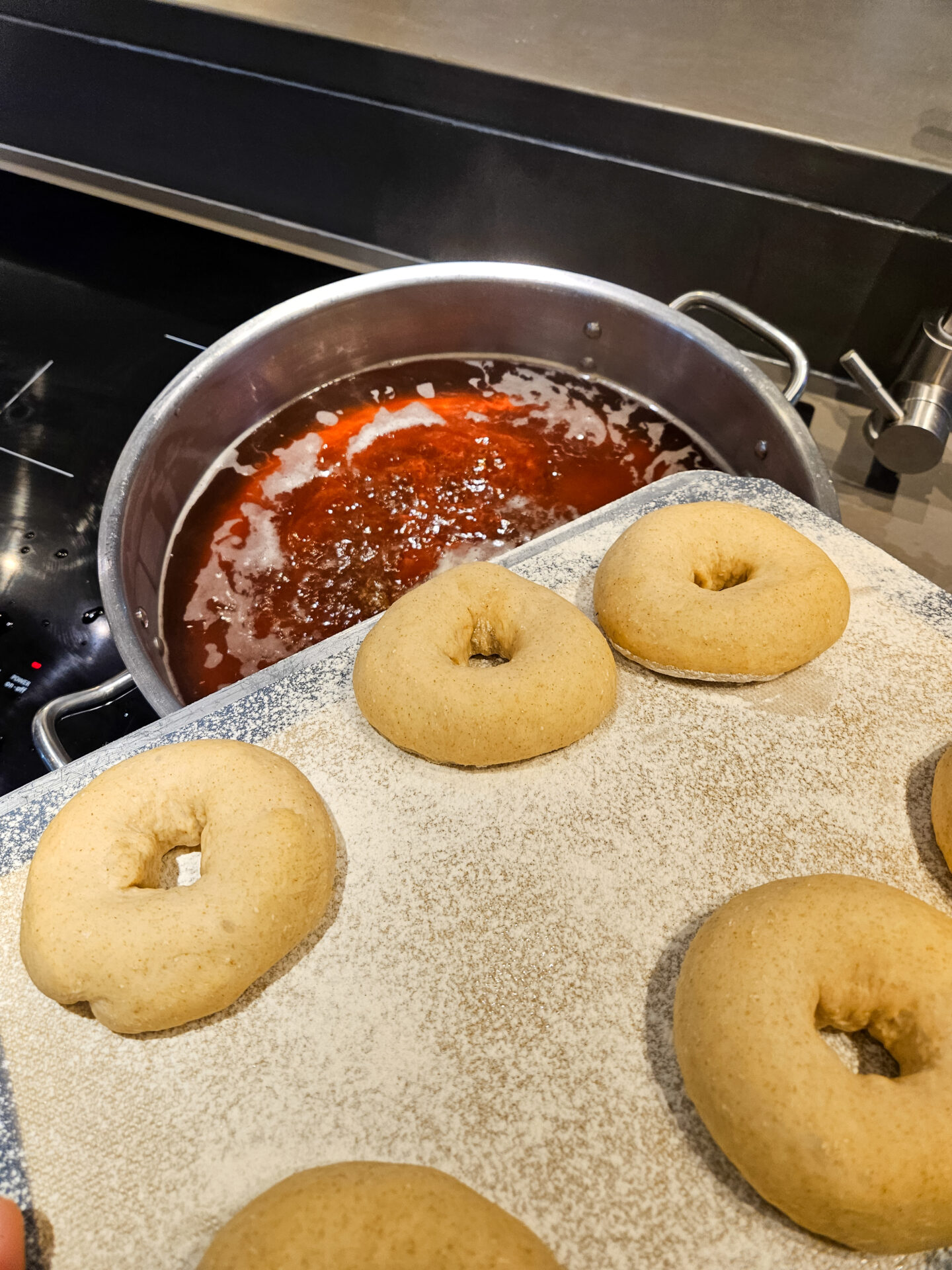
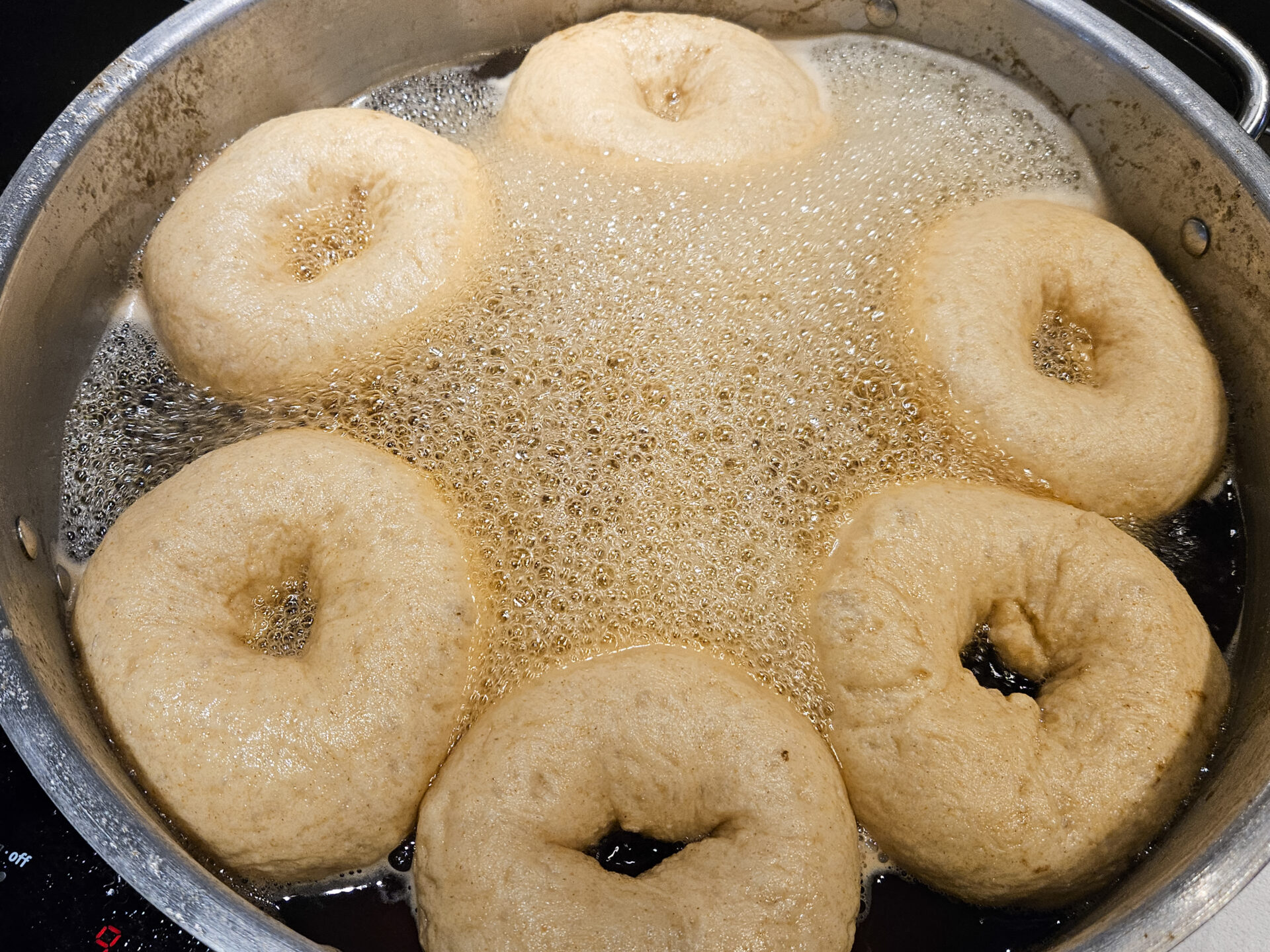
The boiling bath is exactly what gives my Bagel Recipe its unmistakable, glossy finish and chewy texture. While the bagels are finishing their proofing time, I prepare a large pot with four to six quarts of water and three tablespoons of barley malt syrup. I bring this to a rapid boil. I carefully place the bagels in this boiling bath for exactly two minutes and 30 seconds. Because they expand, I make sure to boil them in batches so they have enough room to float. Once done, I use a slotted skimmer to remove them and let them rest for 15 seconds on a paper towel to partially dry.
Baking on a Silicone Mat in a Preheated Oven
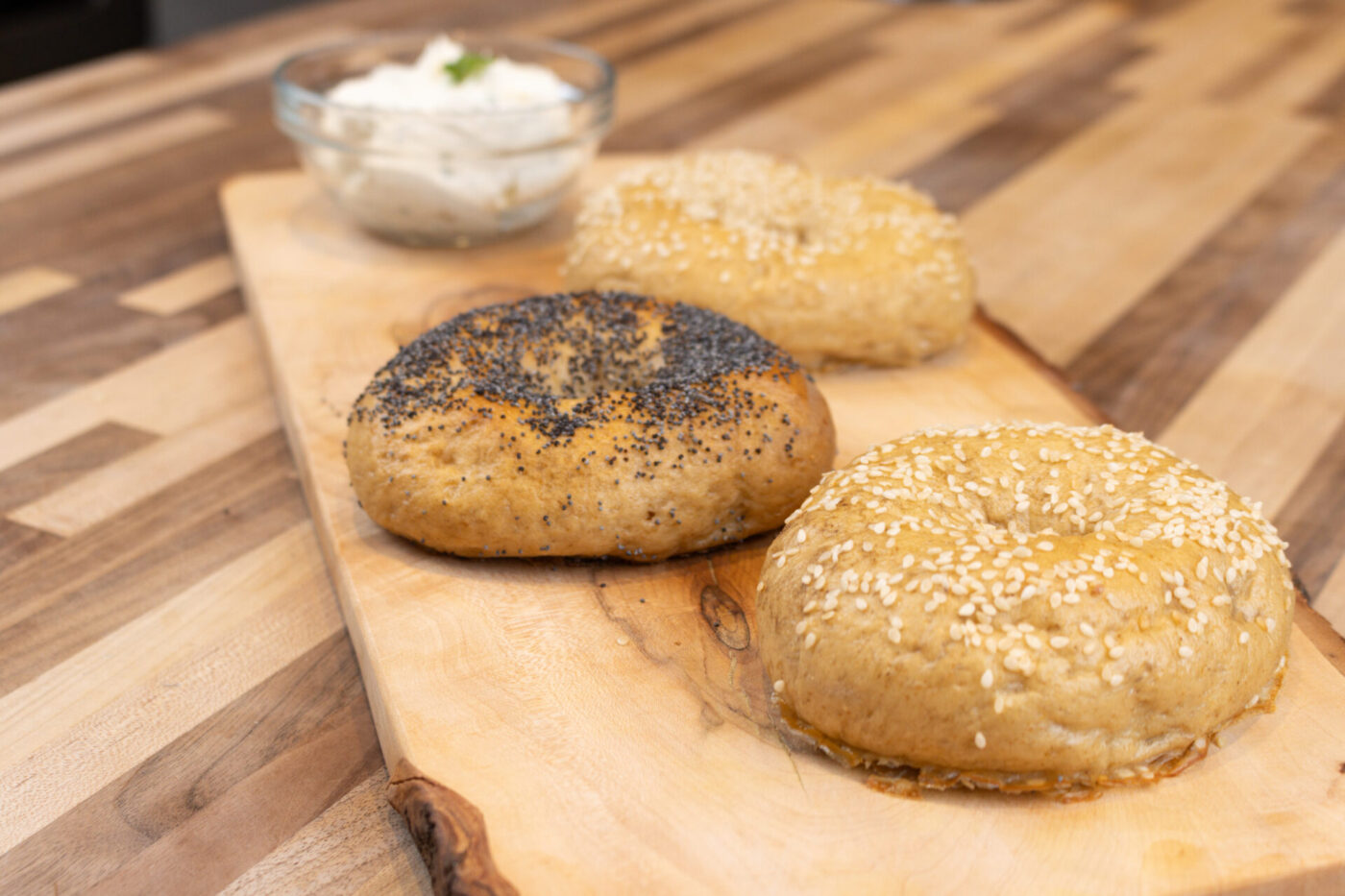
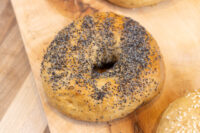
Before putting my bagels into a preheated oven set to 400 degrees Fahrenheit, I make sure to dust off all the excess flour from my silicone mat. It is absolutely vital to bake the bagels on a non-floured silicone mat for the best bottom crust. I brush each boiled bagel with a little bit of milk and, if desired, add sesame seeds, poppy seeds, or crushed pepper flakes. Then, I bake them in the preheated oven for about 20 minutes, making sure to rotate the baking sheets in the middle of baking. Once they pass the toothpick test, I let them cool entirely on a cooling rack before serving.
Bagel Recipe
Ingredients:
Click any ingredient to learn moreBagel dough:
4 cups of bread of your choice
½ cup of rye flour (*)
1 TBSP of active dry yeasts
1 TBSP of granulated sugar
2 TSP of salt
2 cups of water - warm, about 80 to 90°F (preheat in a kettle or microwave)
1 TBSP of barley malt syrup (**)
Boiling Bath:
4 - 6 QT of water (adjust if needed)
3 barley malt syrup (adjust if needed, **)
Brushing:
¼ cup of milk (adjust if needed)
* You can use any rye flour you have available.
** You can optionally substitute barley malt syrup for the more cost-effective alternative, molasses.
Optionally sprinkle with:
- Black and/or white sesame seeds
- Crushed pepper flakes
- Poppyseeds
- Sunflower seeds or any other kind of seeds
- Sea salt (do not use if you are going to freeze or refrigerate – this makes them soggy)
Tools:
Click any tool to learn more1x Piano Whisk
1x Bowl Scraper
1x Plastic Wrap (or plate)
1x Paper Towel
1x Cooling Rack
Nutrition:(recipe split into 12 servings)
Vegetarian
Nutrition is not available for this recipe — the figures its ingredients give did not pass our accuracy checks, so we would rather show nothing than a number we cannot stand behind.
Directions:
1.Dough for Bagel Recipe:
Let’s start the preparation of the bagel recipe.
1.1.
Place into a kitchen mixer with hook attachment:
4 cups of bread flour
½ cup of rye flour
1 TBSP of active dry yeasts
1 TBSP of granulated sugar
2 TSP of salt
Briefly stir with a hand whisk just enough to combine all ingredients (about 1 minute).
1.2.
Add:
2 cups of water – warm, about 80 to 90°F (preheat in a kettle or microwave)
1 TBSP of barley malt syrup
Knead on low speed until all ingredients are partially incorporated (about 1 – 2 minutes).
1.3.
Then increase speed to medium-high and knead until the dough is compact and stops sticking to the bowl (usually about 2 – 3 minutes).
1.4.
2.Rising the Dough:
2.1.
Remove the bowl from the mixer and cover with plastic wrap.
2.2.
Let it rise in a warm place until it’s doubled in size (about 2 – 3 hours).
3.Form Dough Balls:
Important:
Work on a non-floured surface (countertop).
3.1.
Place the dough on a work surface and, using a bowl scraper, separate the dough into 12 even pieces for regular-sized bagels (about 3.5 OZ each).
Tip:
If you prefer jumbo bagels, separate the dough into 8 even pieces (about 5 OZ each).
3.2.
Form each piece of dough into a dough ball by stretching it:
Important:
Work one by one.
3.2.1.
To stretch the dough, place the bowl scraper at a slight angle against the bottom part of the dough while making sure that the bottom of the bowl scraper is touching the table.
3.2.2.
Then, keeping one hand on the top of the dough, push the scraper to move the dough slightly. The dough will roll slightly and stretch at the same time.
3.2.3.
Repeat this step a few times until a nice dough ball is shaped. Each time, turn the dough about 90° to the right (usually about 2 times from each of the four sides).
Note:
Optionally, you can form each piece of the dough into a dough ball another way (rolling between two hands), but the method mentioned above is recommended.
4.Form Bagels:
Important:
- To make sure that formed bagels will not stick and will be easy to release for boiling, place them on an upside-down baking sheet with a generously floured silicone mat.
- Make sure that bagels have at least 1” space between each other – I usually place no more than 6 of them on each baking sheet.
4.1.
To form the bagel, take a dough ball and penetrate it in the middle with your thumb.
4.2.
Leaving the thumb in the center of the dough ball, start rotating the dough ball around your thumb and at the same time, start gently stretching it into a bagel shape until you reach a center hole with approximately a 1” diameter.
Important:
If you rip the dough ball during shaping, you need to form it into the dough ball again and repeat the steps – this doesn’t happen very often.
4.3.
Place the formed bagel on an upside-down baking sheet with a floured silicone mat and continue forming each ball.
5.Proofing:
5.1.
Then, let all bagels proof at room temperature for about 30 minutes (keep the tray uncovered).
Note:
Each ball will increase its’ size. Do not focus on how much; just make sure that they are resting for about 30 minutes. Most important is that the balls recover from shaping and are ready to be boiled.
6.Boiling Bath:
6.1.
While the bagels are proofing, prepare your boiling bath. Place into a large pot:
4 – 6 QT of water
3 TBSP of barley malt syrup
And briefly stir.
6.2.
Bring to a boil with occasional stirring and boil until the water and syrup are fully combined (usually a couple of minutes).
7.Set Oven to Preheat:
7.1.
Set oven to preheat to 400°F.
8.Boil Bagels:
Important:
Since bagels will expand during boiling, it is important to boil them in batches. I use a pot with a 14” top diameter that can accommodate 6 bagels being boiled at the same time. With a pot with a smaller diameter, you may have to split boiling into more than 2 batches.
8.1.
8.2.
In the meantime, dust off all flour from the silicone mats – it doesn’t need to be perfect, but it is important to bake the bagels on non-floured silicone mats.
8.3.
After the bagels are precooked for 2 minutes and 30 seconds, place them for about 15 seconds on a paper towel to partially dry. Then place them on a baking sheet with a silicone mat.
9.Brush and Optionally Sprinkle:
9.1.
Brush the boiled bagels with milk.
9.2.
Optionally, immediately sprinkle them with sesame seeds, poppy seeds, other kinds of seeds, crushed pepper flakes, or sea salt.
10.Baking:
10.1.
Bake in a preheated oven until done (about 20 minutes). Rotate the baking sheets in the middle of baking.
10.2.
Test with a toothpick.
10.3.
Then, cool on a cooling grate.
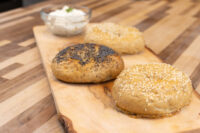
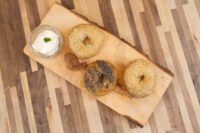
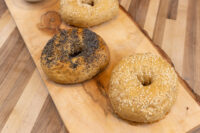
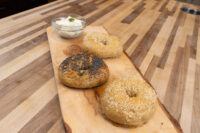
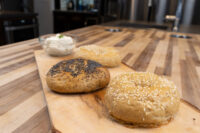
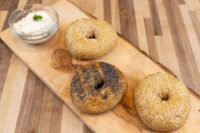
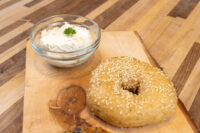
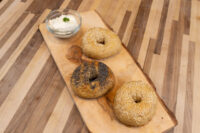
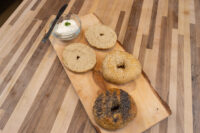
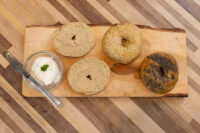
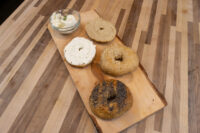
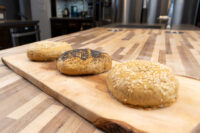
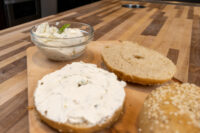
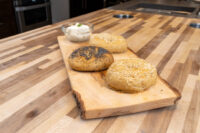
11.Bagel Recipe Complete And Ready to Be Served:
11.1.
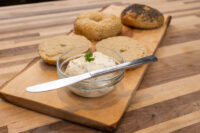
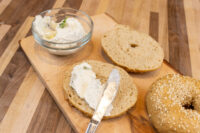
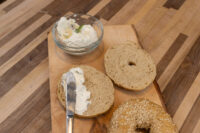
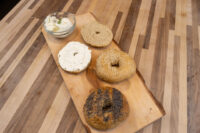
Serve while still warm or when fully cooled.
Popular questions
Do I absolutely have to use barley malt syrup for this Bagel Recipe, or can I use something else?
In my Bagel Recipe, I strongly recommend using barley malt syrup to achieve the most authentic bakery flavor and the perfect chewy texture in both the dough and the boiling bath. However, I have included an option where you can substitute the barley malt syrup for a more cost-effective alternative, which is molasses. Please note that using molasses is a modification that is not part of the primary recipe, but it is a perfectly acceptable alternative that will still allow you to create a wonderful dough ball, boil it effectively in the boiling bath, and bake it beautifully on your silicone mat in a preheated oven. You can even still top them with sesame seeds!
Share
Click on the icons below to share "Title of the item to share"