
Main Course Recipes
60 min. Pan Pizza
2 pan pizza (12“ each)
Craving a hot, cheesy homemade pepperoni pizza with a thick, crispy crust but short on time? While countless chains offer deals that make cooking seem pointless, this 60 min. Pan Pizza recipe proves that making it at home makes a lot of sense and results in a delicious dinner. Read More
Main Course Recipes
Before You Start
Let’s talk about important parts of the recipe before you start…
Welcome to my 60 min. Pan Pizza Recipe
Craving a hot, cheesy pepperoni pizza with a thick crispy crust but short on time? While countless chains offer deals that make cooking seem pointless, this 60 min. Pan Pizza recipe proves that making it at home makes a lot of sense. This is an easy pizza dinner solution when you want quality without the wait.
Selecting the Right Flour for Your Crust
When preparing this 60 min. Pan Pizza, the choice of flour is the first step toward that perfect texture. My recipe specifically calls for 3 cups of bread flour. While you optionally can substitute with all-purpose flour, using the recommended bread flour contributes significantly to the structure of the dough. It helps achieve that desired thick crispy crust that defines this style of pizza.
The Critical Role of Active Dry Yeast
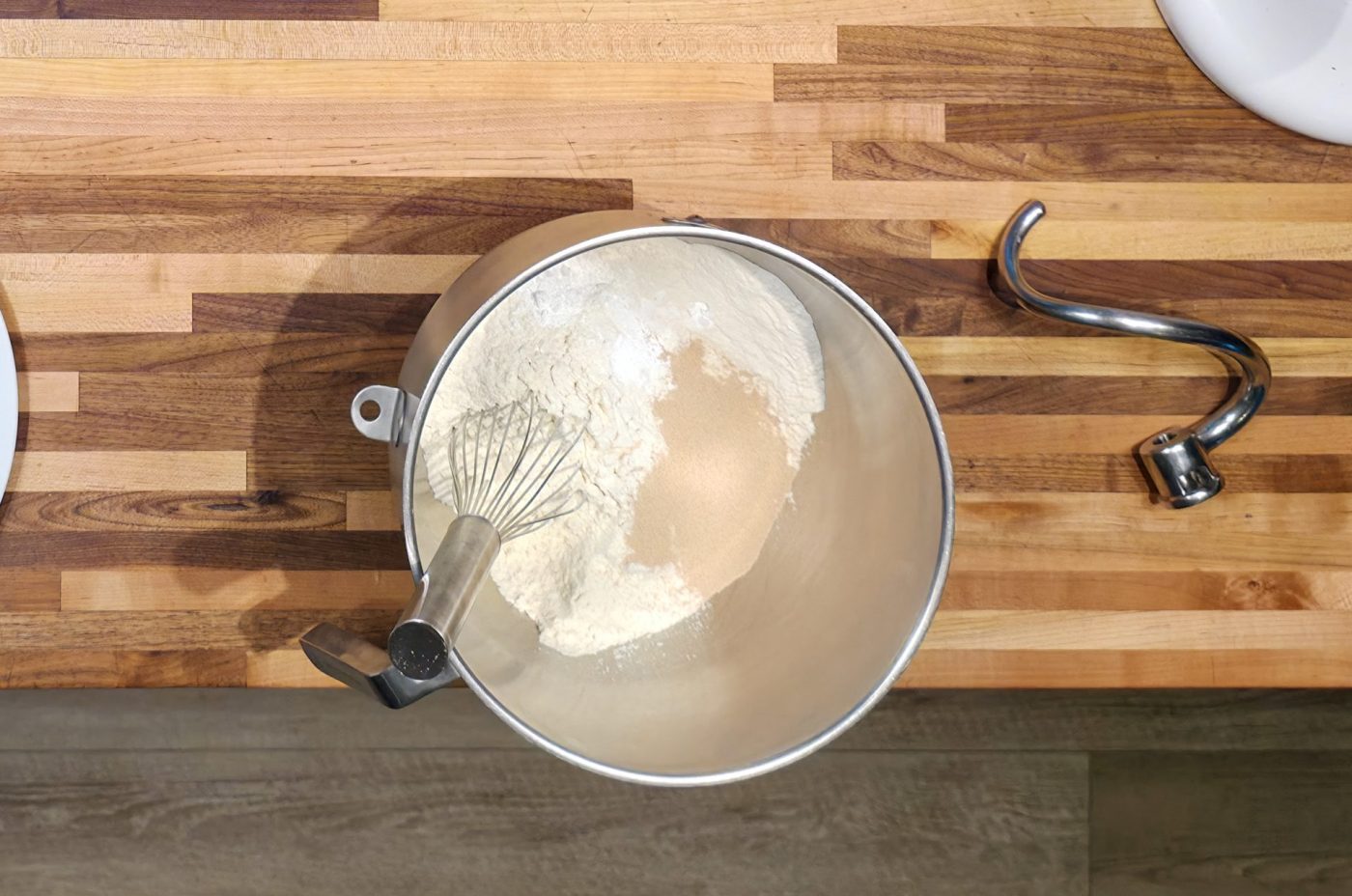
For this recipe, it is absolutely crucial to use active dry yeast that is not expired or compromised. This is a fast-rising dough, so the yeast must be potent. Make sure that your yeast is in a perfectly sealed pouch right before using it. If you are using part of a bulk package of yeast, make sure that it was properly stored in a sealed container in the refrigerator for no more than six months. Failure to do so may result in denser pizzas rather than the airy texture we want in a 60 min. Pan Pizza.
Understanding Dough Consistency and Sticking
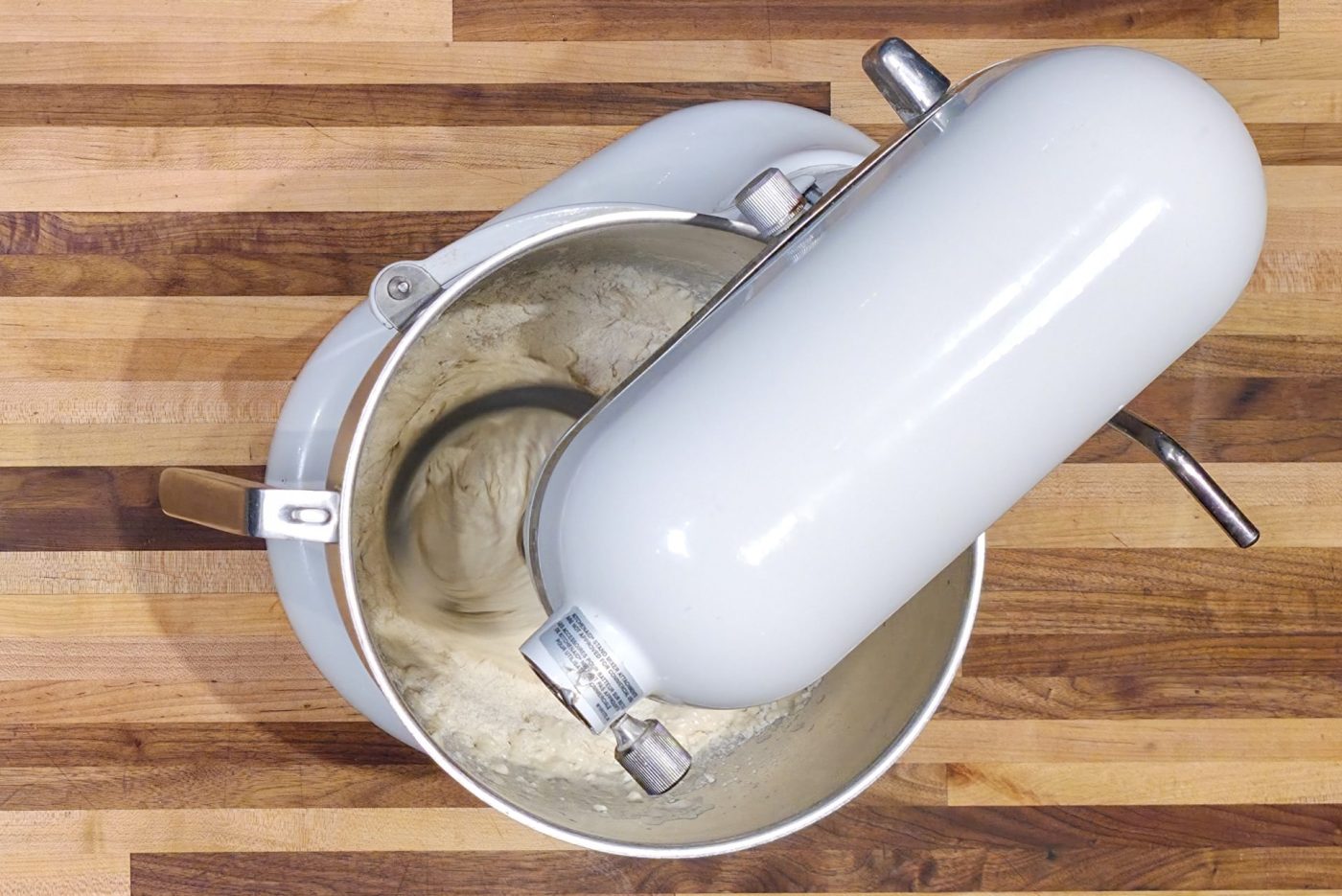
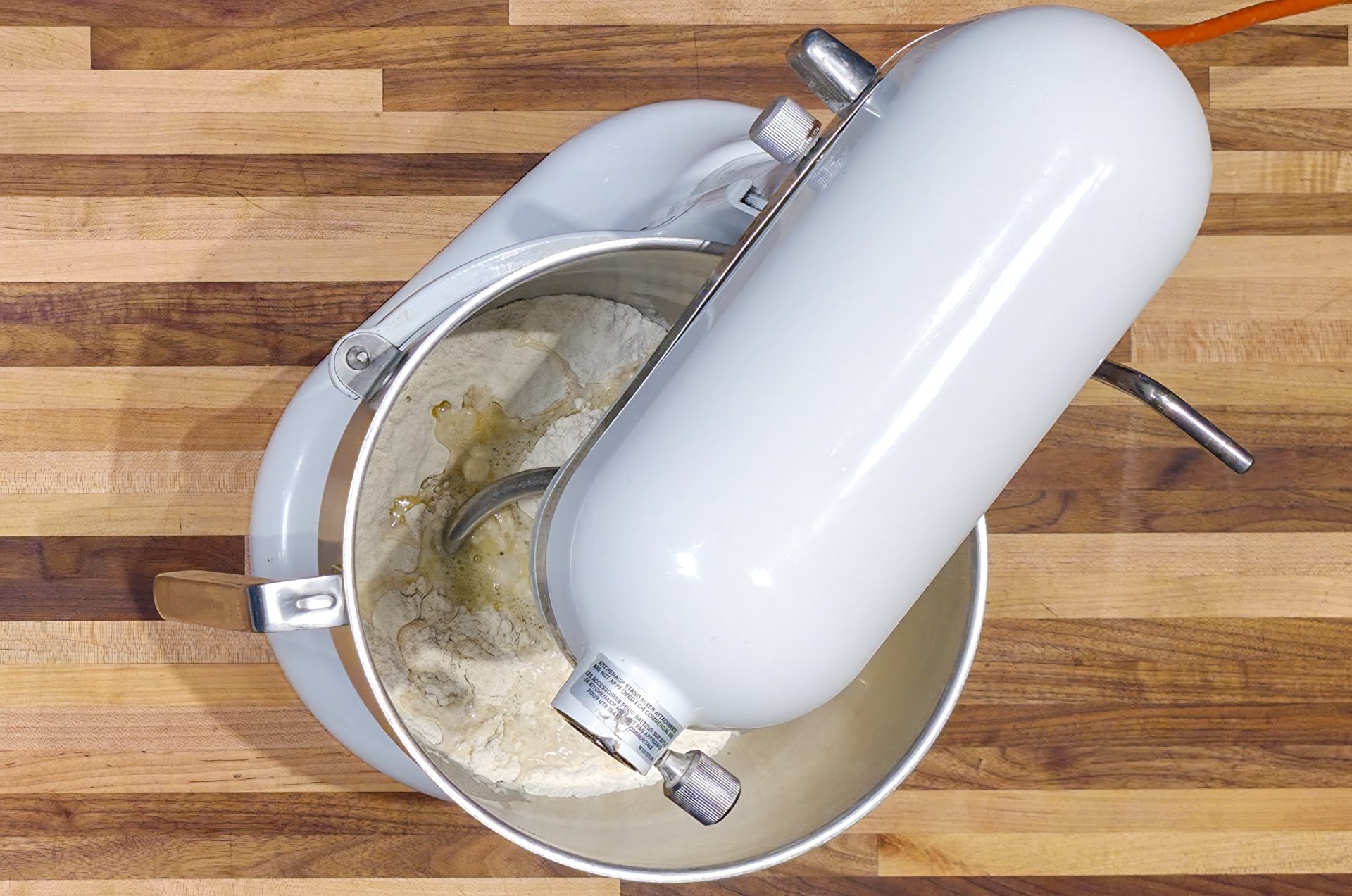
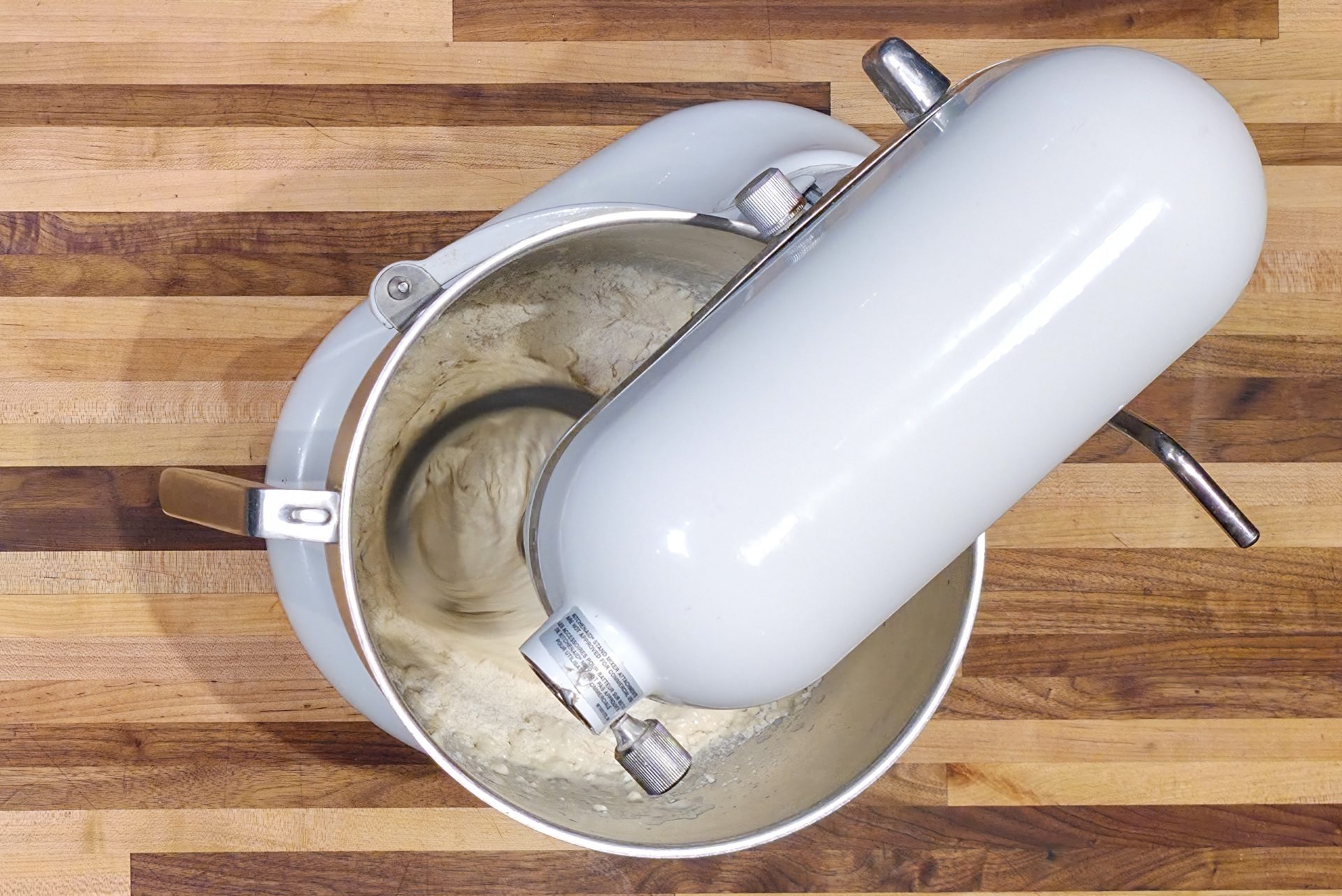
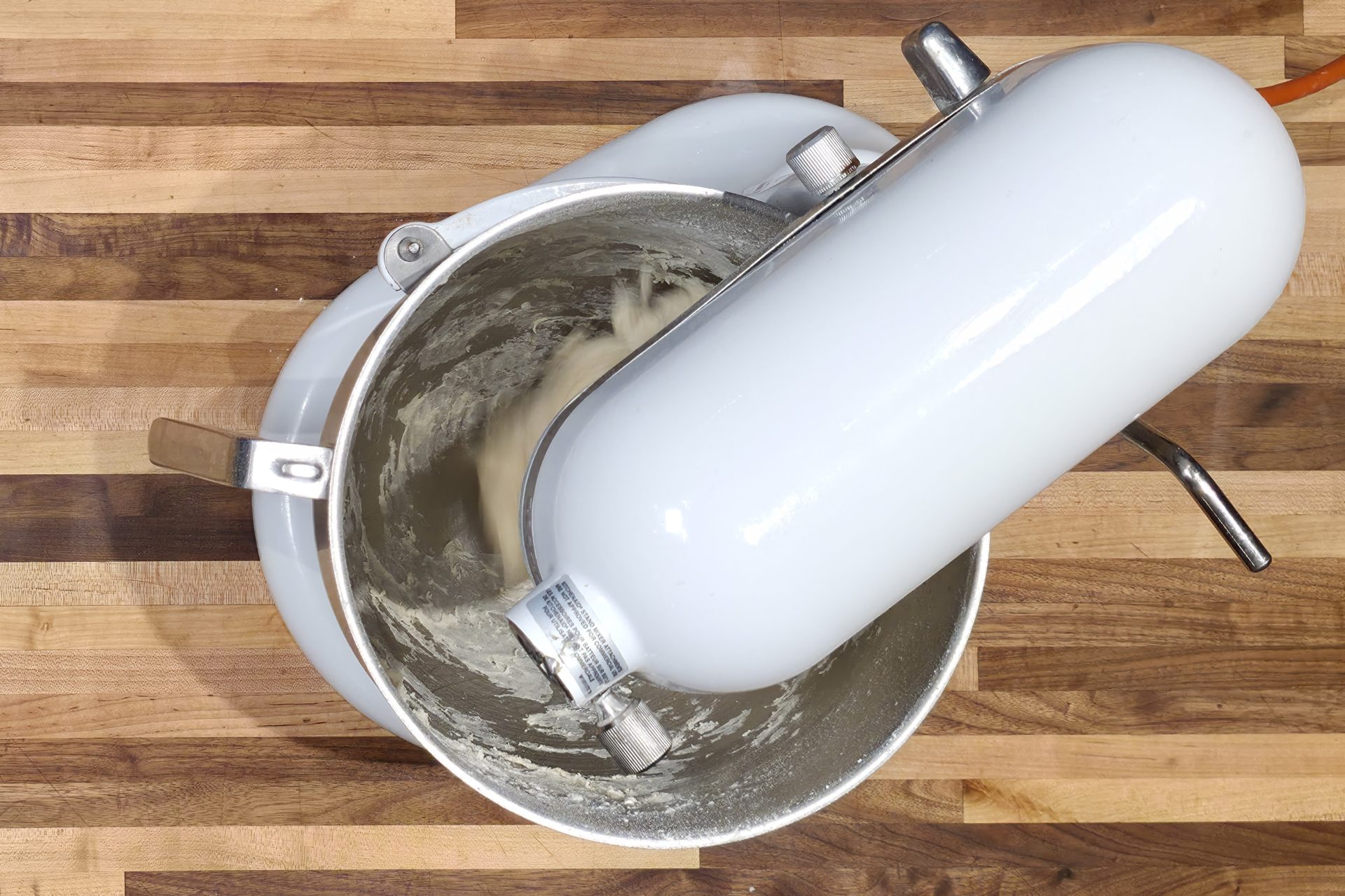
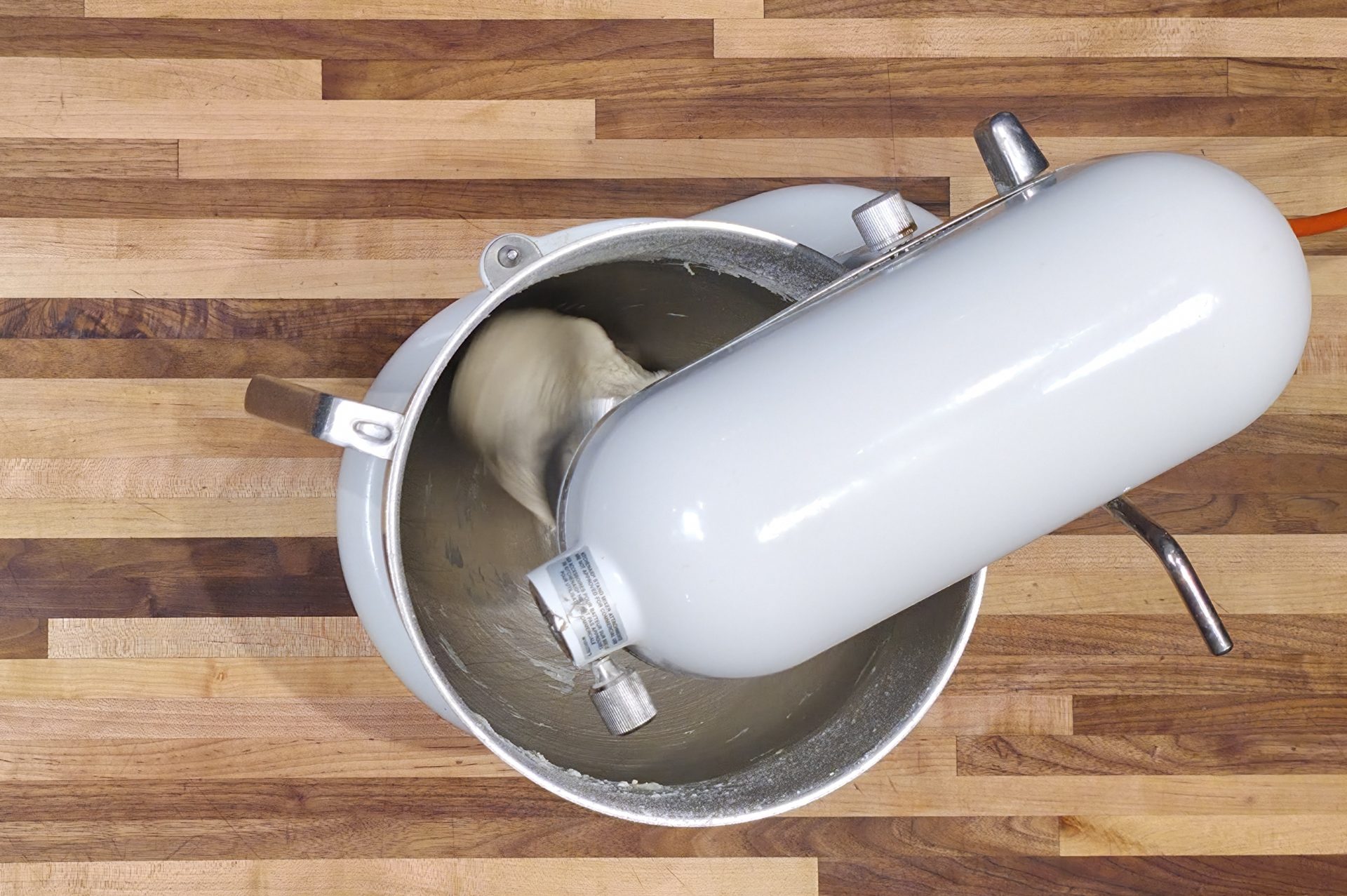
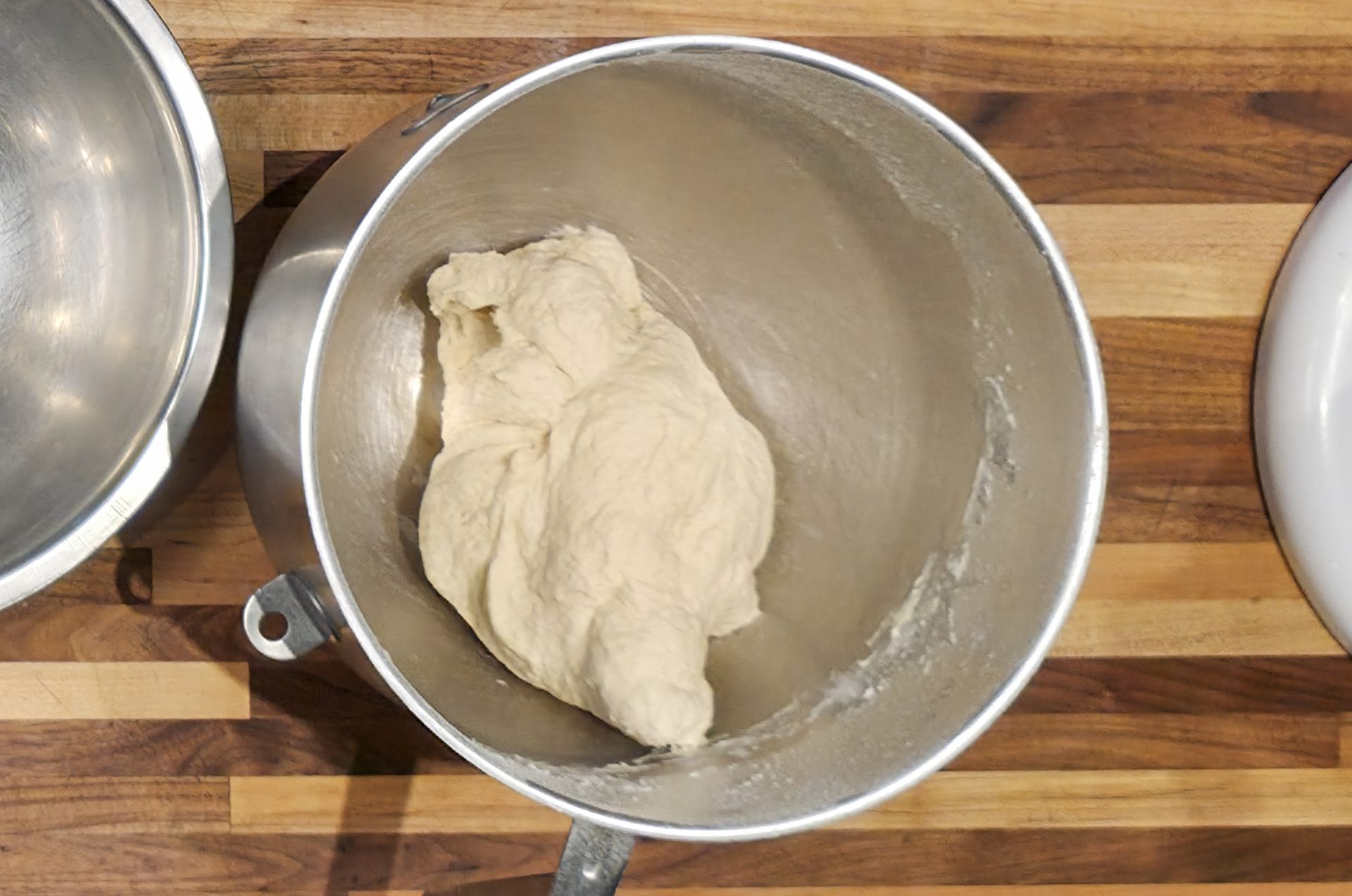
During the kneading process of this baking powder pizza dough—which utilizes both yeast and baking powder—you will knead on medium-high speed until a compact dough forms. You are looking for a dough that stops sticking to the bottom of the mixing bowl, which usually takes about 2 to 4 minutes. However, note that the “no sticking” part applies only when the dough is being processed. When you turn off the mixer, the dough will rest and be a little sticky, which is okay and normal for this 60 min. Pan Pizza.
Proper Rising Techniques for Fast Results
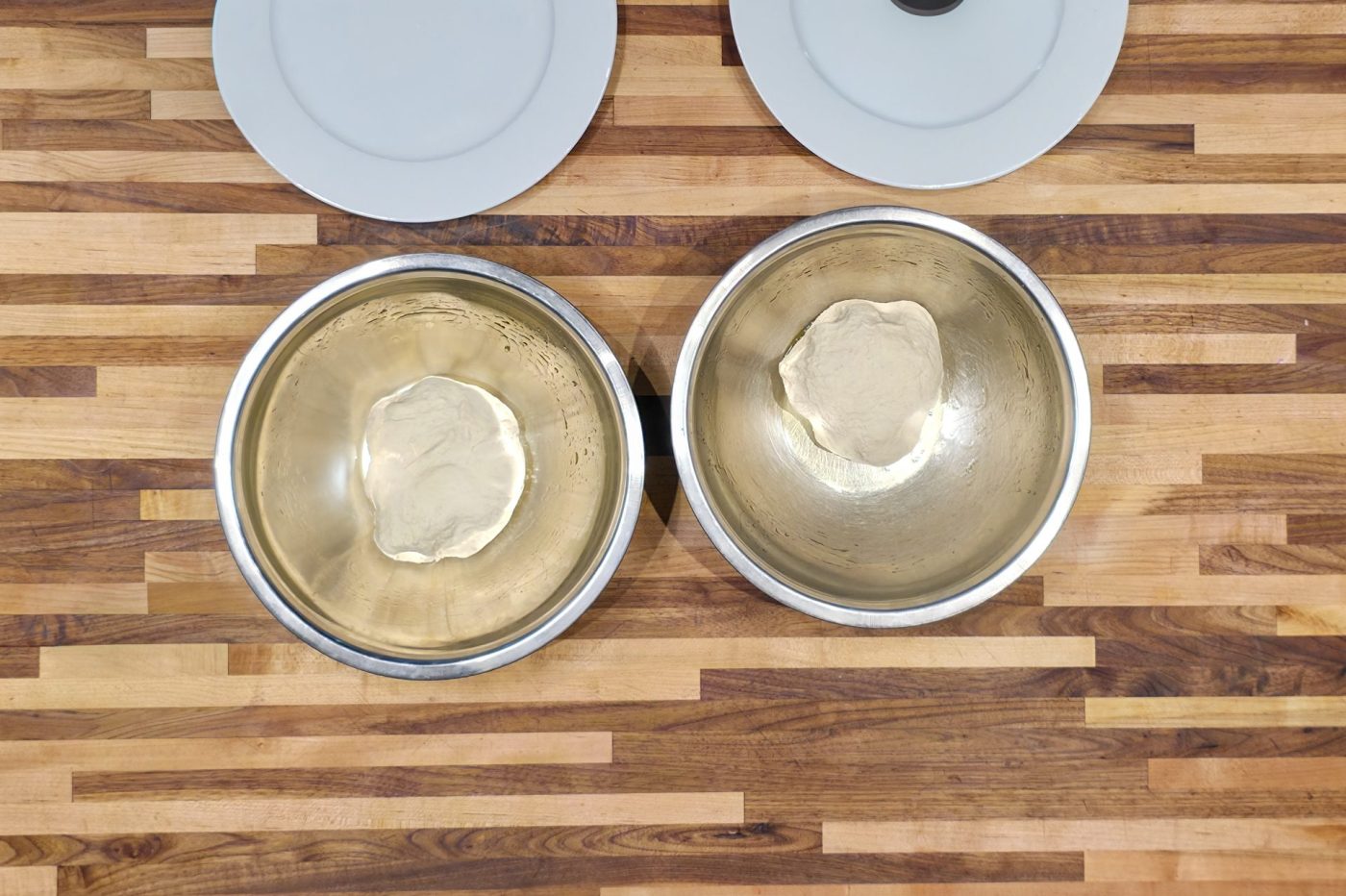
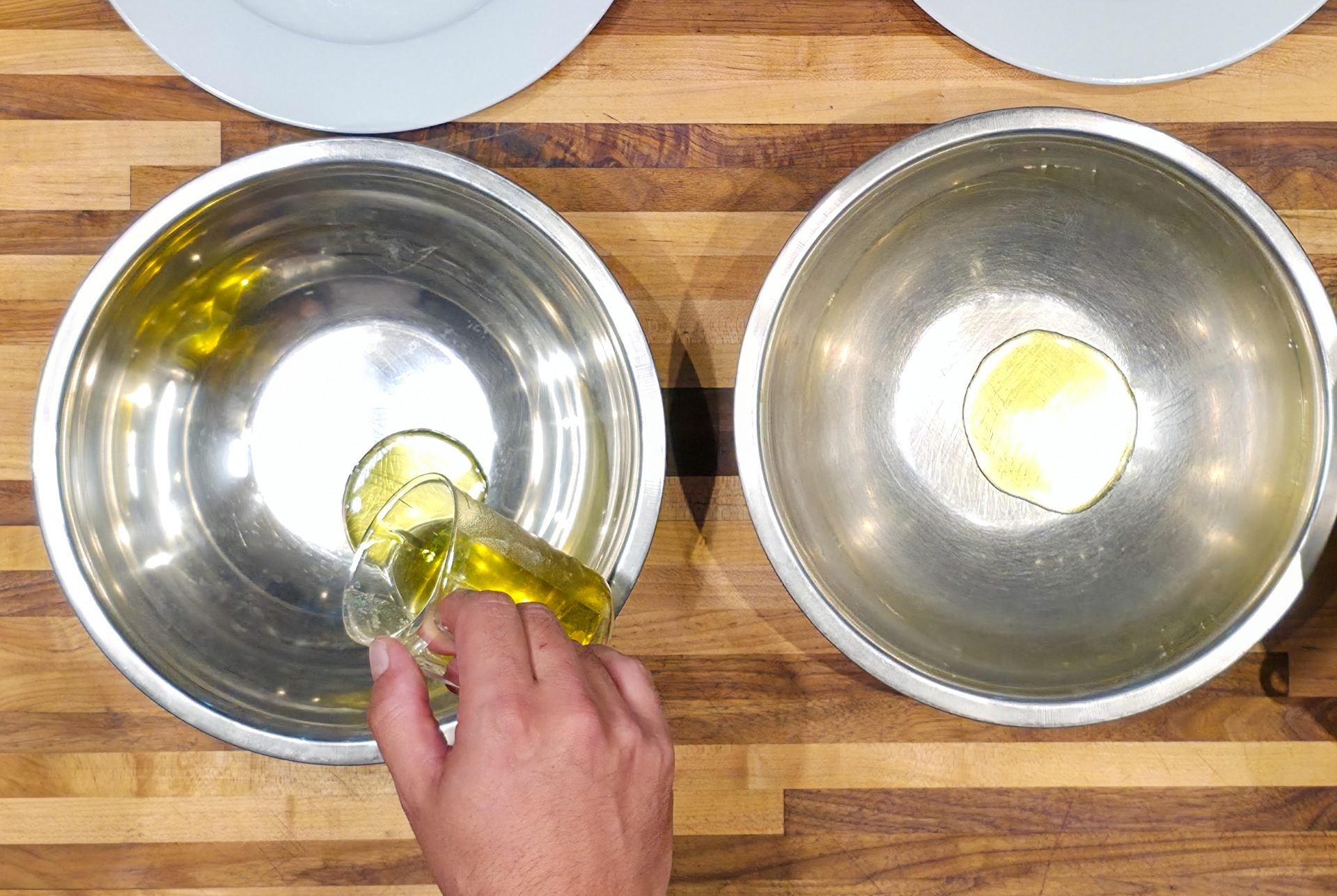
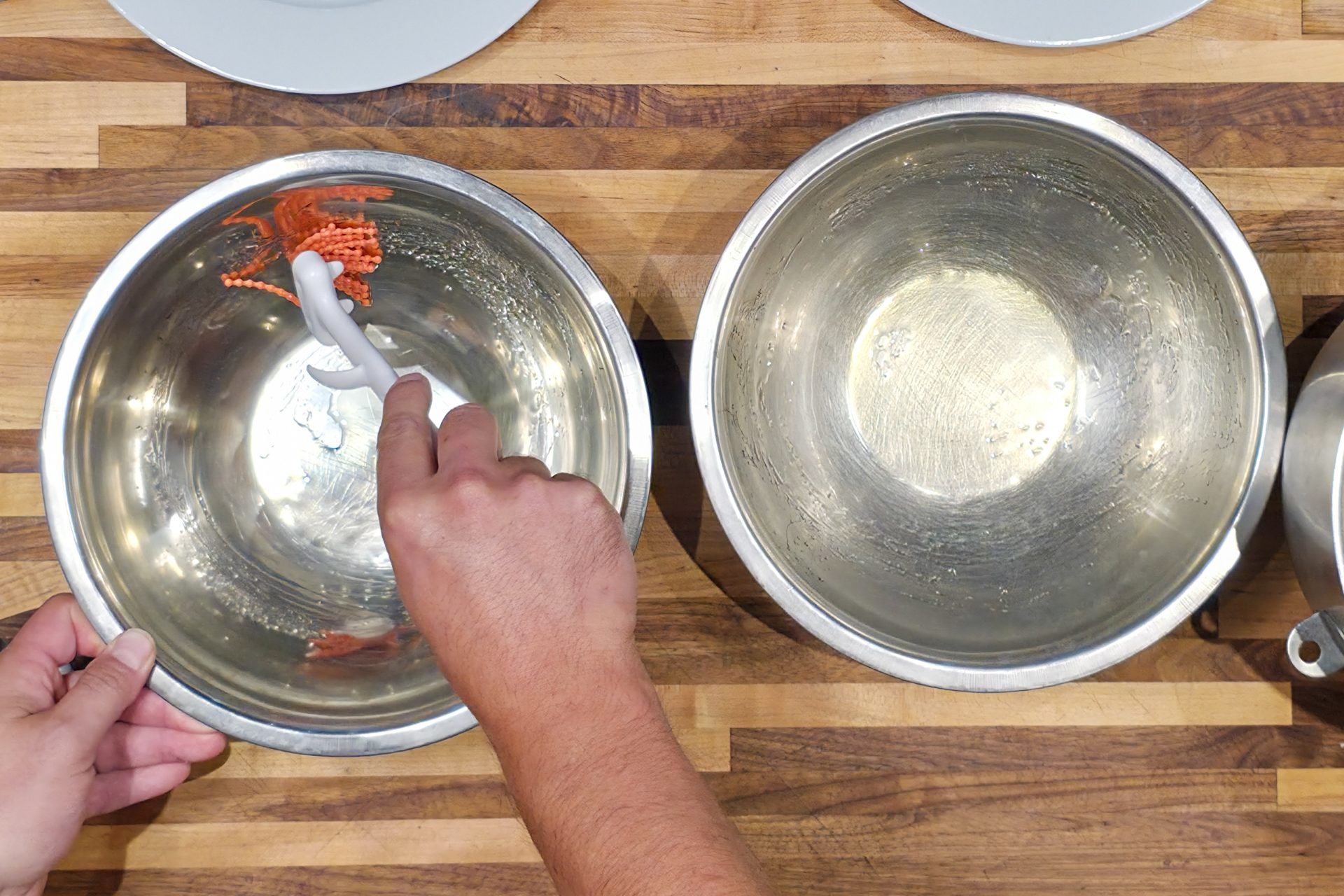
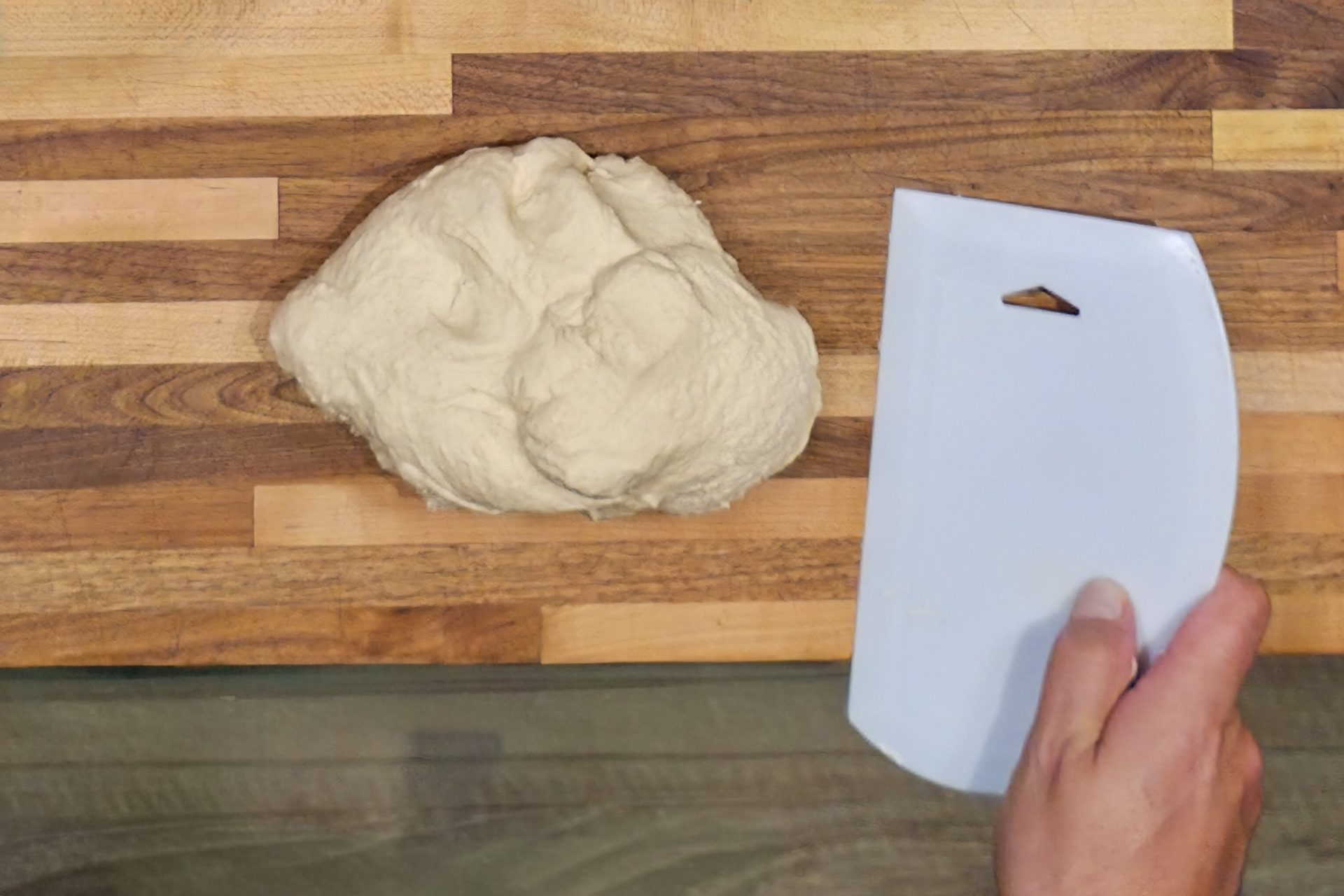
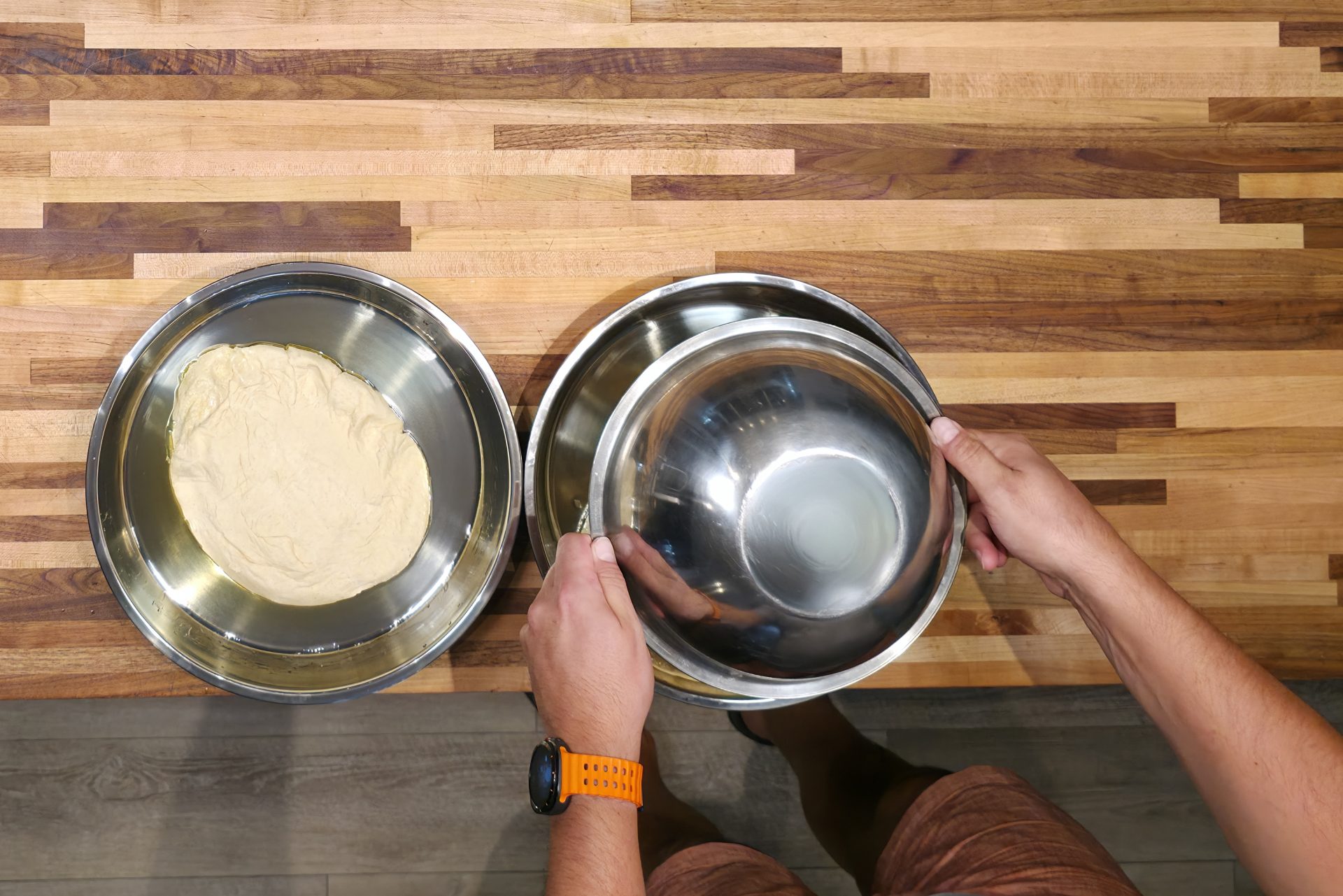
This is a fast-rising dough, thanks to a large amount of yeast and the use of baking powder, which together give the pizza a perfect texture. To rise, place each piece into an individual medium mixing bowl, cover both with a plate or plastic wrap, and let them rise until doubled in a warm place. A warm place would be considered the oven set to a bread-proofing/rising program, or a slightly preheated oven turned off with a comfortable, sauna-like temperature, or simply place it near a source of heat. Alternatively, let it rise at room temperature for 30 minutes. For a fuller taste, you have optional steps: deflate the dough after the first 20 or 30 minutes, cover, and let it rise again for another 20 or 30 minutes.
Smart Sauce Preparation and Storage
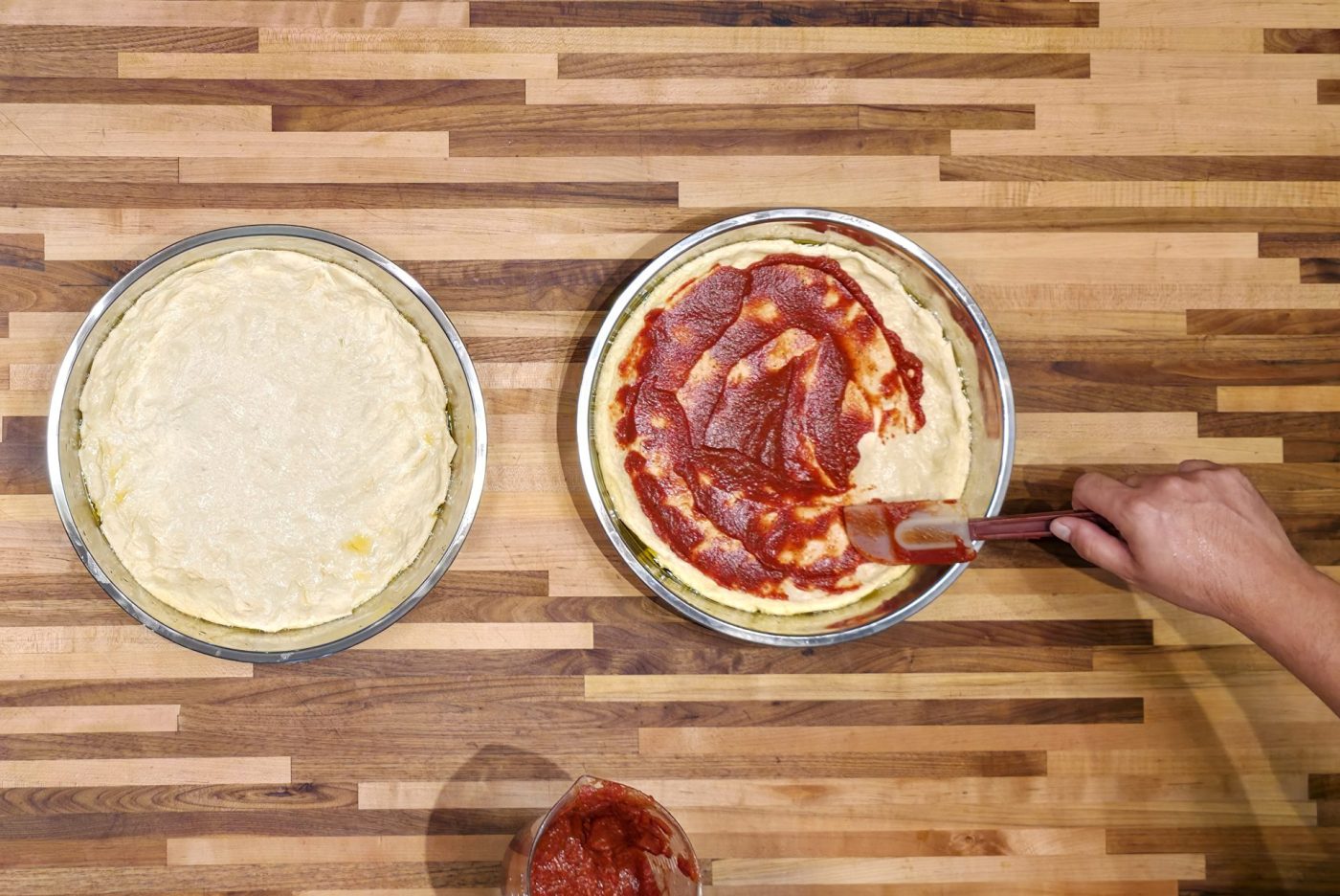
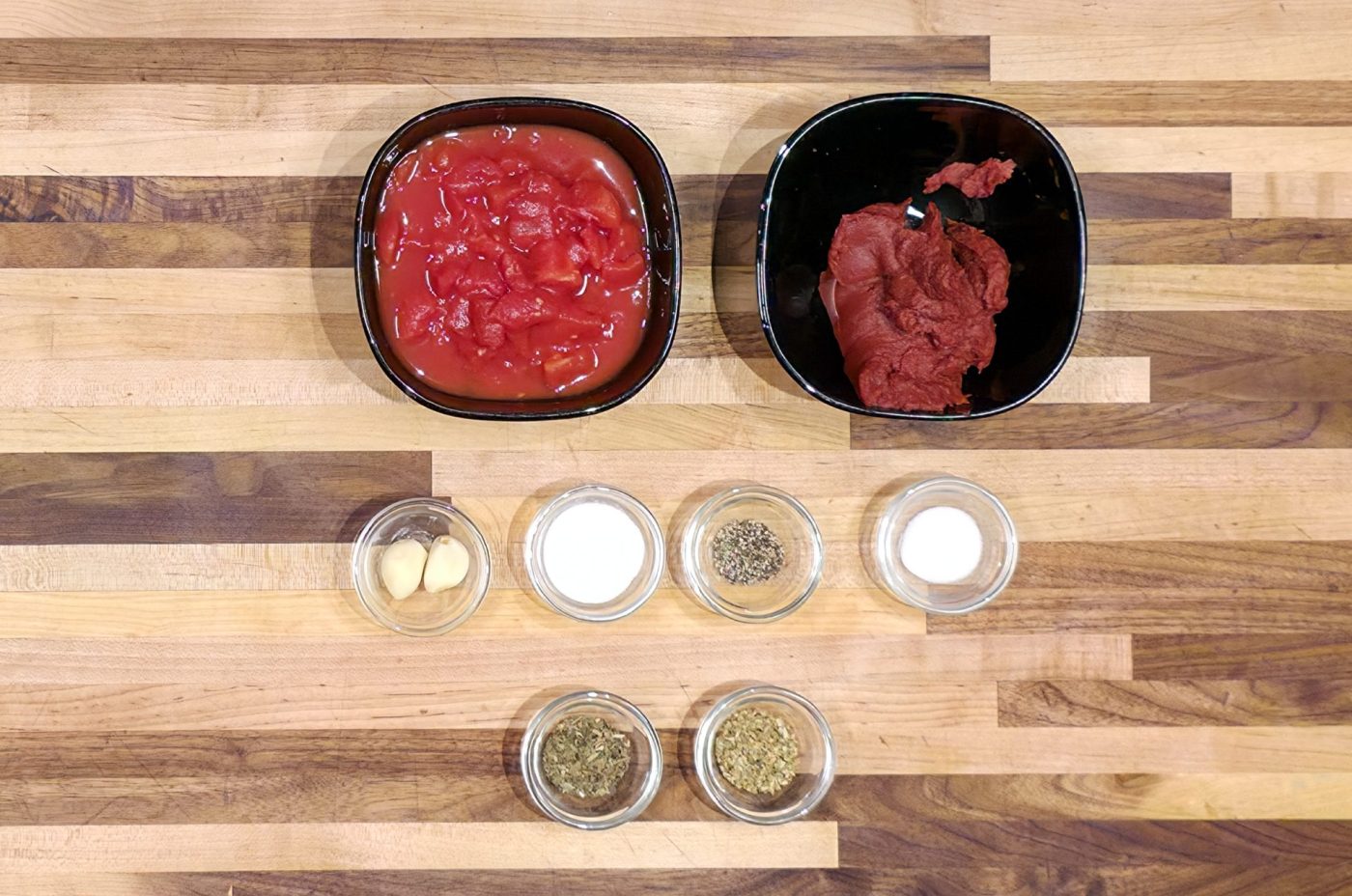
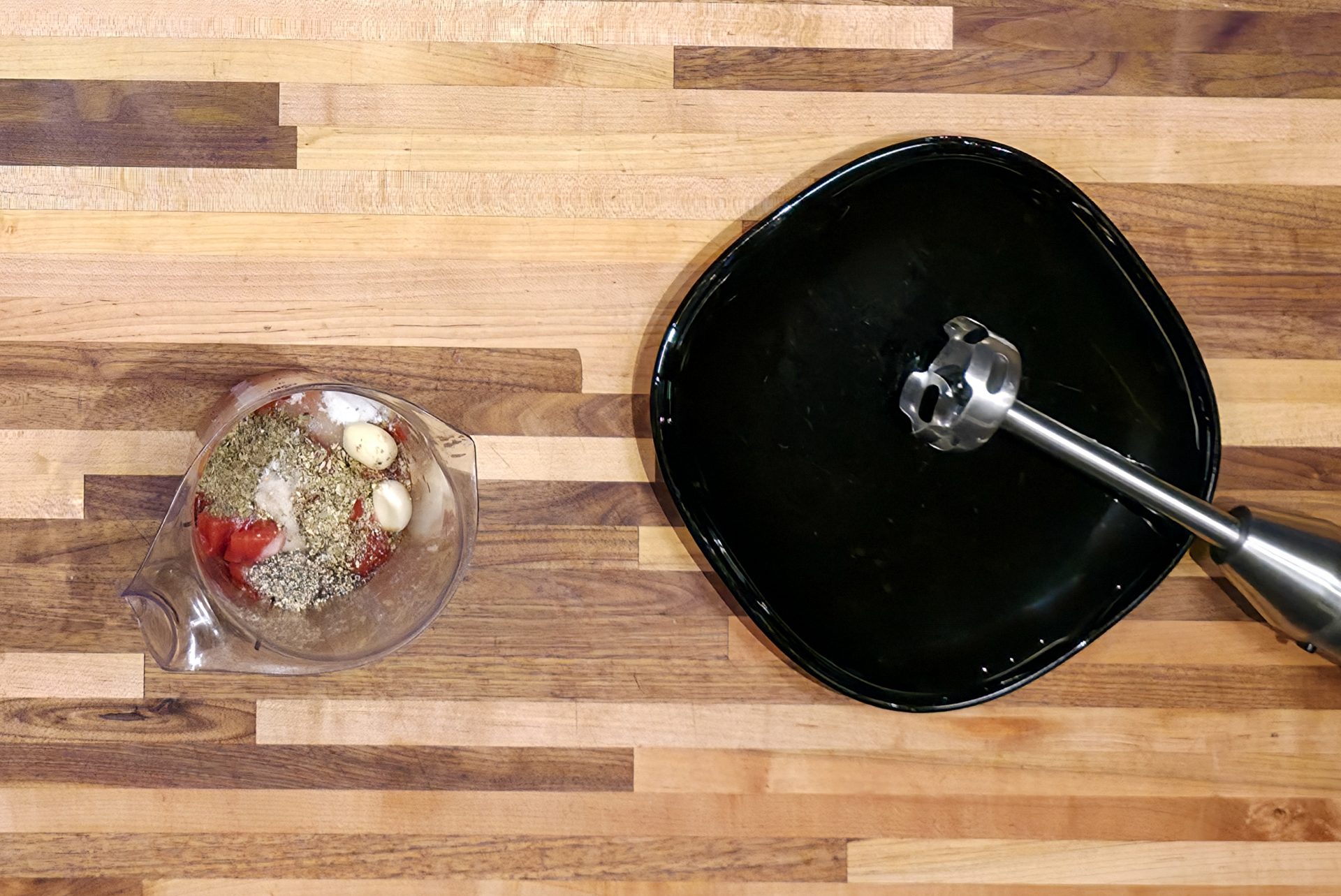
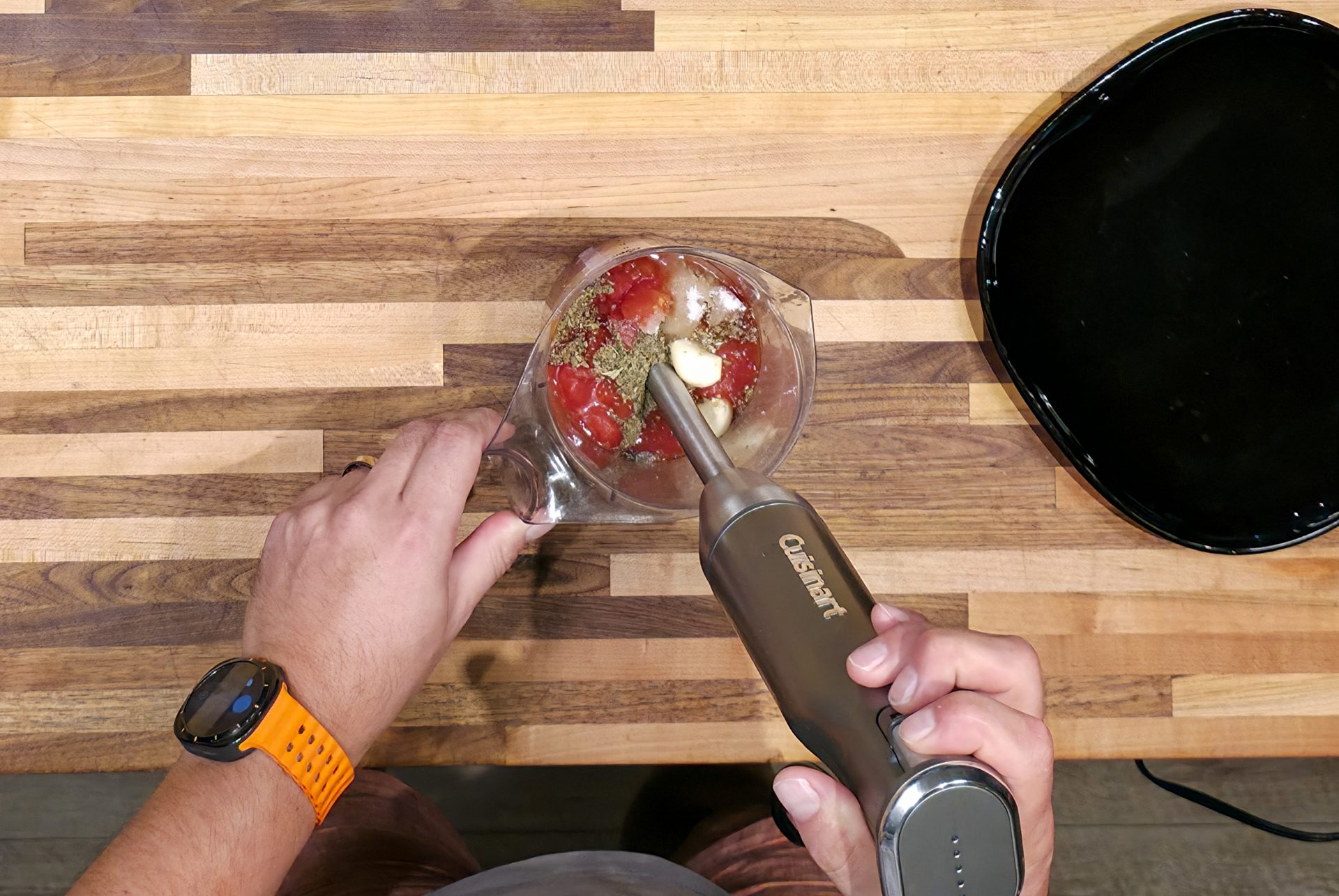
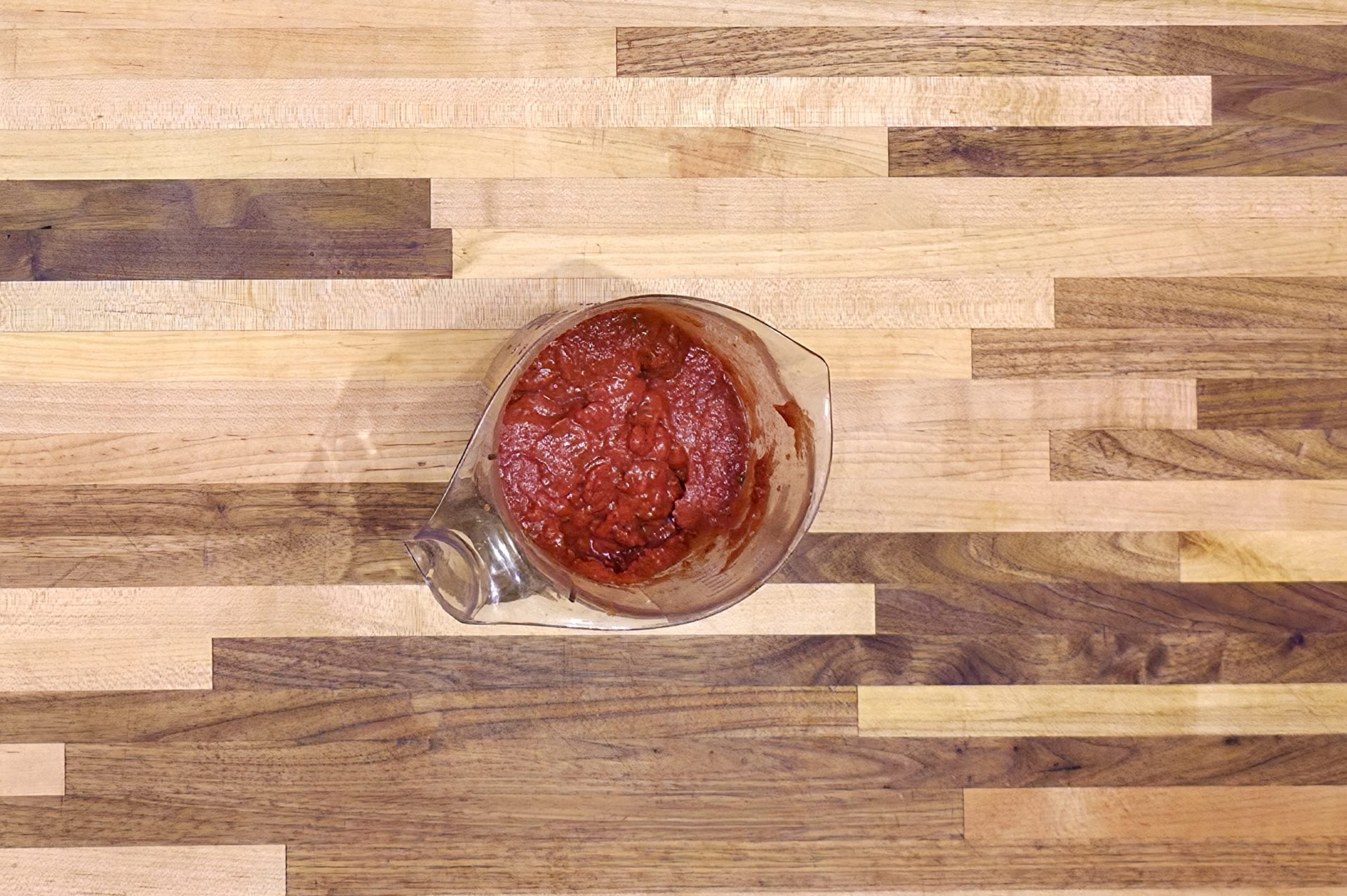
My pizza sauce recipe is designed for efficiency. The amount of sauce in the recipe is designed to use the entire can of diced tomatoes as well as the entire can of tomato paste. This is to prevent you from having leftover cans and to prevent the necessity of measuring. Use an amount of the sauce you like on your 60 min. Pan Pizza, up to half of the total amount for each saucy pizza, or a quarter of the amount for pizza with a moderate quantity of sauce, based on your preference. If you do not use all the sauce, feel free to store it in the refrigerator for up to one day or in the freezer for up to half a year for your next pizza project.
Shaping the Dough in the Pans
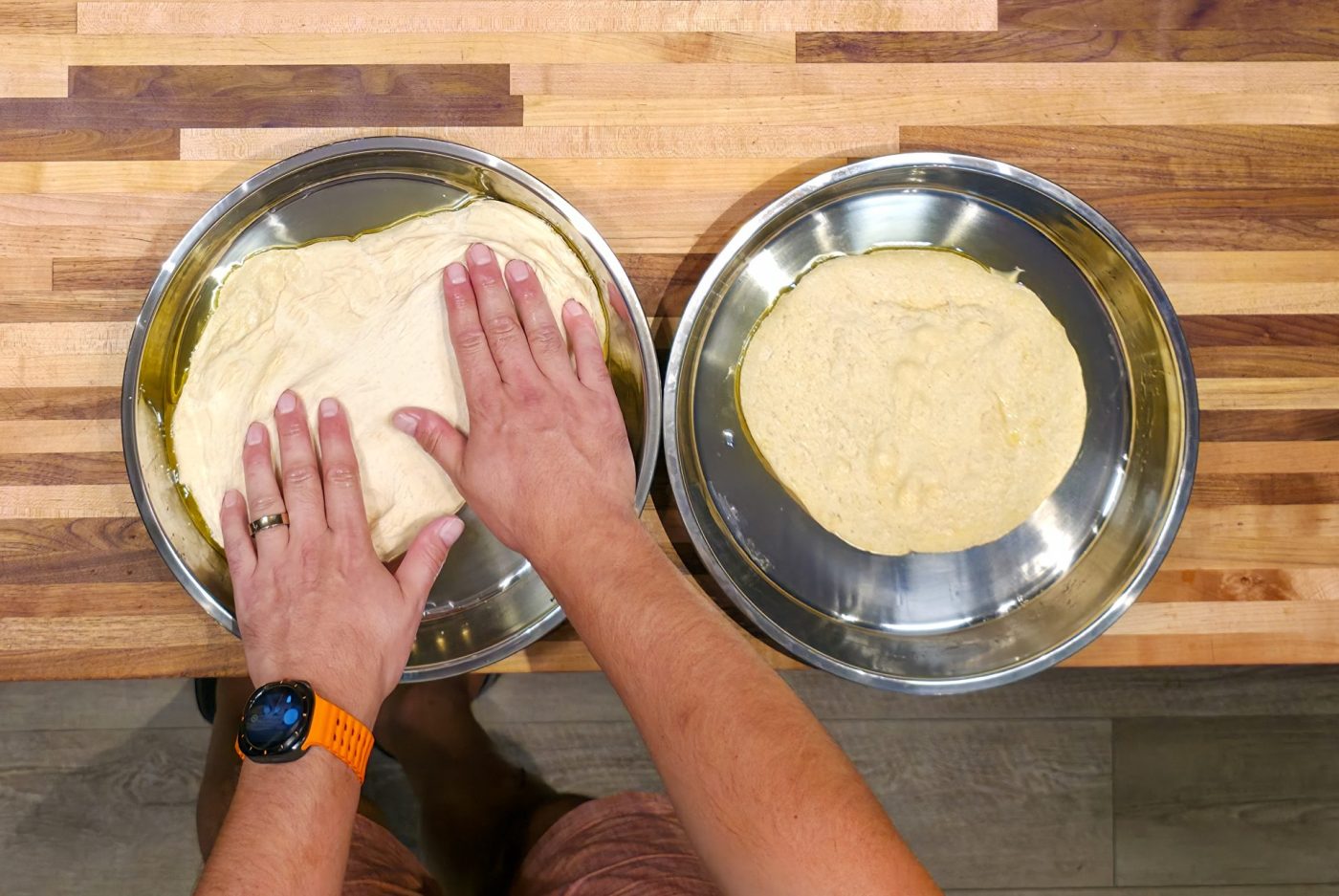
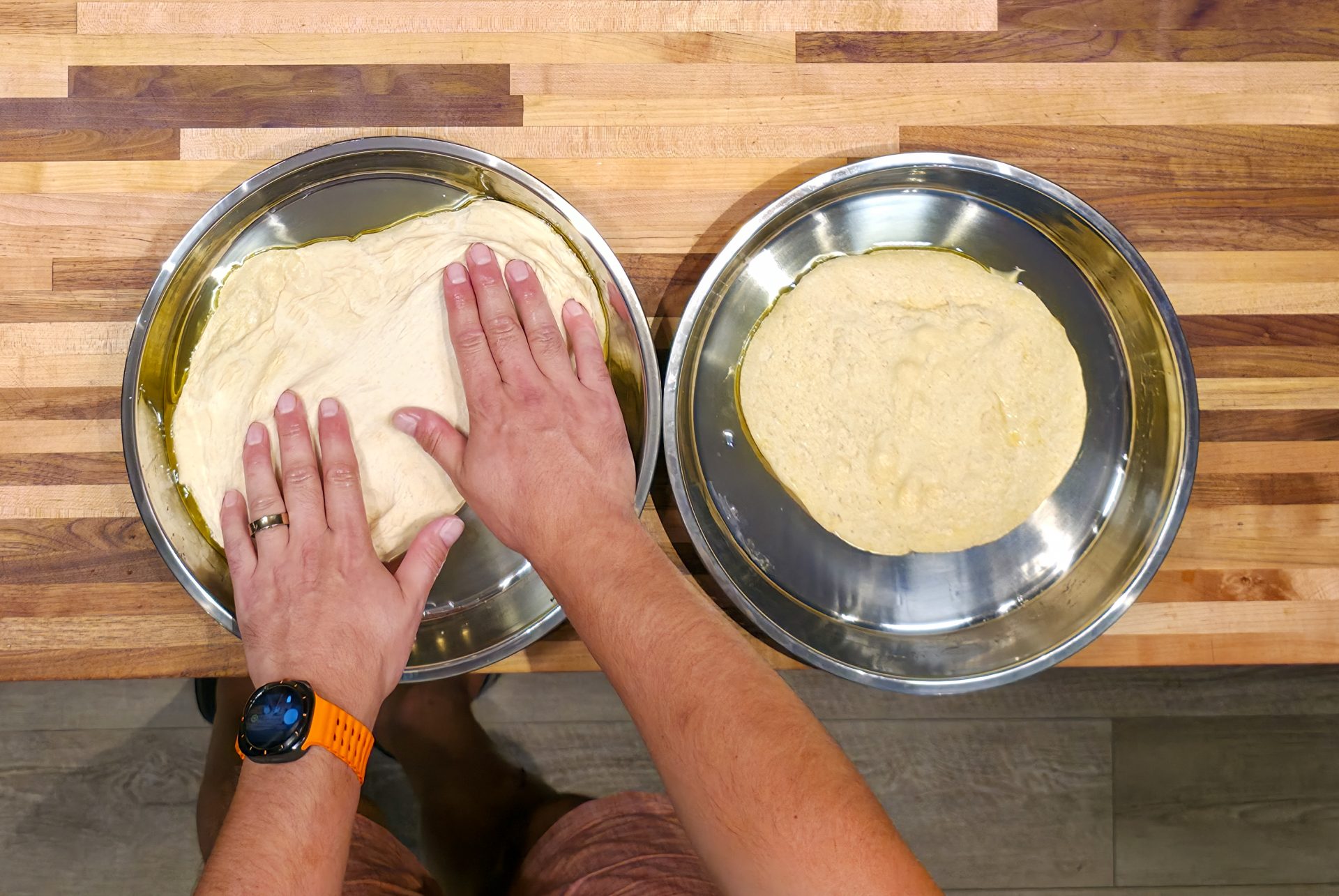
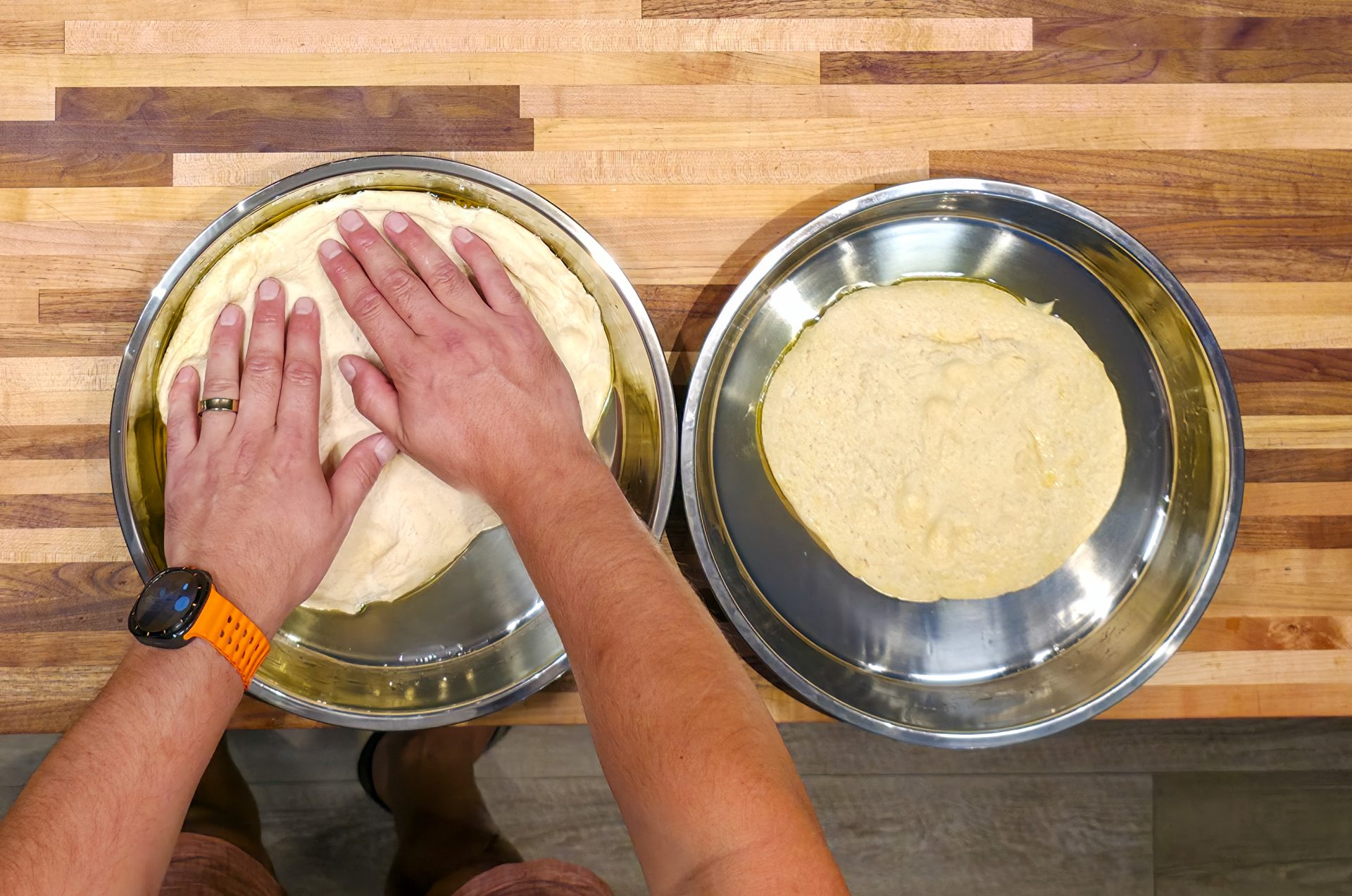
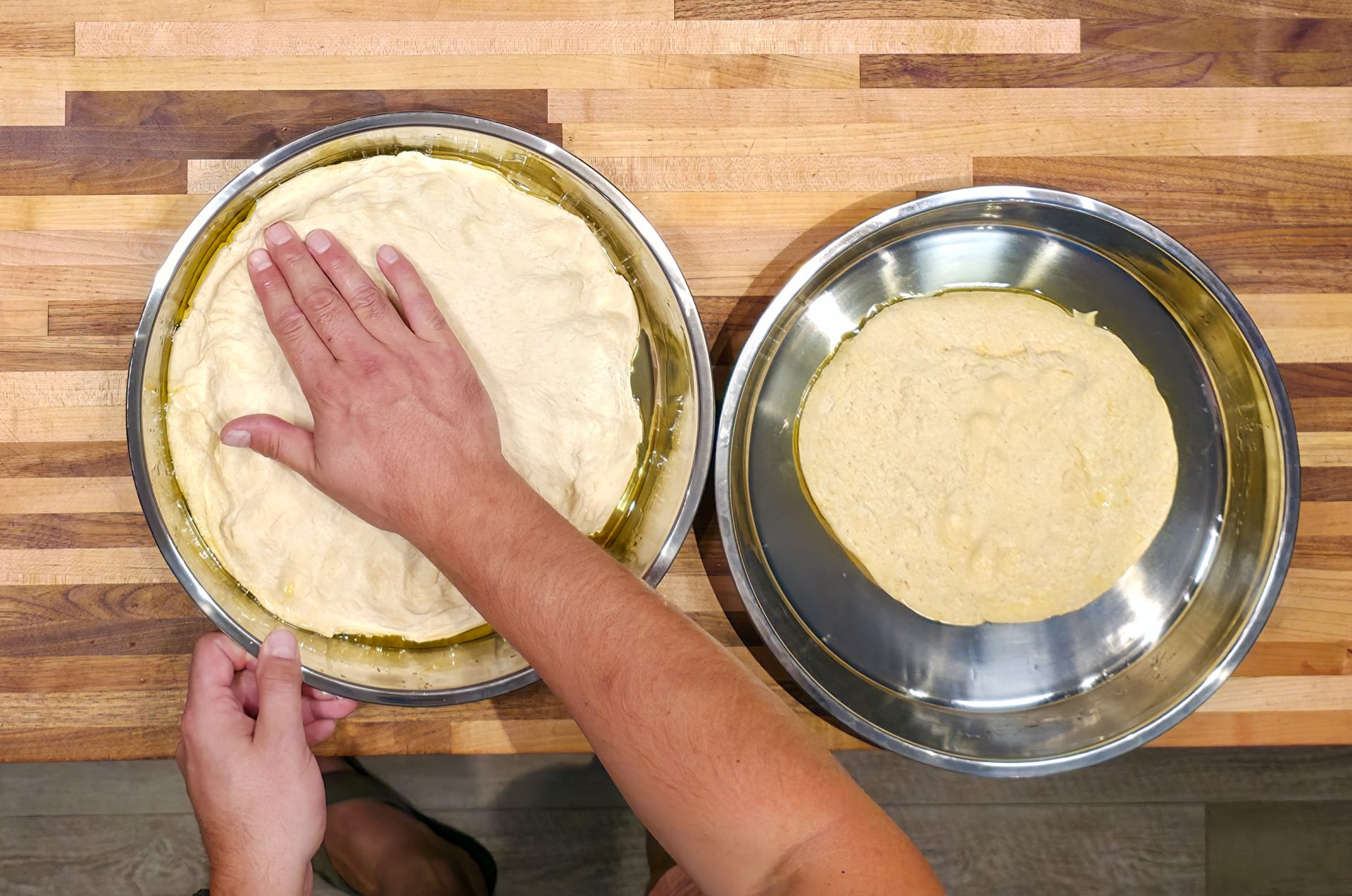
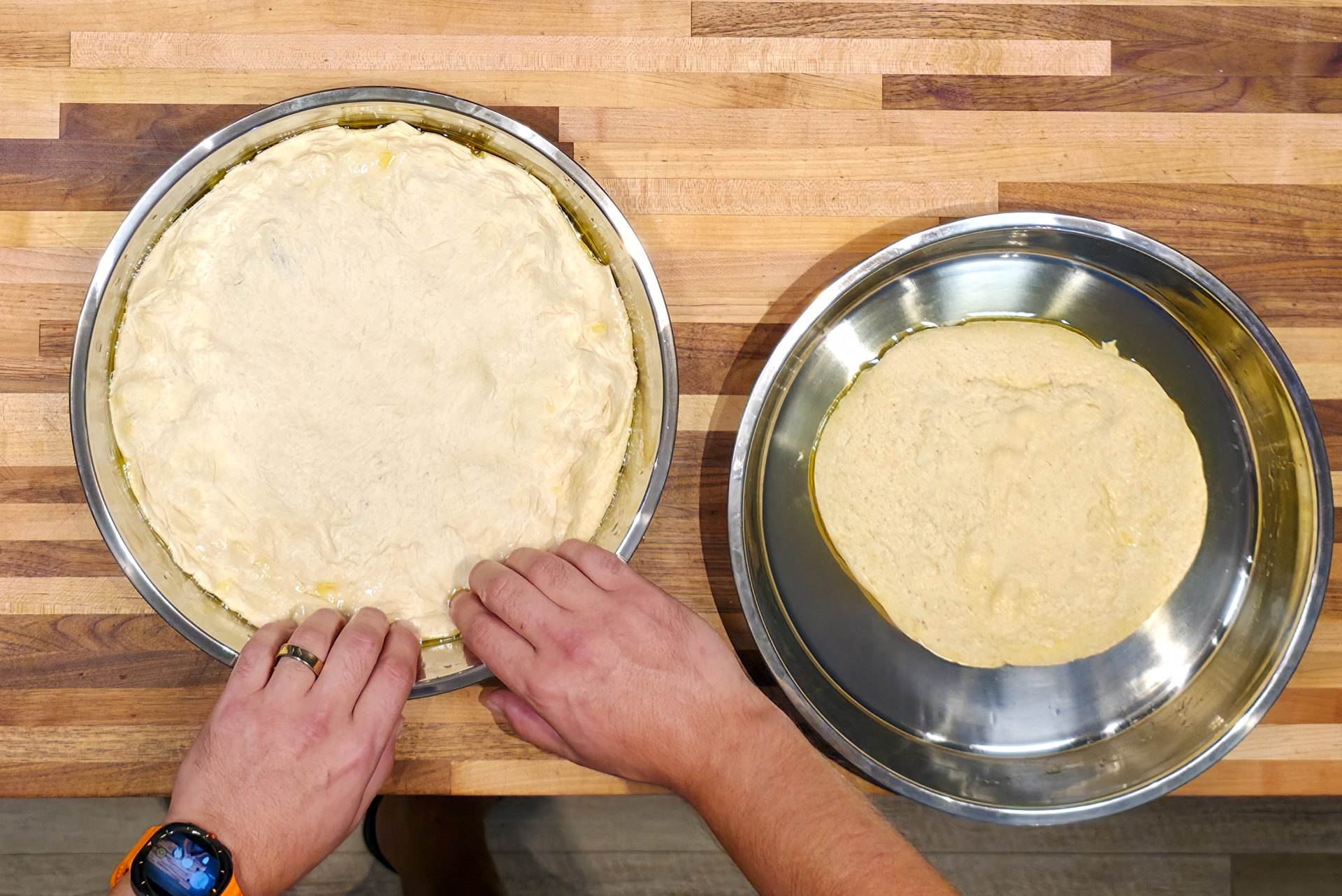
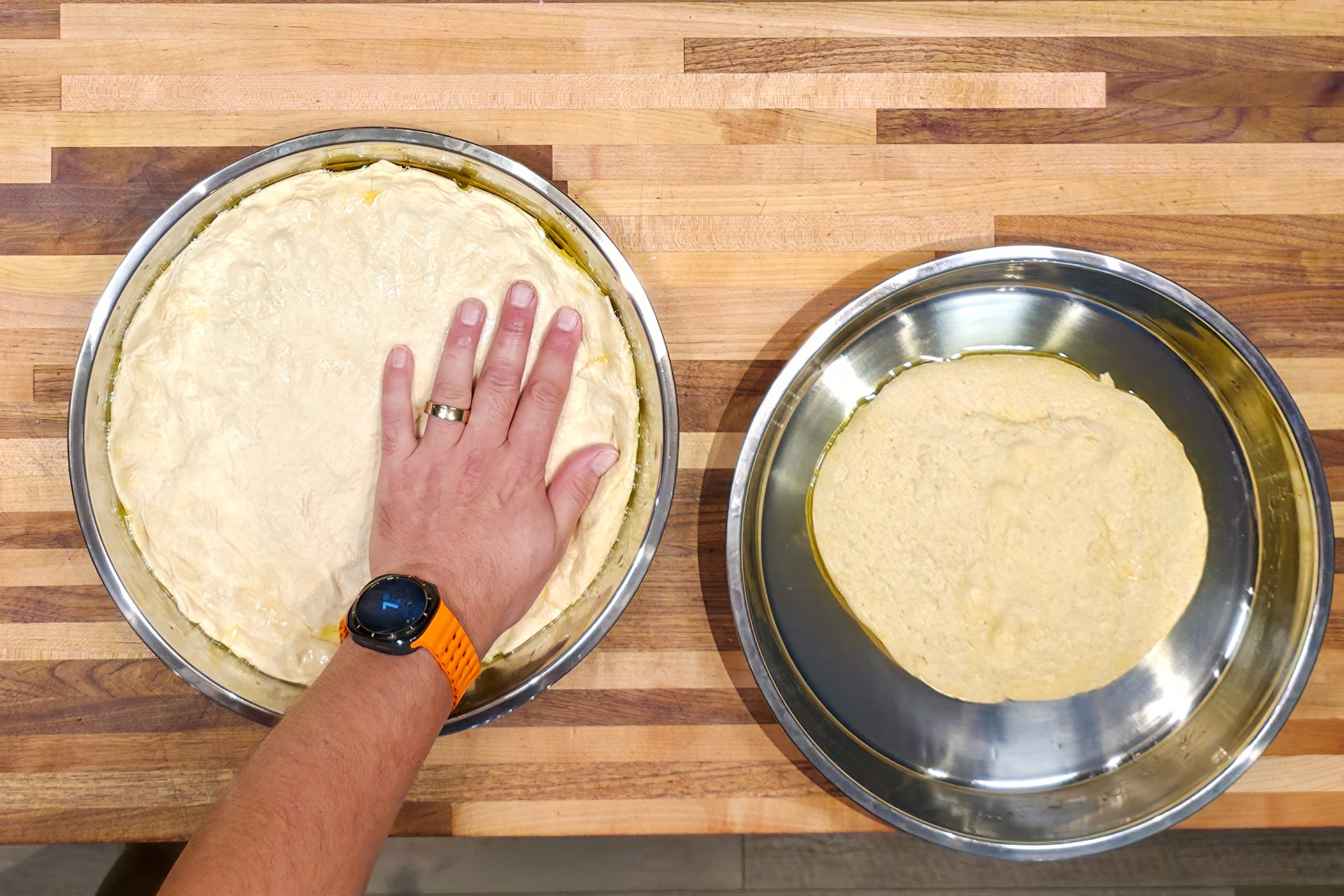
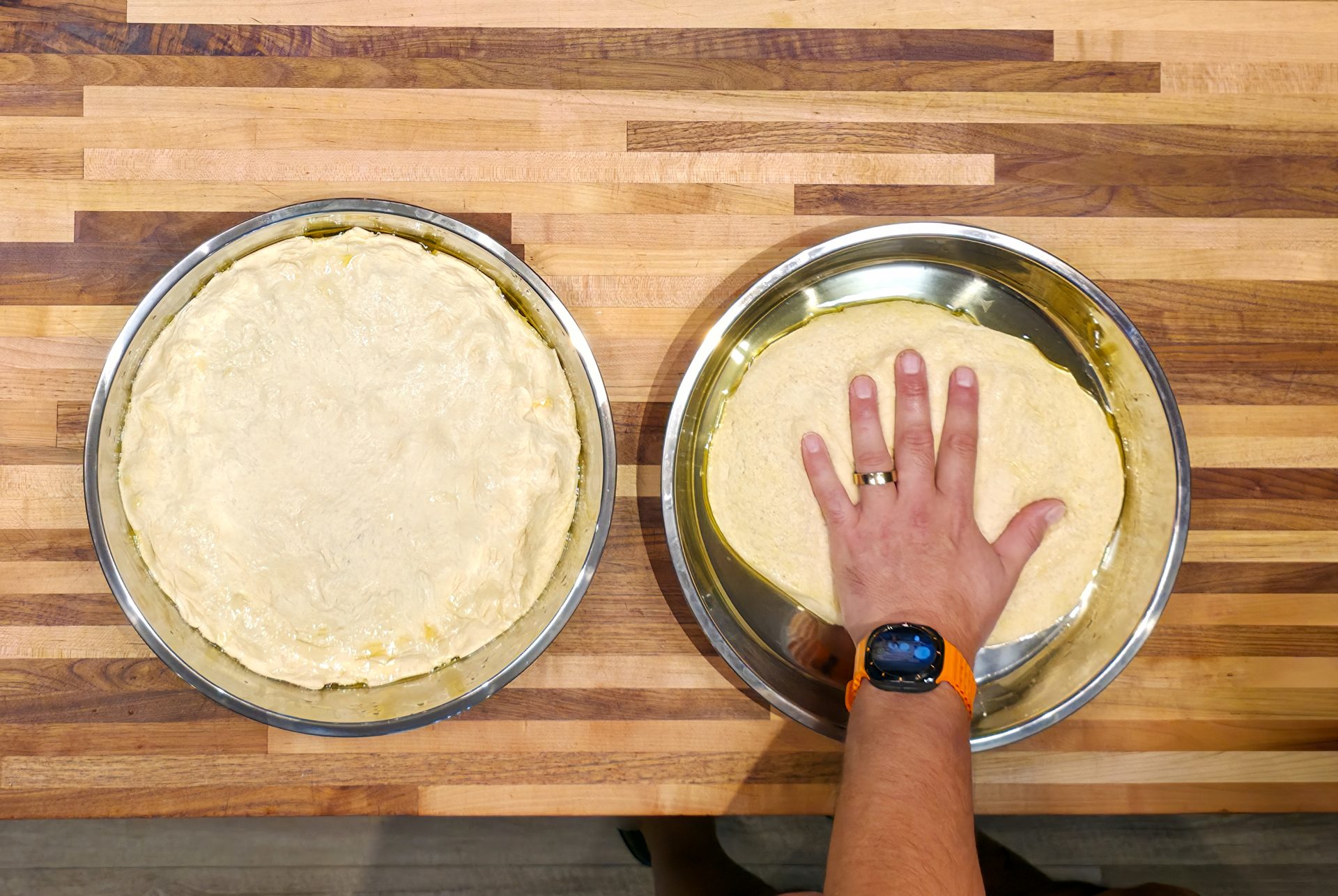
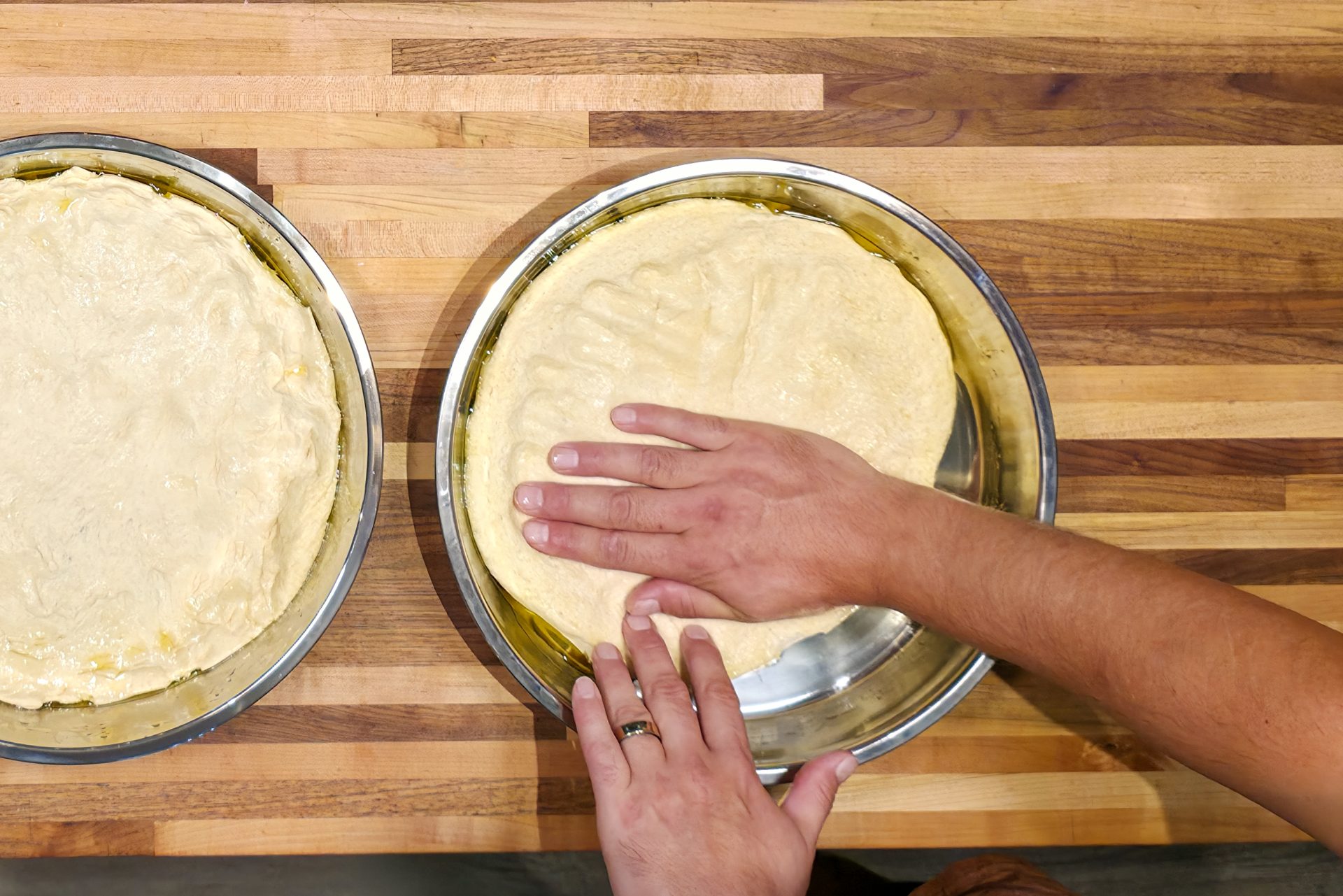
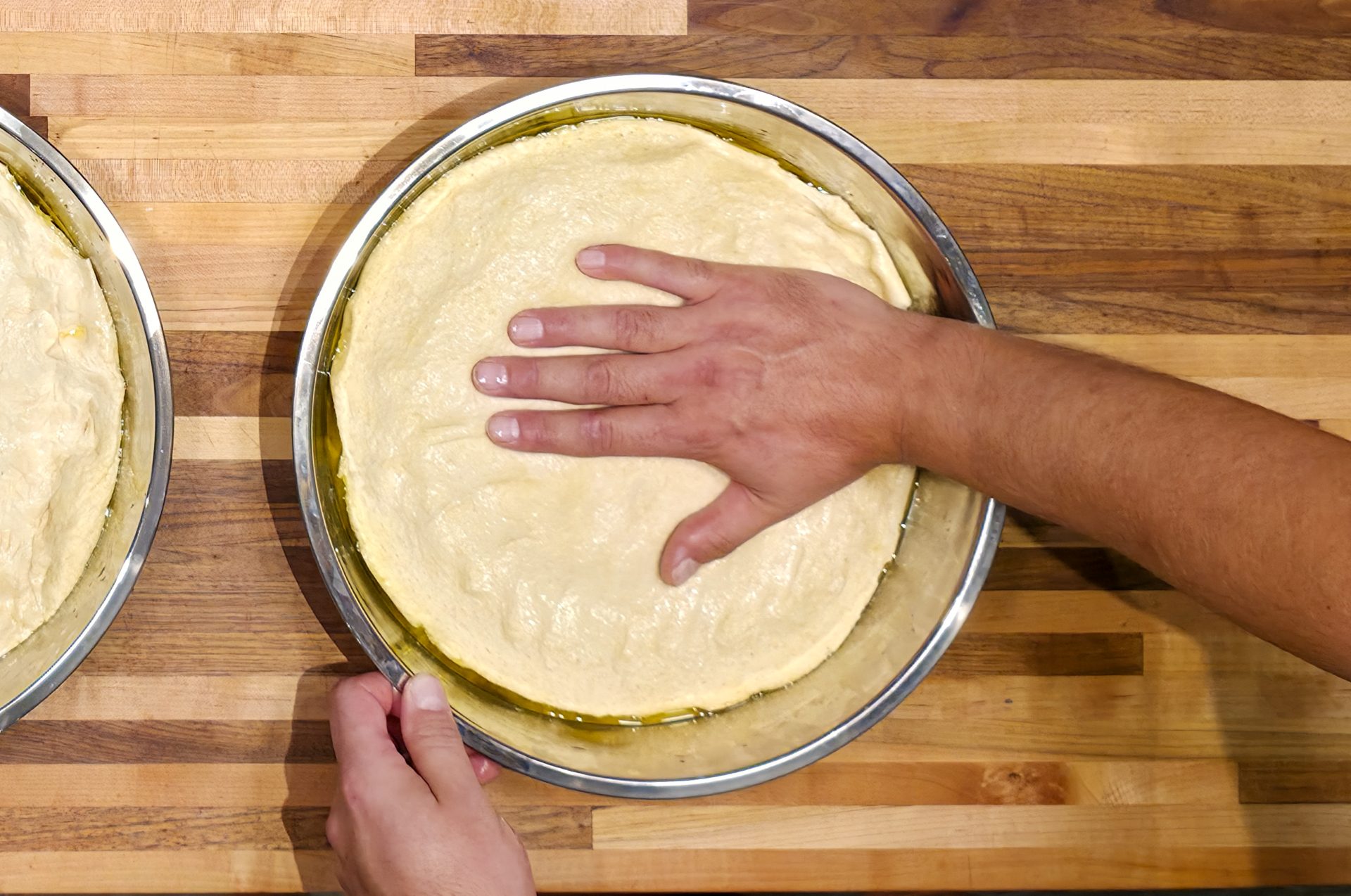
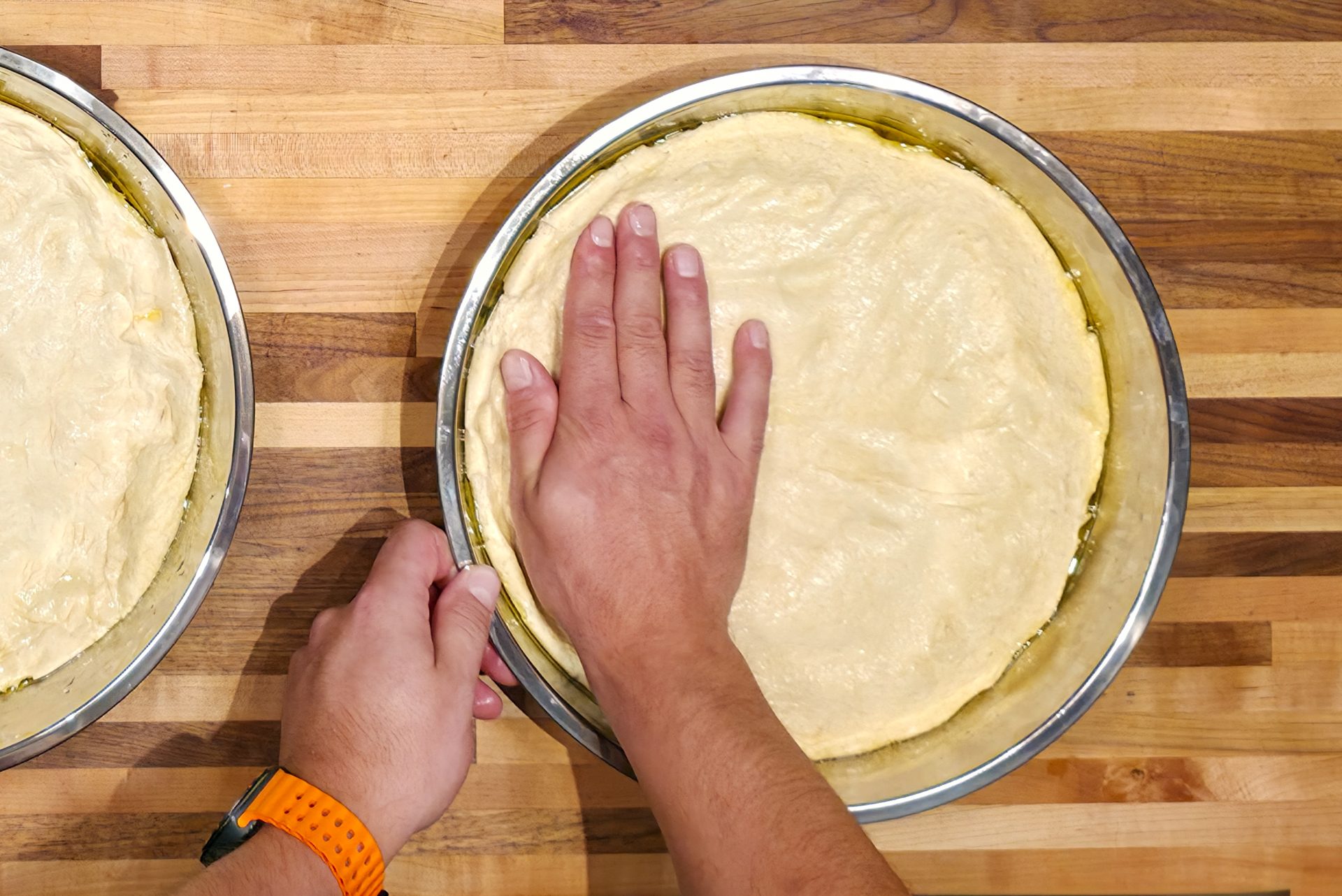
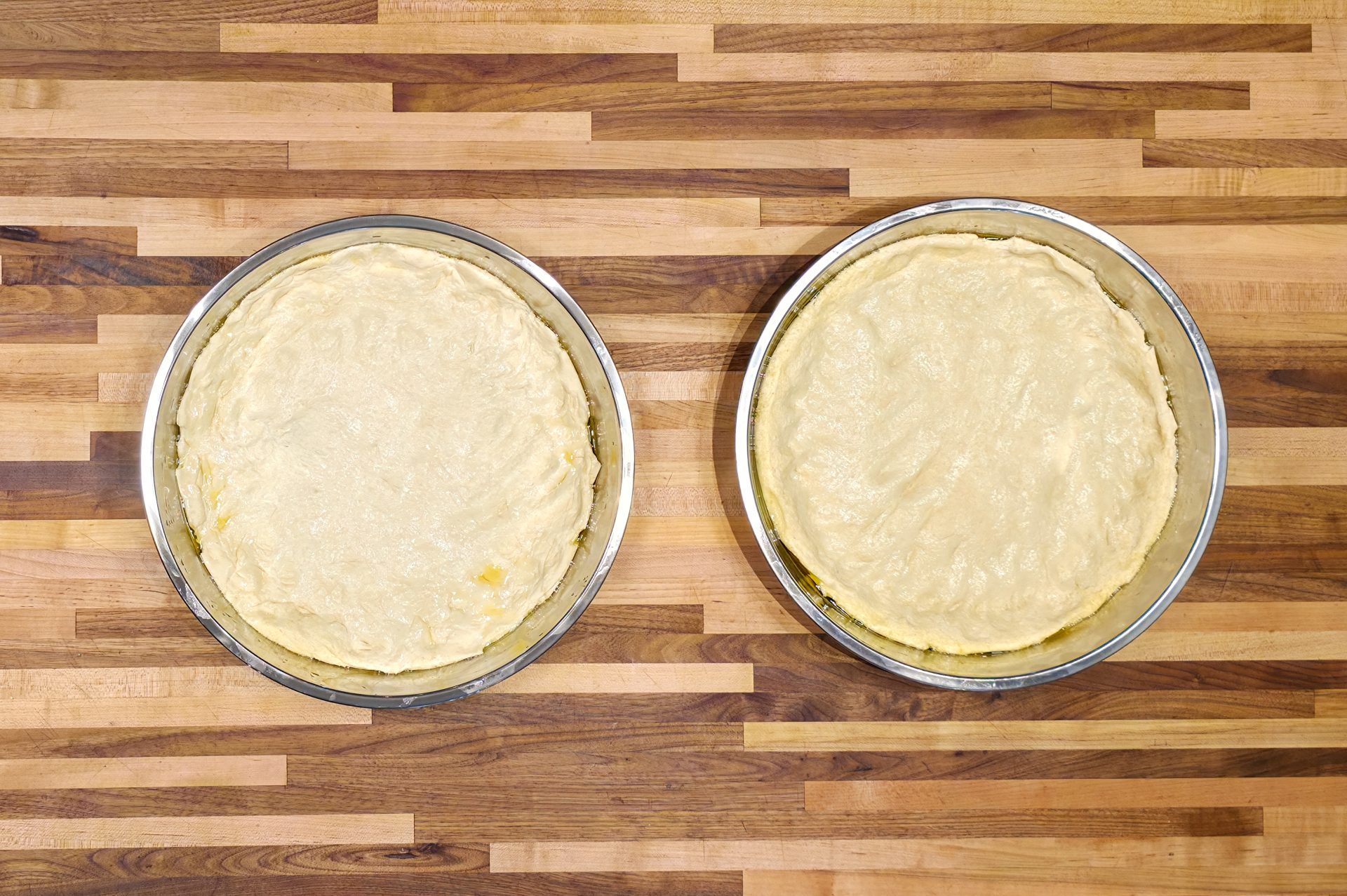
When it is time to shape the dough into your 12 inch pizza pans, let gravity do its job. Place one piece of dough into each pan. Then, using all your fingers, evenly distribute the dough by gently pressing and stretching it until you have covered the entire bottom diameter of the pan. Because the dough has a greasy surface after being flipped into the pan—thanks to the Extra Virgin Olive Oil used for greasing—it is easy to use bare hands without it sticking.
Toppings and Customization
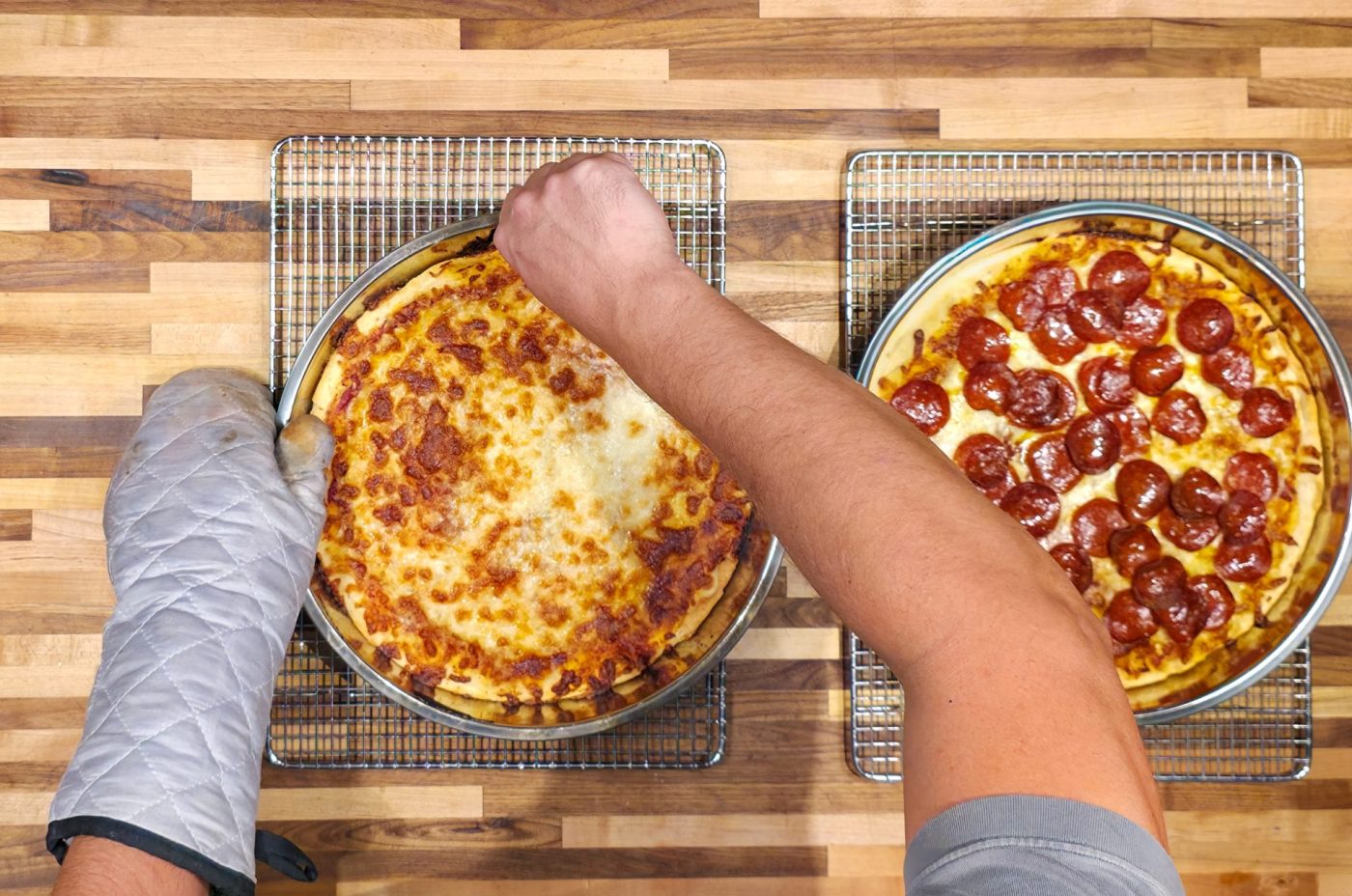
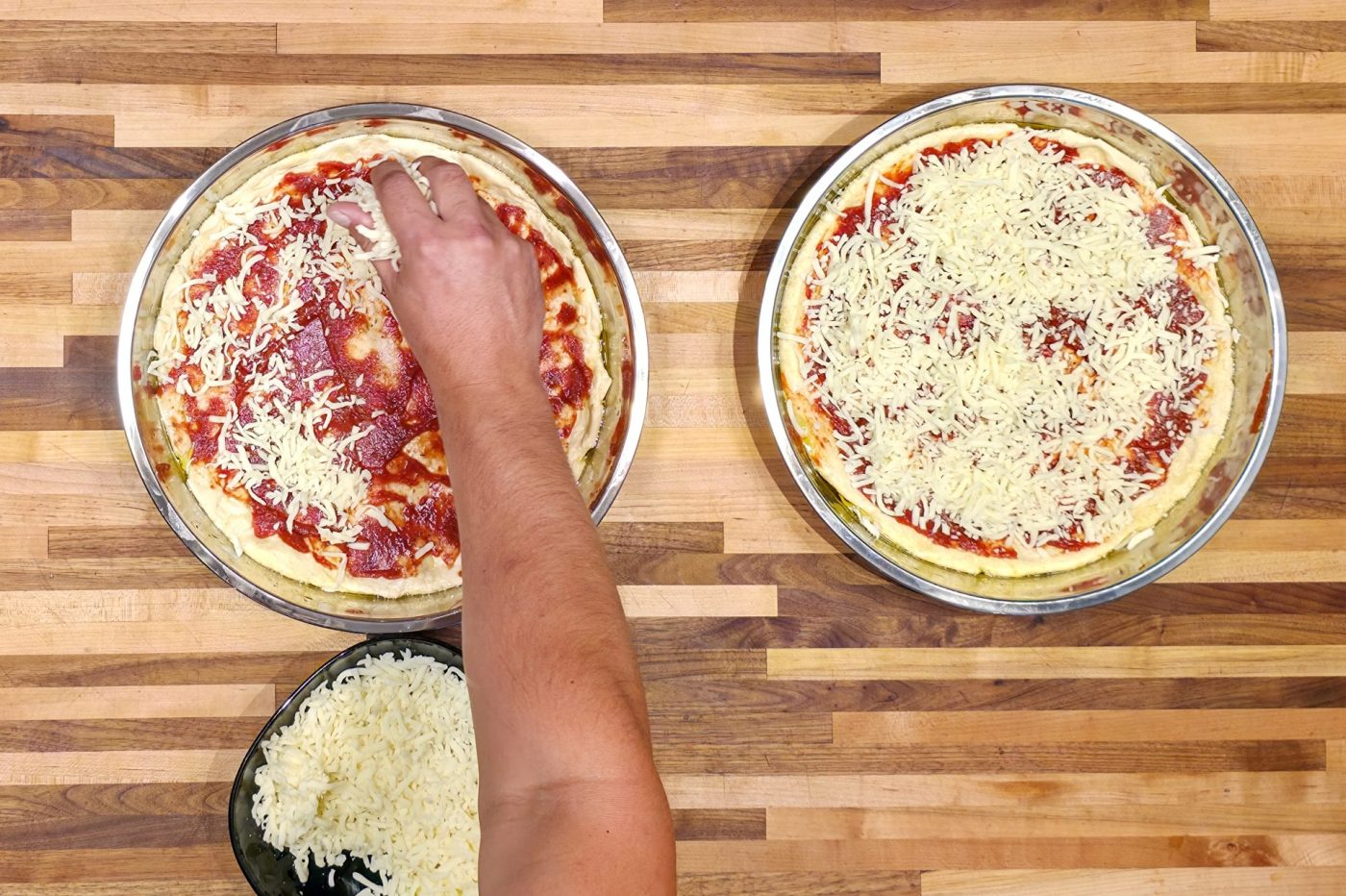
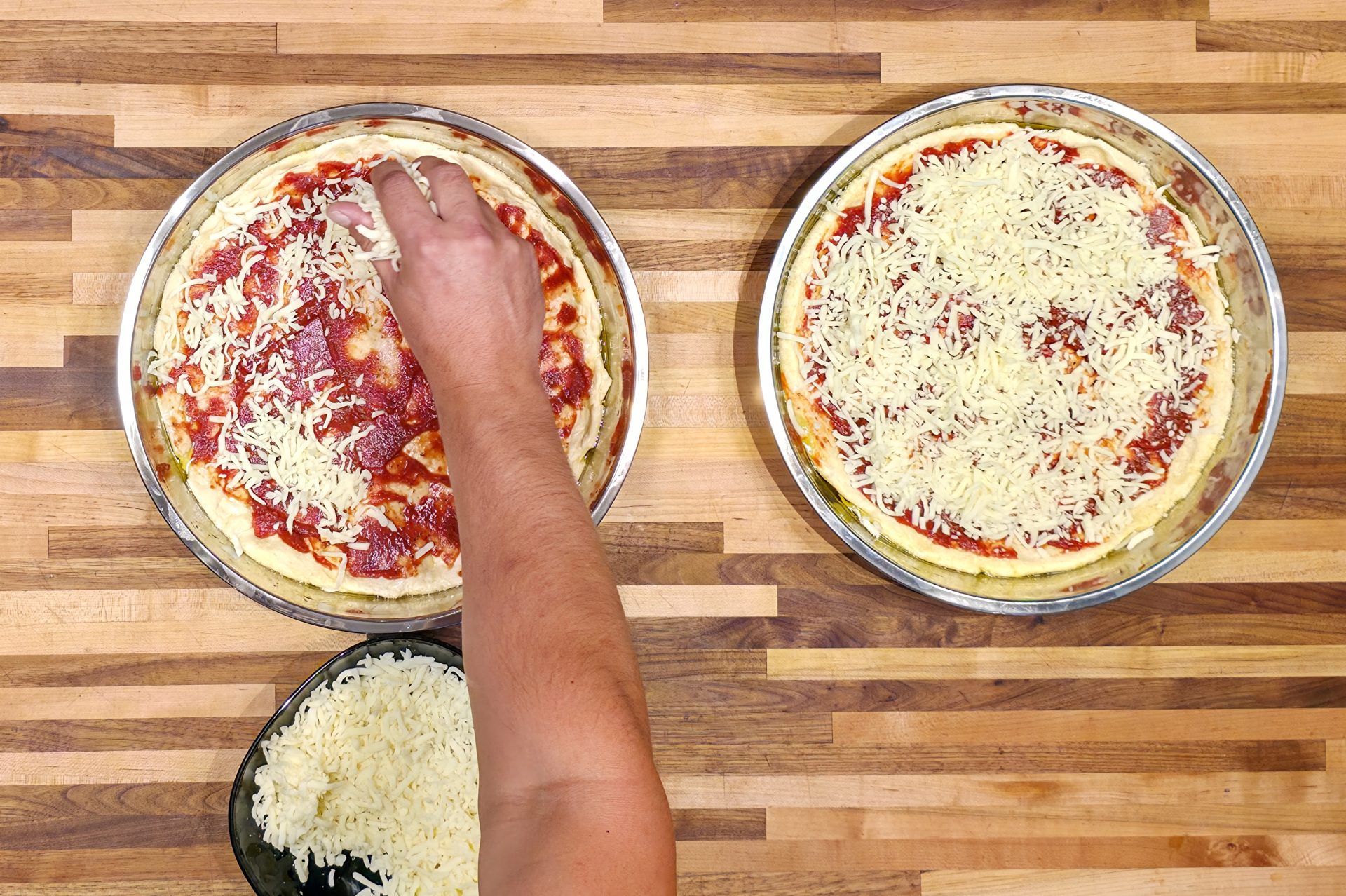
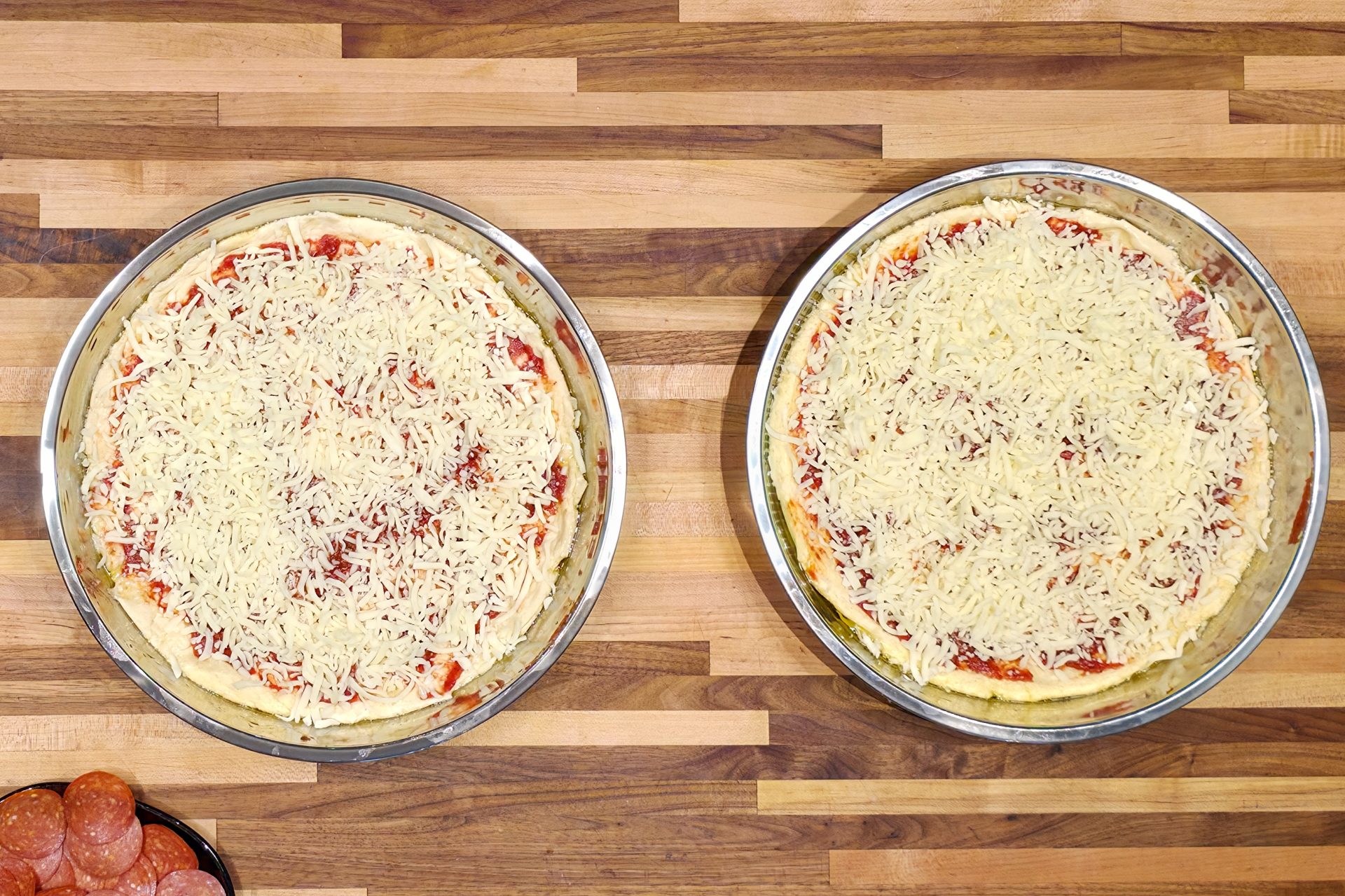
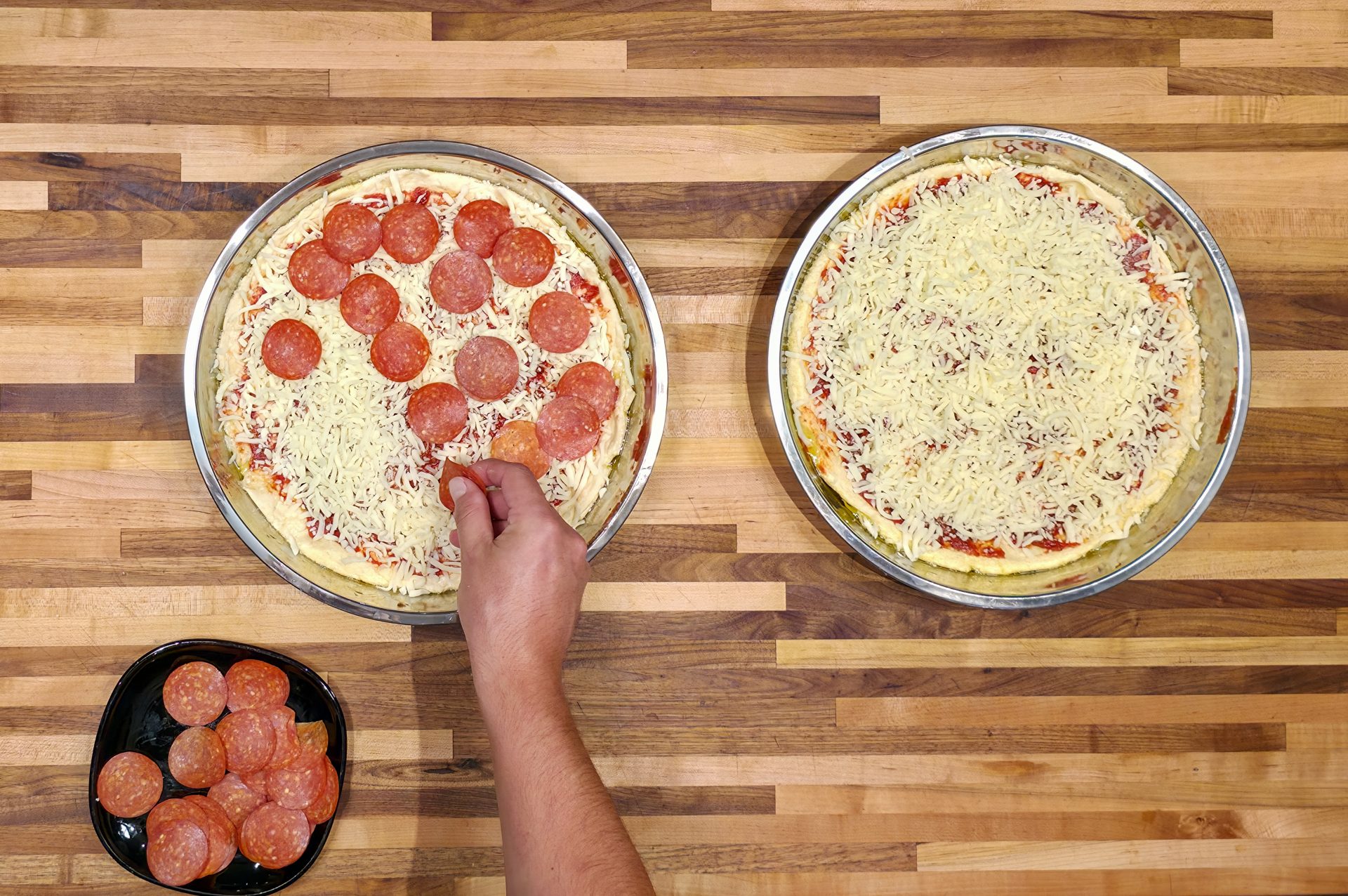
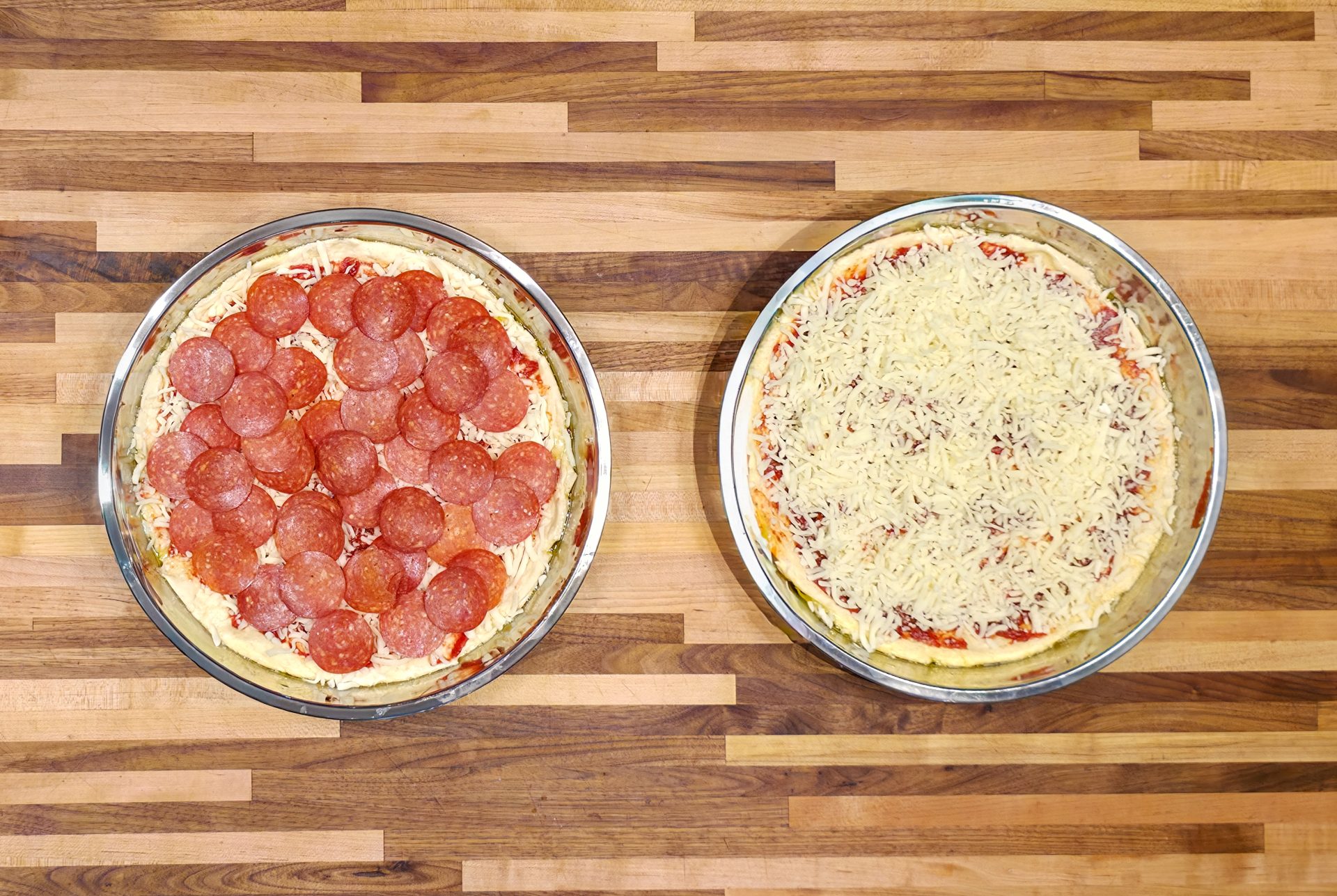
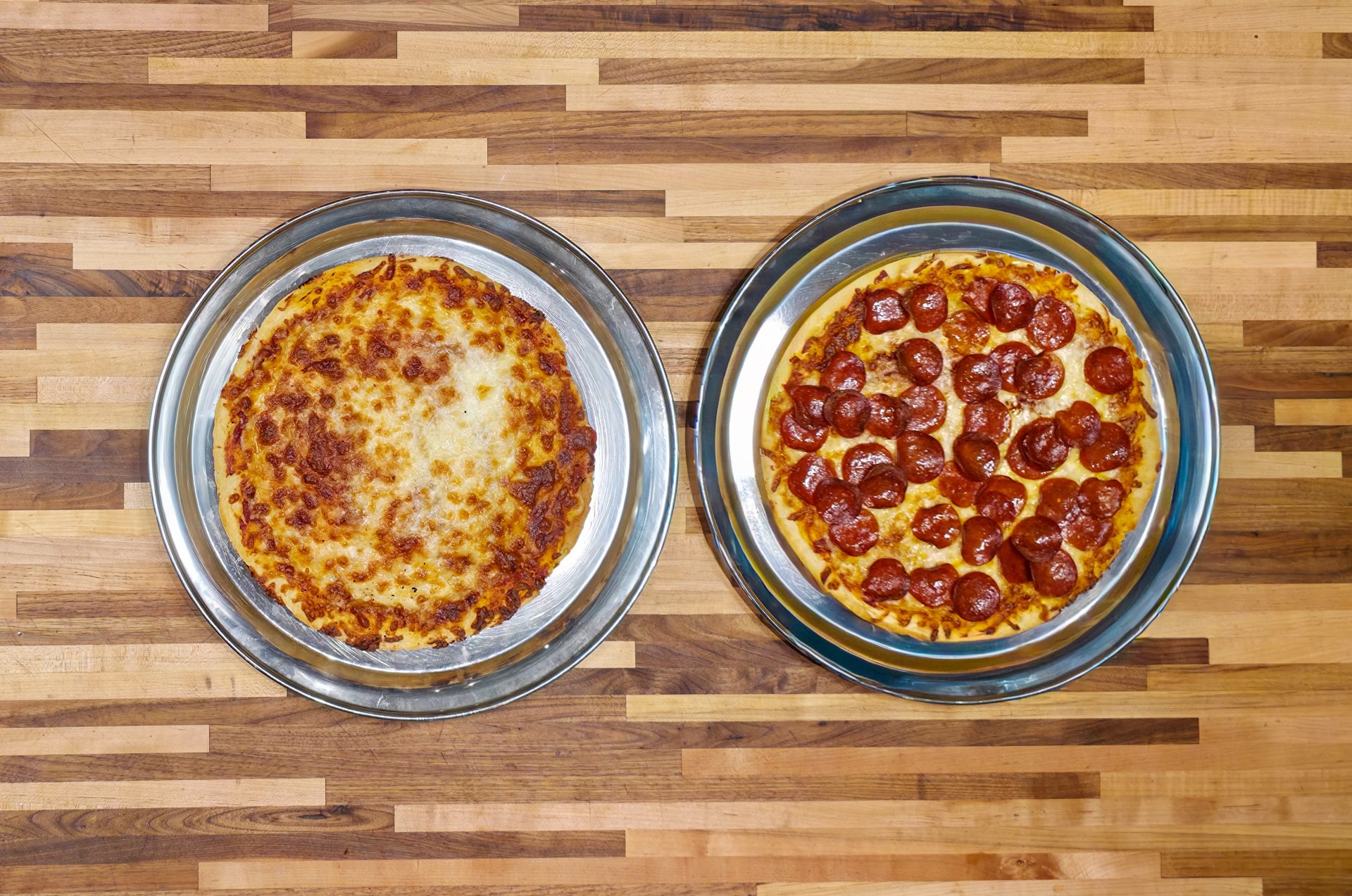
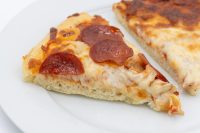
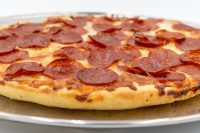
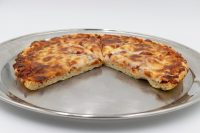
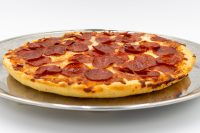
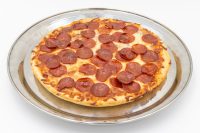
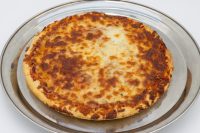
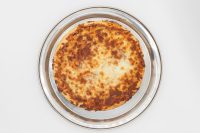
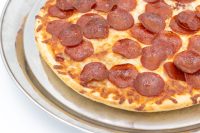
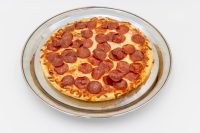
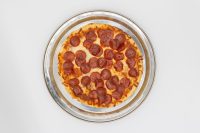
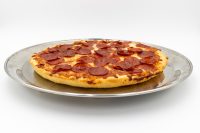
For the toppings, I use 1 LB of shredded mozzarella cheese, which is about 3 ½ cups, but you can use more for cheesy pizzas. For the meat, ¼ to ½ LB of sliced pepperoni salami is standard. A ¼ LB of pepperoni is enough for both pizzas. But since my wife is a vegetarian and I love pepperoni, I use the entire ¼ LB just for my pizza, as you can see in the pictures. This flexibility allows everyone to enjoy their perfect homemade pepperoni pizza.
Baking and Releasing the Pizza
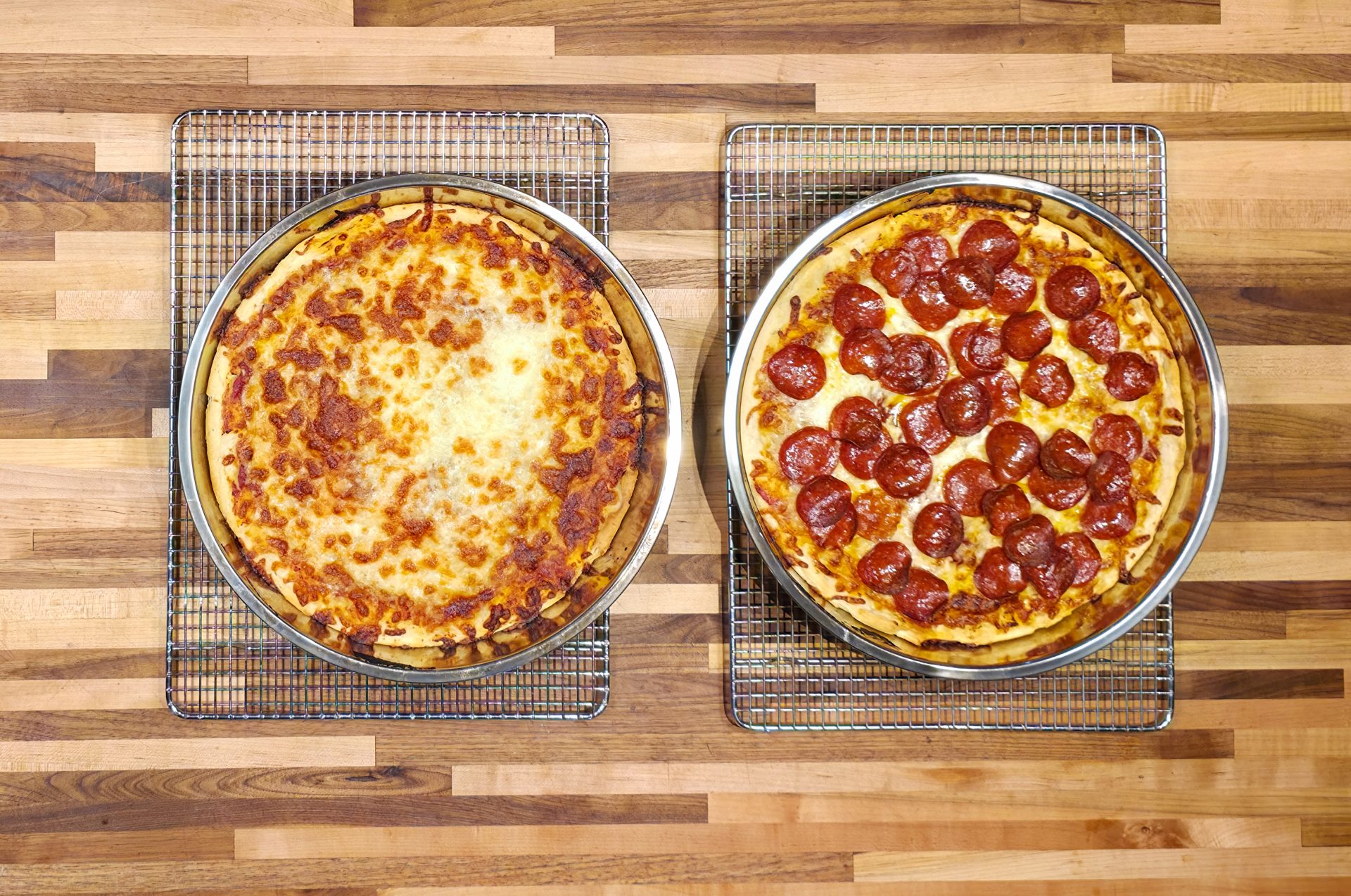
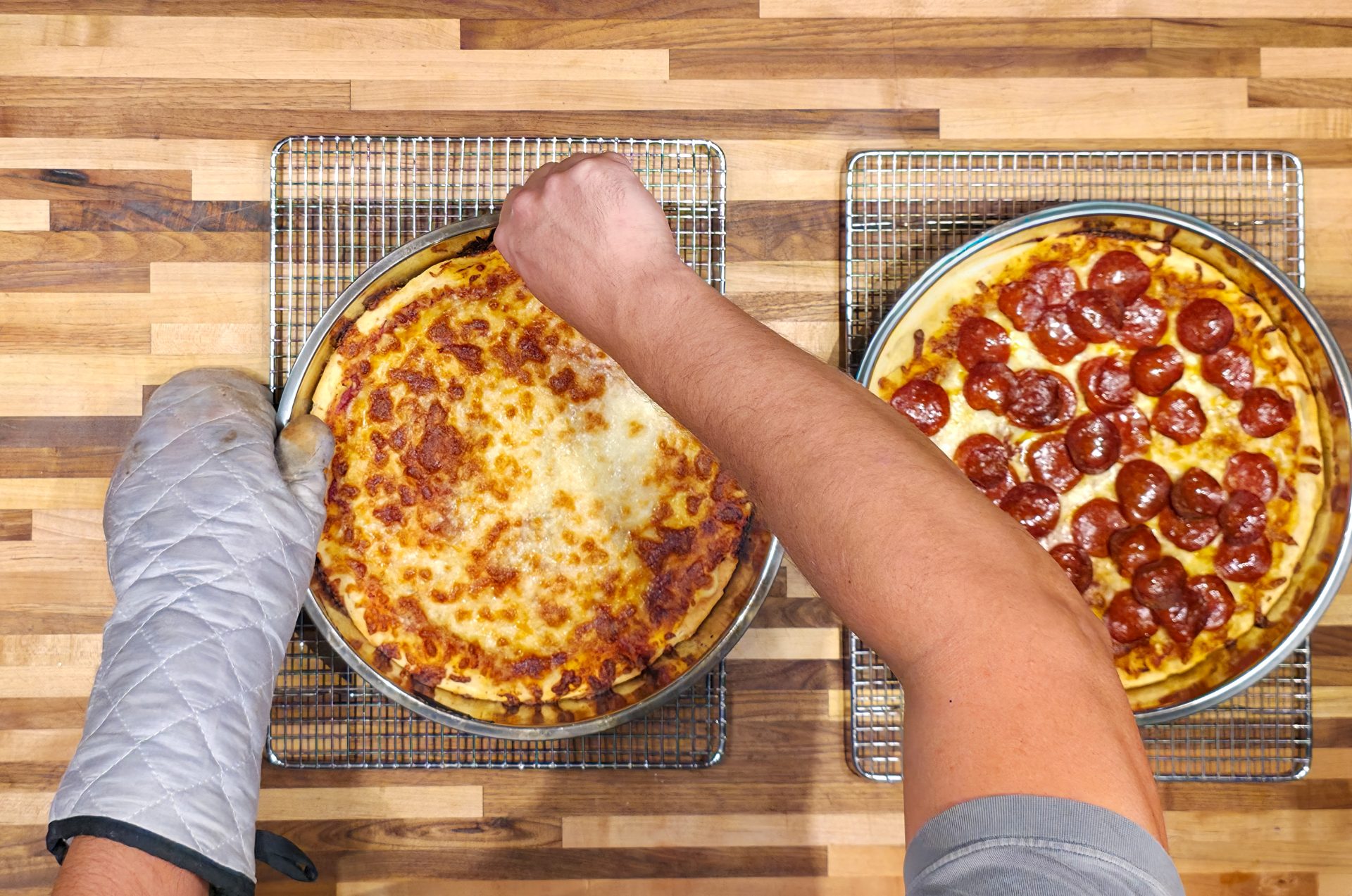
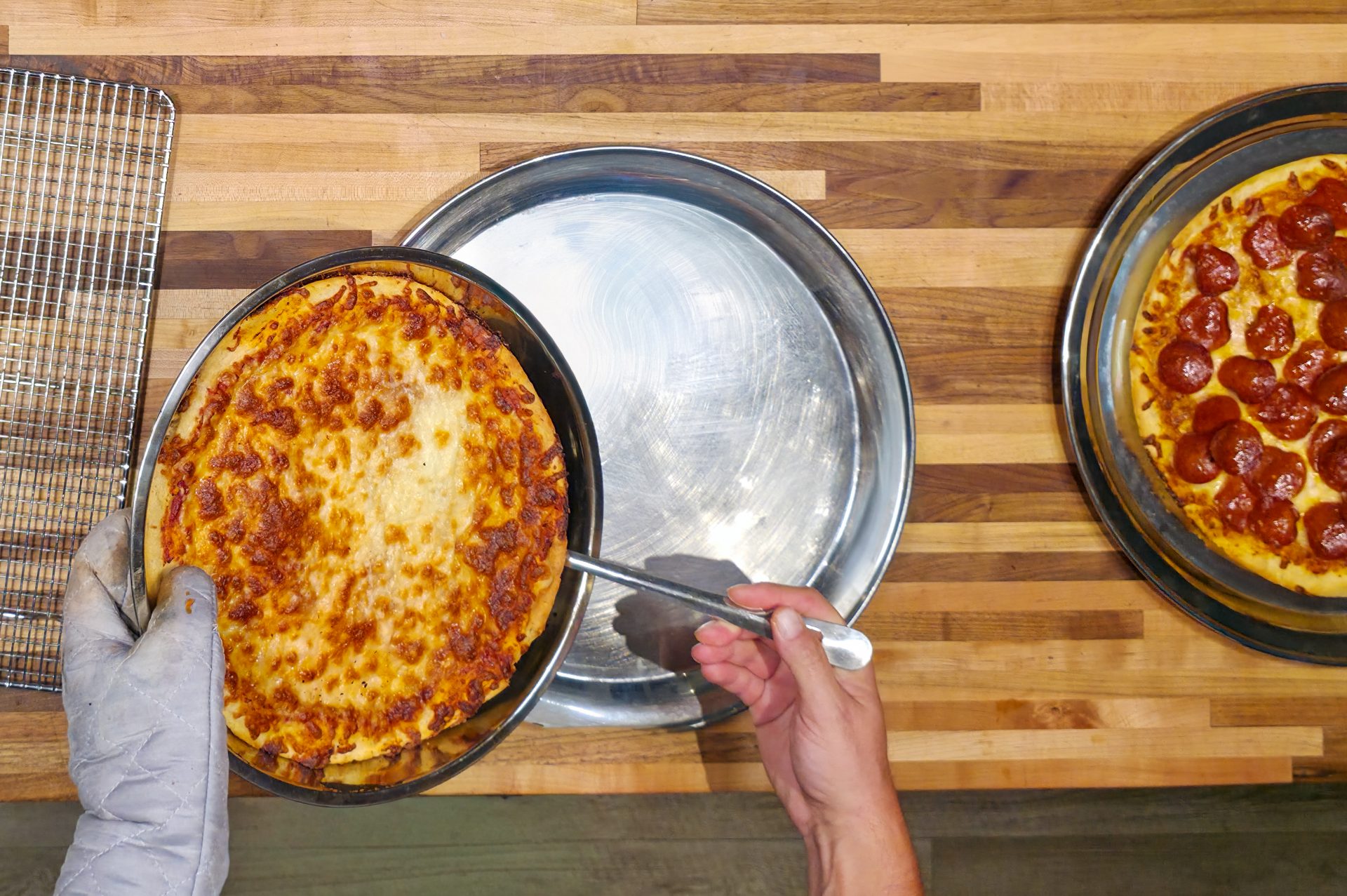
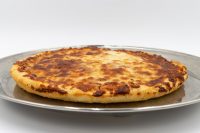
Place the pizzas on the bottom rack of the preheated 400°F oven and bake until done, about 20 minutes. Once removed, let them sit for 3 to 5 minutes on a cooling rack. To serve, run a paring knife around the entire diameter of both pizzas to make sure that the sides are released. Even if well-greased, sometimes sauce or cheese can get over the edge of the pizza, causing the edges to stick to the pan. Then, use a turner to carefully move the 60 min. Pan Pizza onto a serving plate. Make sure to exercise caution by wearing oven mitts to prevent burn injuries.
60 min. Pan Pizza
Ingredients:
Click any ingredient to learn morePizza Dough:
3 cups of bread flour (*)
2 TSP of confectioners’ sugar
5 TSP of active dry yeasts (**)
½ TSP of baking powder
1 TSP of salt
1 ½ cups of water - warm, about 80 to 90°F (preheat in a kettle or microwave) (the temperature should be about 90° to 100°F (preheat in a kettle or microwave))
2 TBSP of Extra Virgin Olive Oil ((or other kind of oil))
Greasing:
2 Drizzle of Extra Virgin Olive Oil (to grease mixing bowls)
4 TBSP of Extra Virgin Olive Oil (or other kind of oil, to grease the pans, 2 TBSP for each pizza)
Sauce: ***
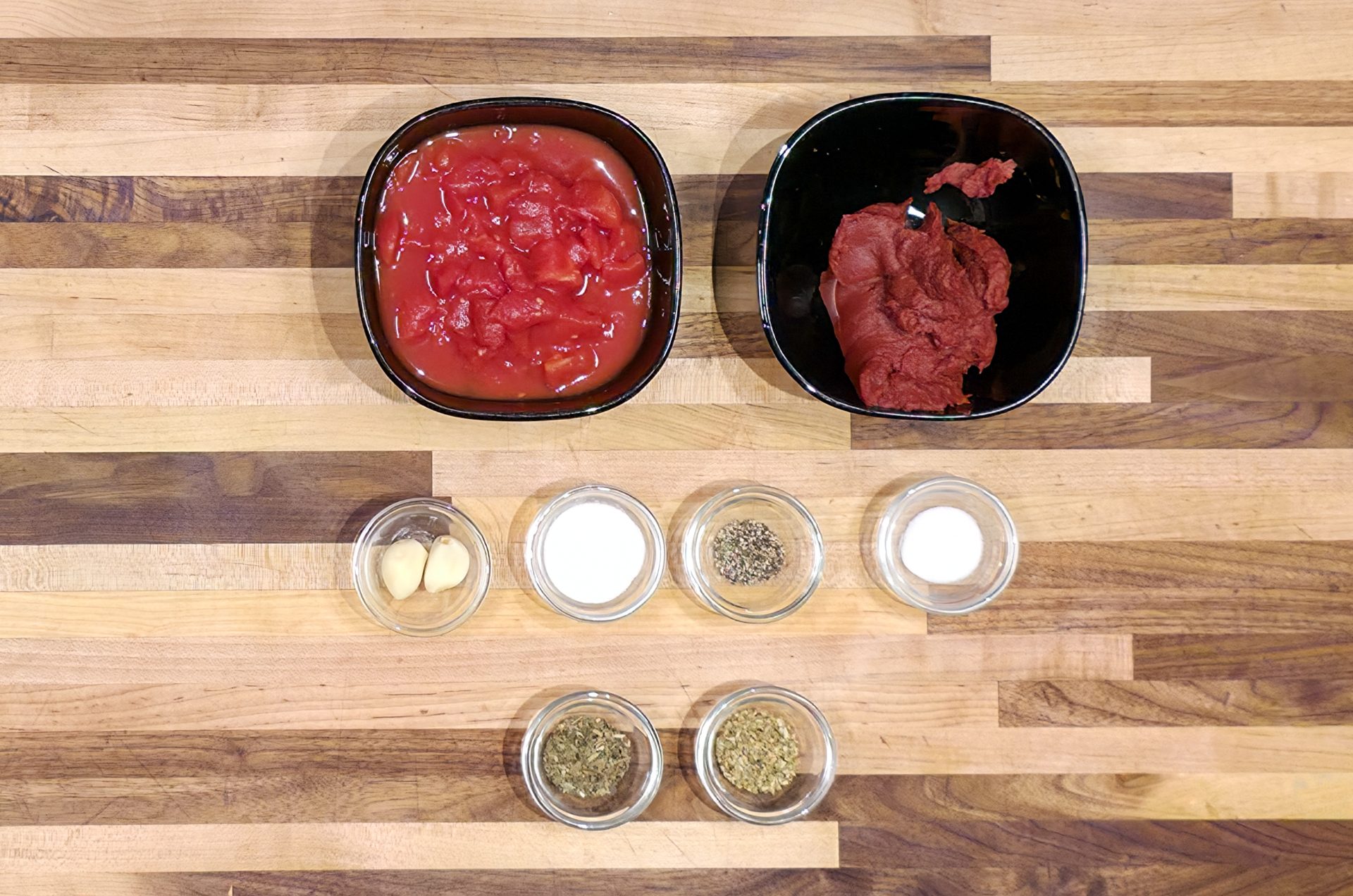
1 can of canned diced tomatoes (15 OZ can including liquid or crushed tomatoes)
1 can of canned tomato paste (6 OZ can )
1 TBSP of granulated sugar
2 cloves of garlic - peeled (or 1 TSP of garlic powder)
1 TSP of oregano (or 1 TBSP of fresh)
1 TSP of basil (or 1 TBSP of fresh)
½ TSP of salt (adjust if needed)
¼ TSP of pepper (adjust if needed)
Toppings:
1 LB of mozzarella cheese - shredded (adjust if needed, about 3 ½ cups) (or more for the cheesy pizzas)
¼ - ½ LB of pepperoni salami - sliced (adjust if needed, ****)
* Optionally, substitute with all-purpose flour
** For this recipe, it is absolutely crucial to use yeast that is not expired or compromised. Make sure that your yeast is in a perfectly sealed pouch right before using it. If you are using part of a bulk package of yeast, make sure that it was properly stored in a sealed container in the refrigerator for no more than six months. Failure to do so may result in denser pizzas.
*** The amount of sauce in the recipe is designed to use the entire can of diced tomatoes as well as the entire can of tomato paste to prevent you from having leftover cans and to prevent the necessity of measuring. Use an amount of the sauce you like, up to half of the total amount for each saucy pizza, or a quarter of the amount for pizza with a moderate quantity of sauce, based on your preference. If you do not use all the sauce, feel free to store it in the refrigerator for up to one day or in the freezer for up to half a year for your next pizza project.
****A ¼ LB of pepperoni is enough for both pizzas. But since my wife is a vegetarian and I love pepperoni, I use the entire ¼ LB just for my pizza, as you can see in the pictures.
Tools:
Click any tool to learn more1x Kitchen Mixer with Hook Attachment (or medium mixing bowl (for hand processing))
1x Whisks
1x Plate (or Plastic wrap)
1x Bowl Scraper (or silicone spatula)
2x pizza pans 12” or larger (or oven-proof fry or sauté pans of any material with a diameter of 12” and larger or cake pan)
1x Measuring Pitcher (or Medium Mixing Bowl)
1x Immersion Blender (or blender, or food processor)
1x Pizza Cutter (or knife)
Nutrition per entire recipe (whole batch):
EstimatedCalories 3153
Protein 212.3 g
Fat 90.7 g
Saturated fat 13.1 g
Carbohydrate 386.6 g
Sugars 67.9 g
Fiber 40.0 g
Sodium 6673 mg
Cholesterol 82 mg
Estimated. Worked out from the ingredients above using the United States Department of Agriculture’s FoodData Central reference data. An estimate, not a measurement — brands, sizes and how much of a marinade actually ends up on the plate all move it.
Directions:
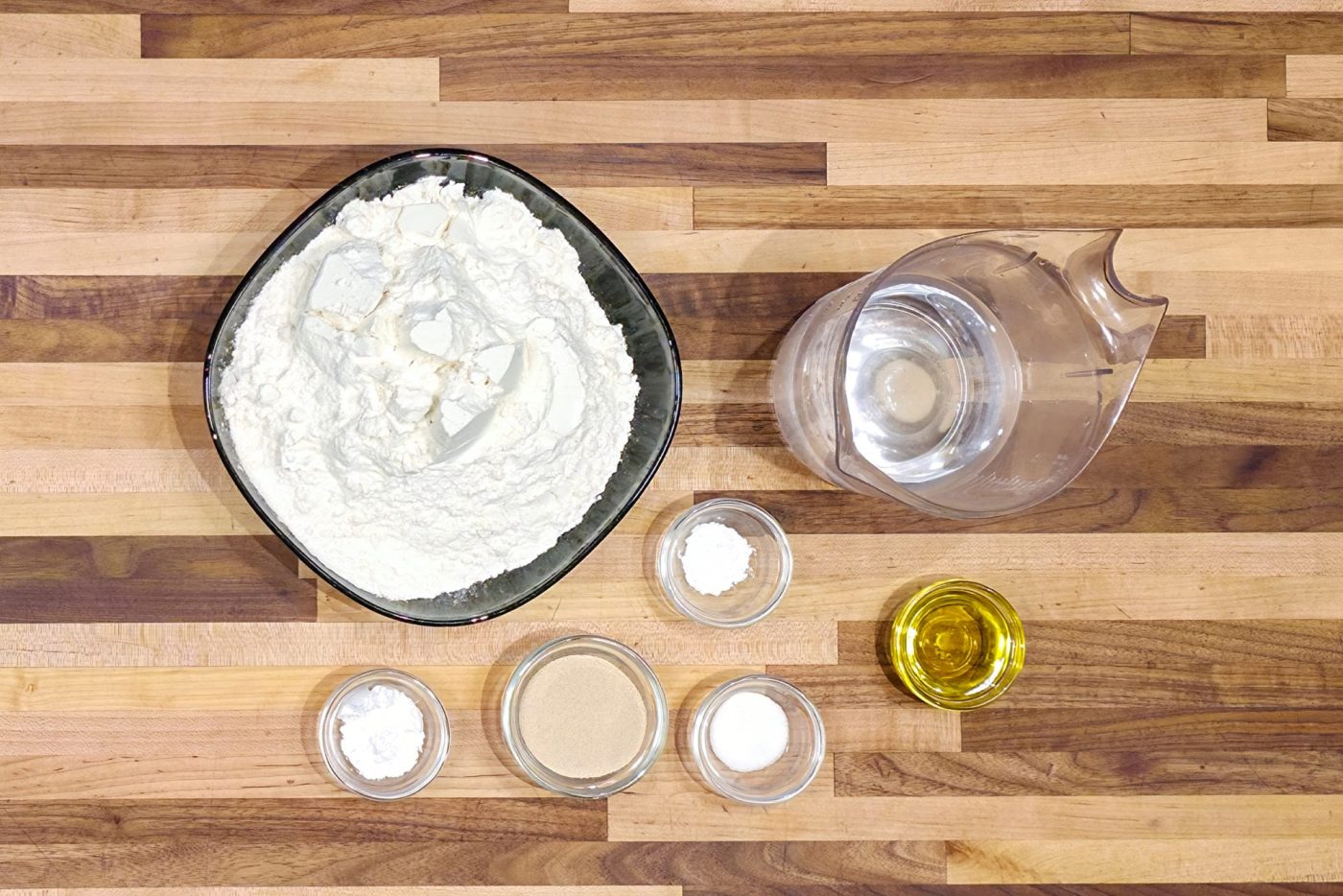
1.Dough:
Let’s start the 60-minute Pan Pizza by preparing the dough.
1.1.
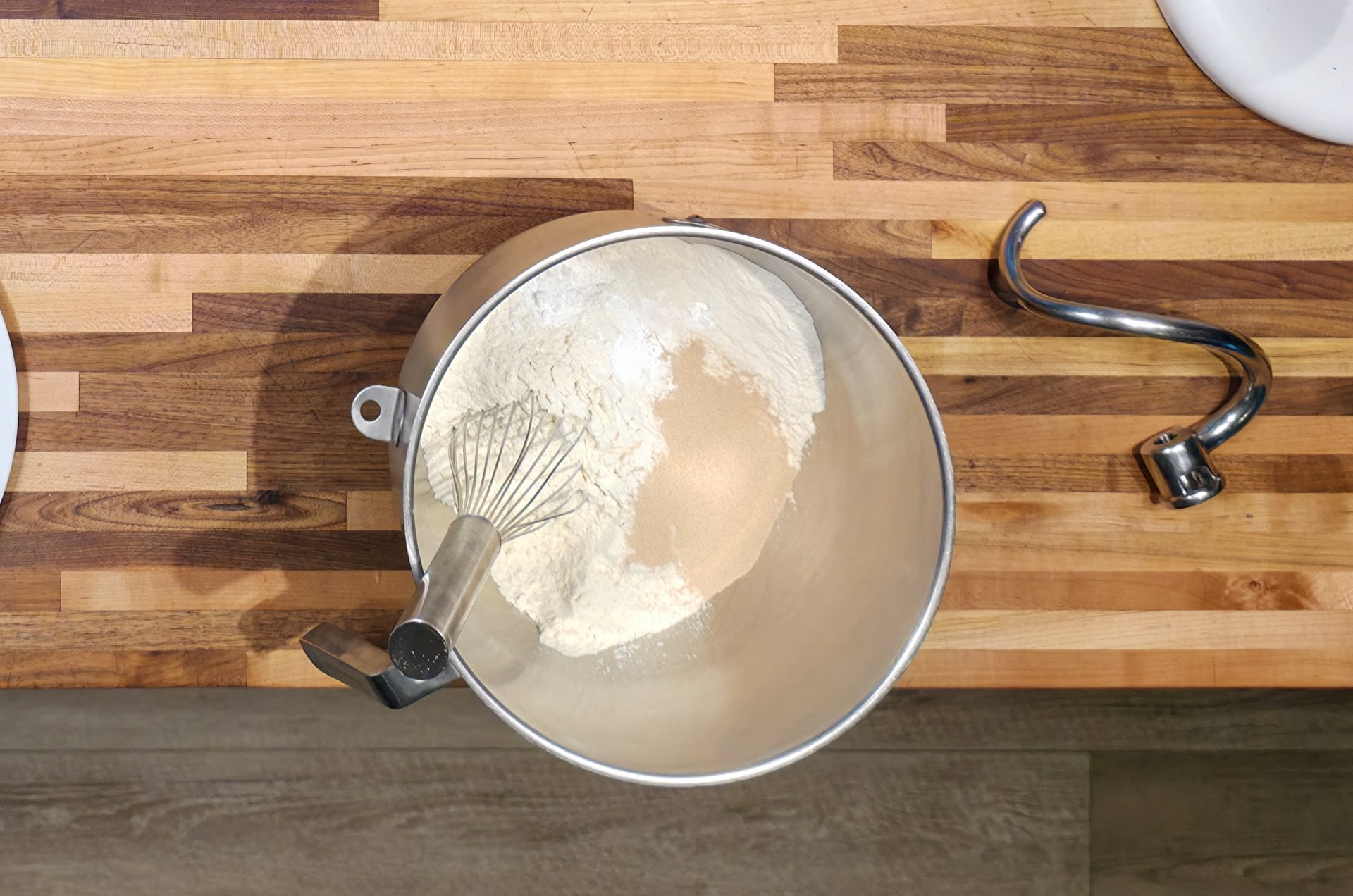
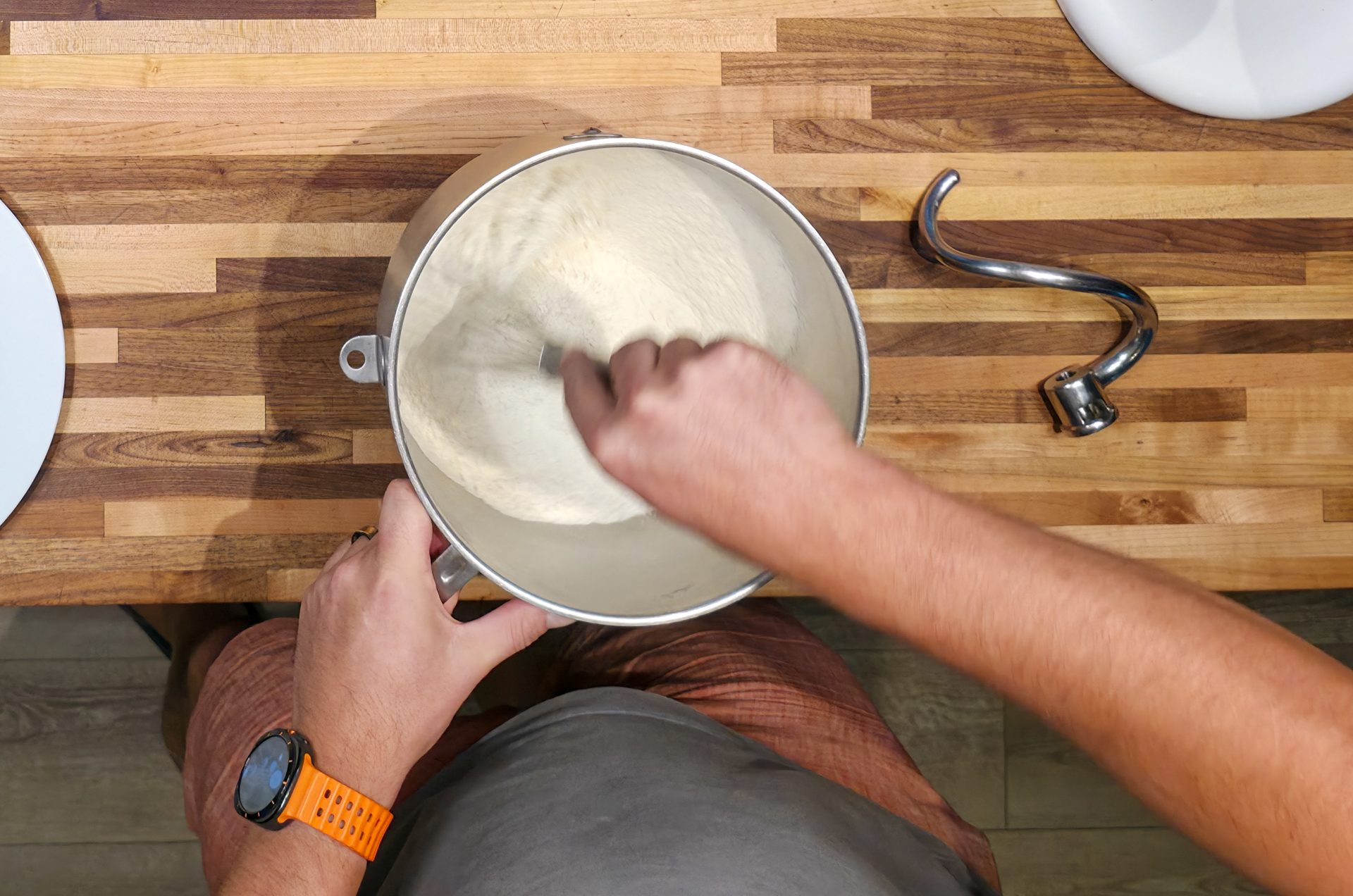
1.2.
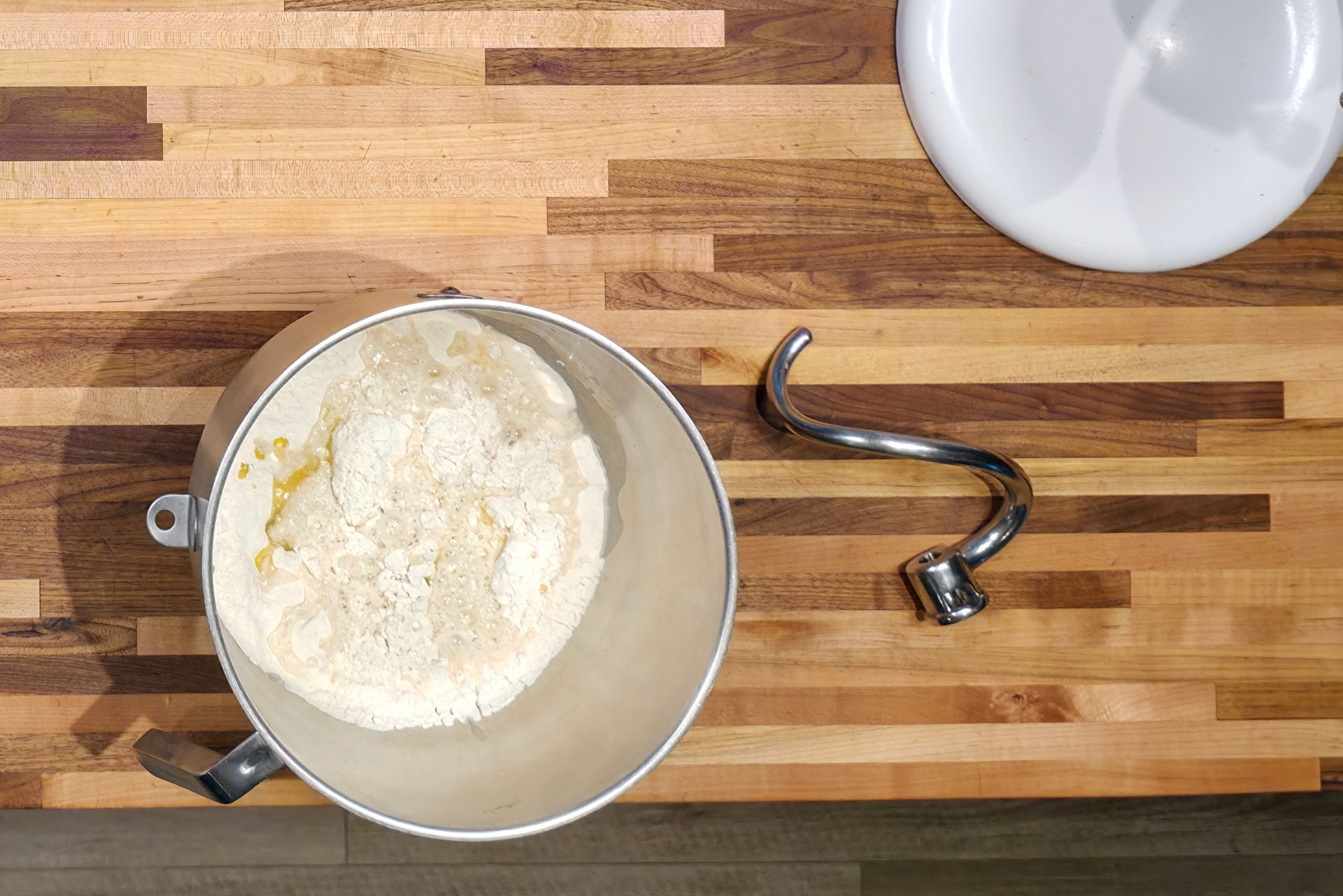
1.3.
Then, increase the speed to medium-high and knead until a compact dough, which stops sticking to the bottom of the mixing bowl, forms (usually about 2–4 minutes).
Note:
The “no sticking” part applies only when the dough is being processed. When you turn off the mixer, the dough will rest and be a little sticky, which is okay.
2.Rising the Dough:
Note: This is a fast-rising dough, thanks to a large amount of yeast and the use of baking powder, which together will give the pizza a perfect texture.
2.1.
2.2.
2.3.
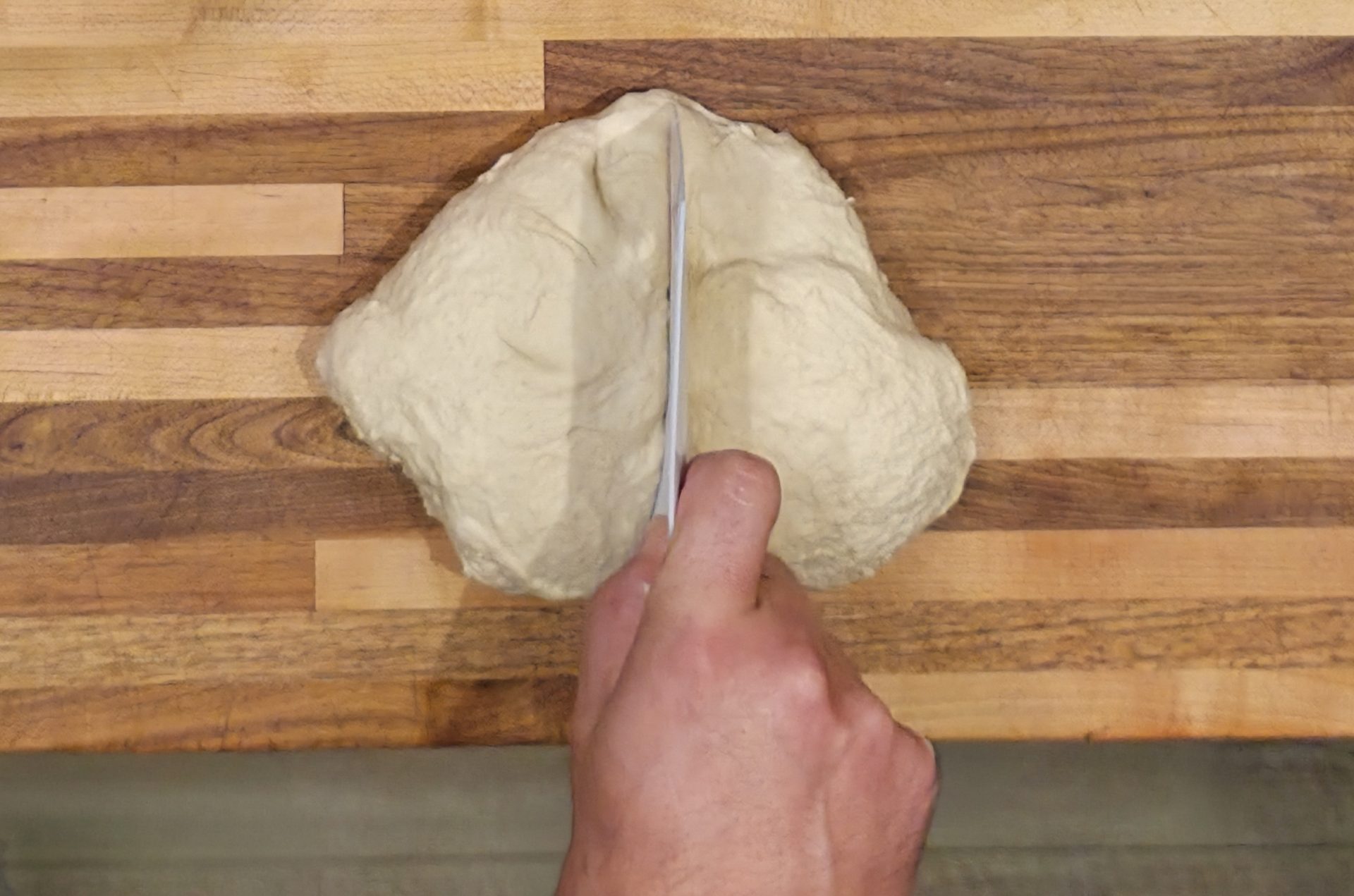
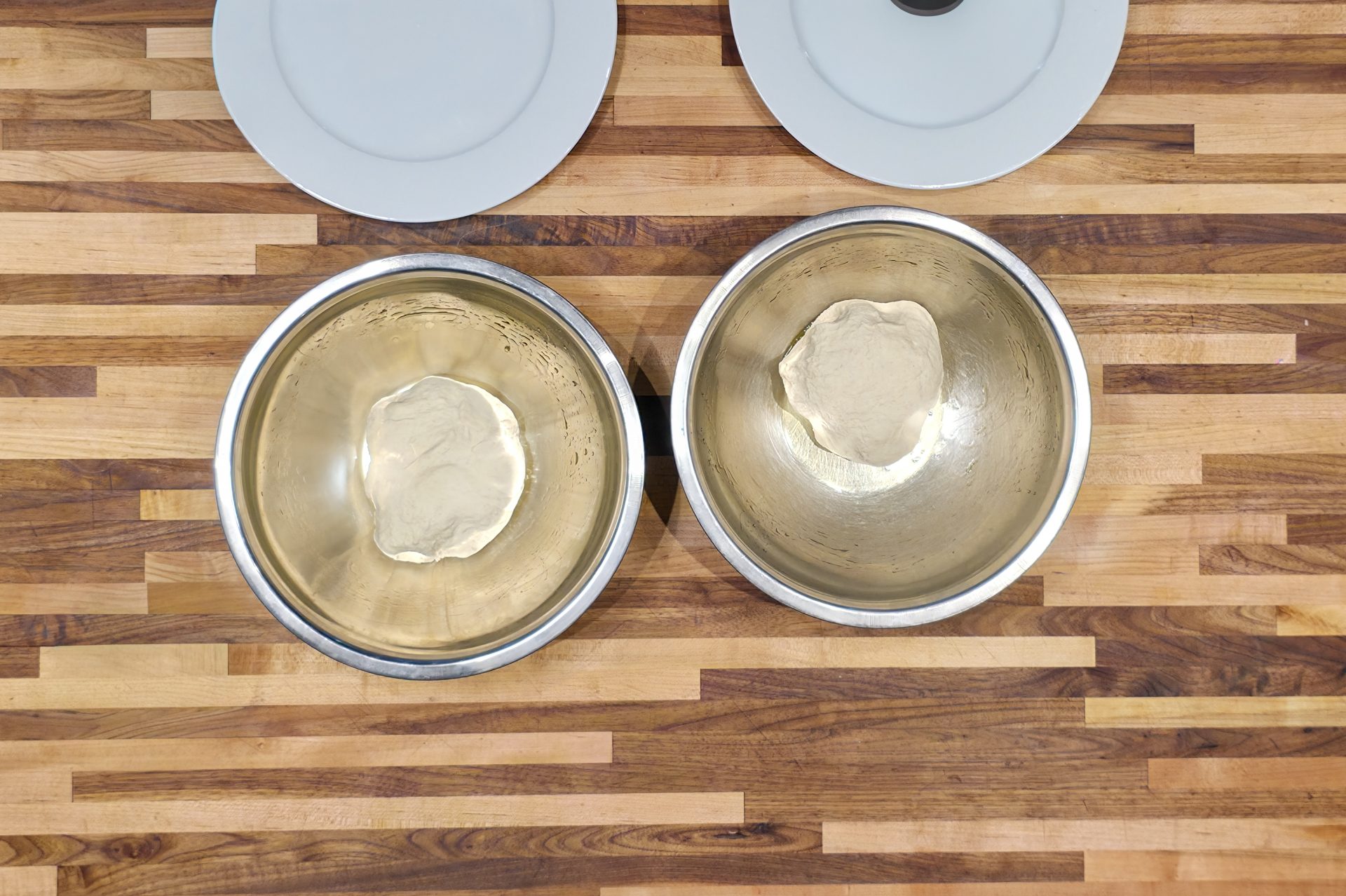
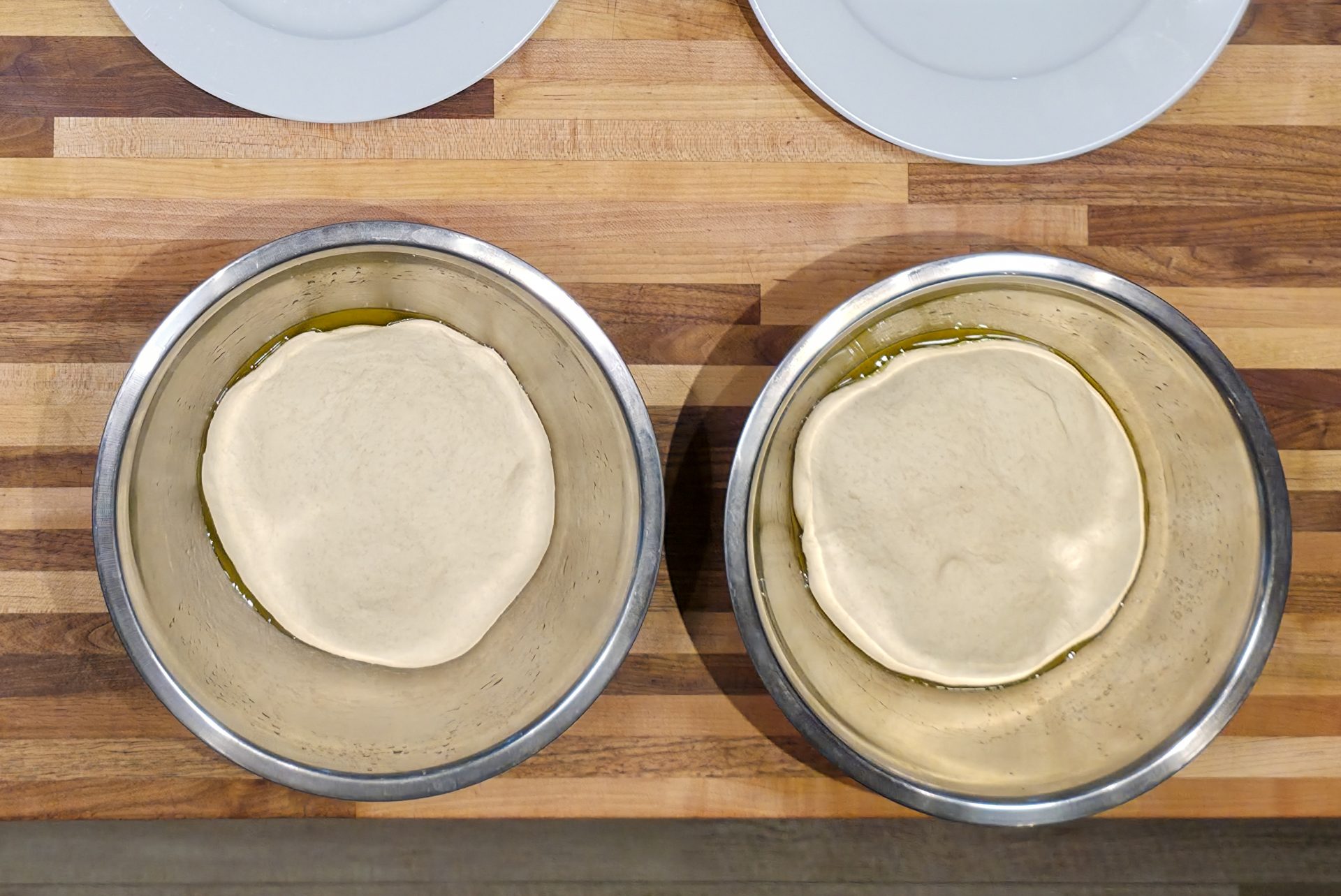
Place each piece into an individual medium mixing bowl, cover both with a plate or plastic wrap, and let them rise until doubled in a warm place (usually for 20 – 30 minutes).
Notes:
- A warm place would be considered the oven set to a bread-proofing/rising program, or a slightly preheated oven turned off (with a comfortable, sauna-like temperature), or place it near a source of heat.
- Alternatively, let it rise at room temperature for 30 minutes.
2.4.
Optional Steps: For a fuller taste of your pizza dough, deflate the dough after the first 20 or 30 minutes of rising by gently pressing down with your hands. Cover the dough and let it rise again for another 20 or 30 minutes.
3.Shaping Pizzas:
3.1.
Set oven to preheat to 400°F, using either the regular or convection program.
3.3.
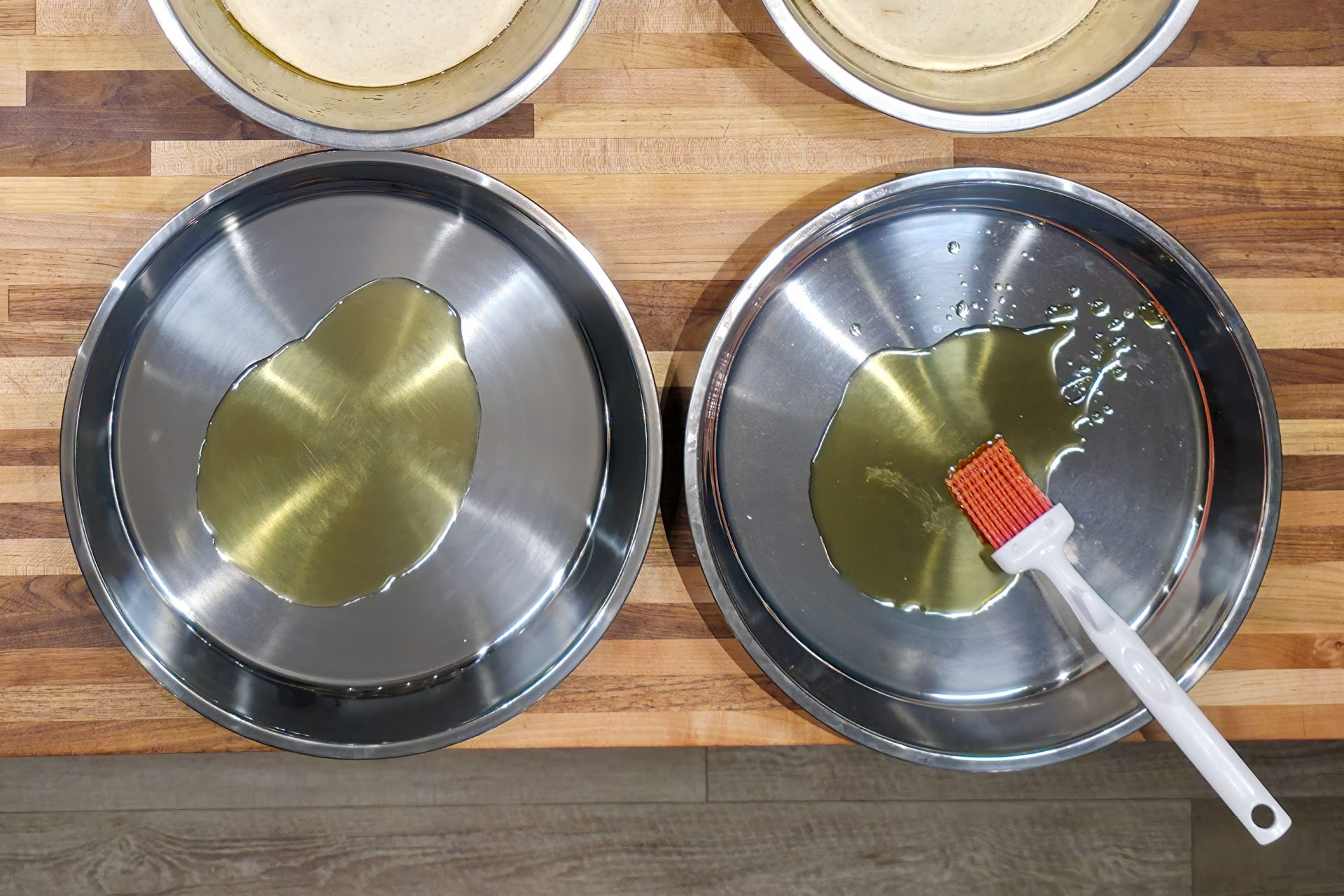
Then, spread it evenly using a silicone brush (If there is an excessive amount of oil, do not remove, as it will support the baking process of the pizza).
3.5.
3.6.
Set the pizzas aside while you prepare the sauce (no need to cover them).
4.Pizza Sauce:
4.1.
5.Assemble and Proof:
5.1.
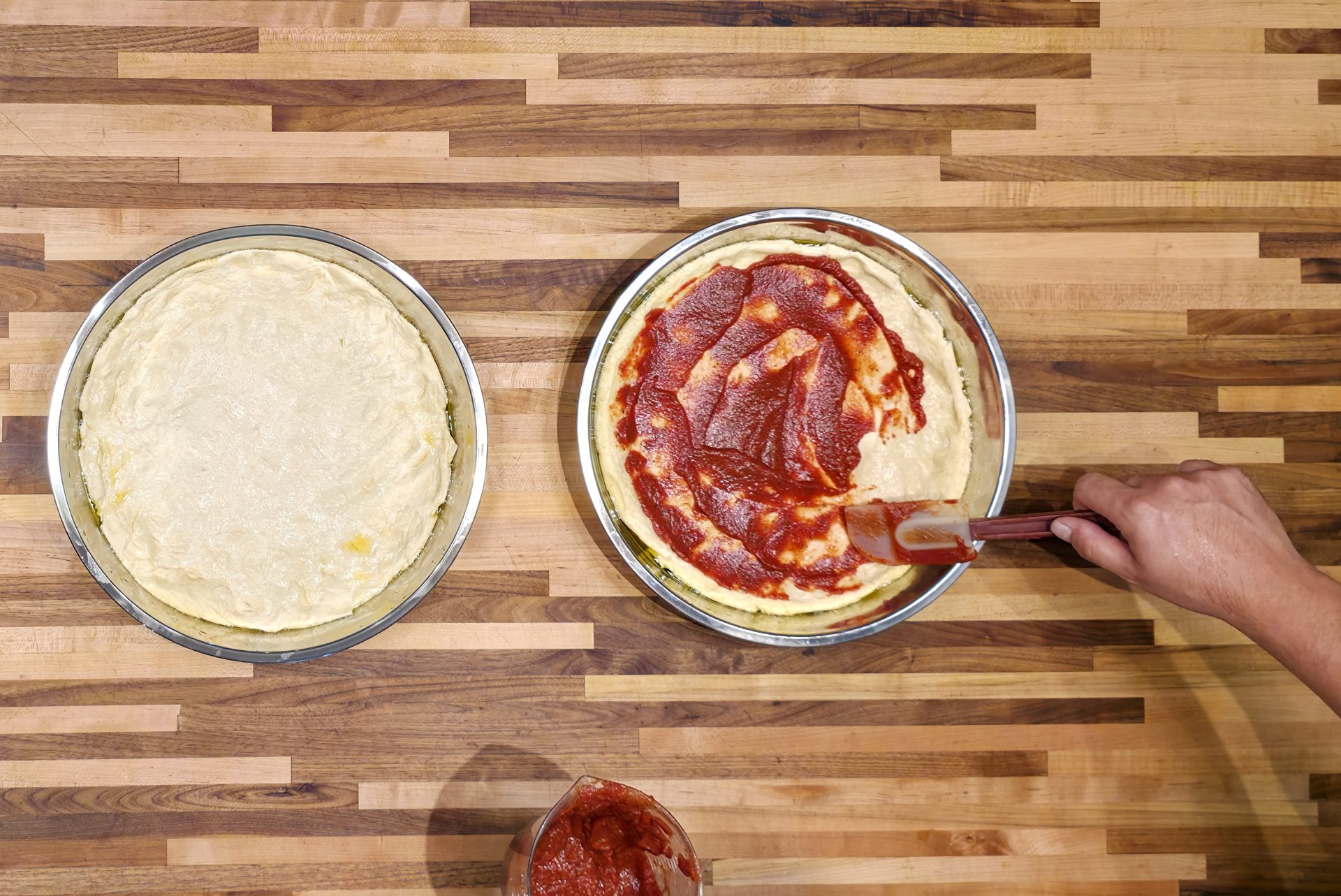
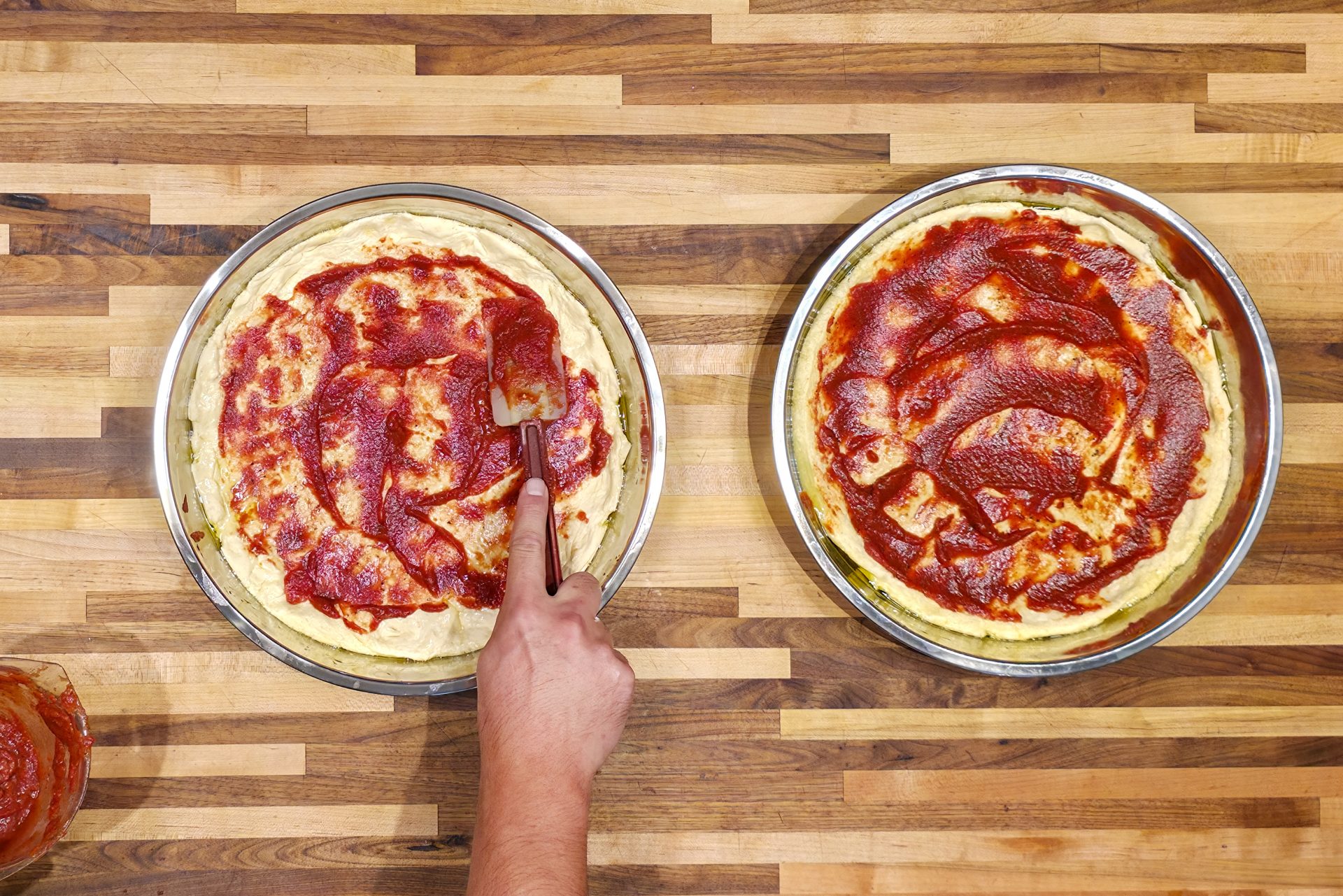
Spread the pizza sauce evenly on both pizzas.
Important:
- Distribute it to the edges (you can go all the way to the edge for a crustless pizza) or leave a 1/2-inch to 1-inch border to create a crust.
- Use an amount of the sauce you like, up to half of the total amount for each saucy pizza, or a quarter of the amount for pizza with sauce in moderate quantity (as I do), based on your preference.
- If you do not use all the sauce, feel free to store it in the refrigerator for up to one week or in the freezer for up to half a year for your next pizza project.
- The amount of sauce in the recipe is designed to use the entire can of diced tomatoes as well as the entire can of tomato paste to prevent you from having leftover cans and to prevent the necessity of measuring.
5.4.
Set the pizza aside until the oven is preheated or place it right away into the preheated oven.
Note: For this pizza, proofing is not necessary.
6.Bake, and Serve 60 Min. Pan Pizza:
6.1.
Place the pizzas on the bottom rack of the preheated oven and bake until done, about 20 minutes.
Note: If your pizzas do not fit next to each other, you can place one on the middle rack and one on the bottom rack.
6.2.
6.3.
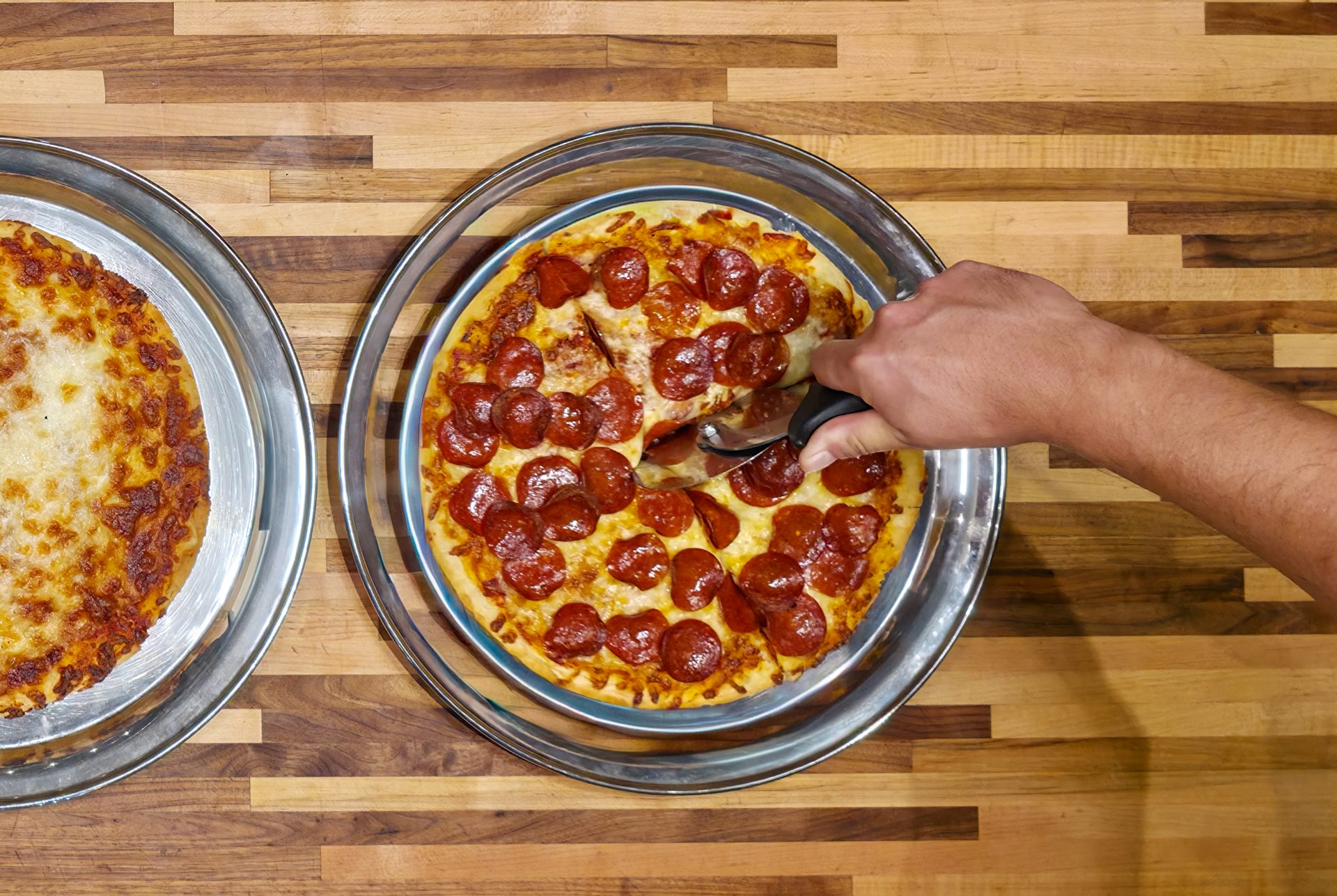
Then remove the pizzas from the pans, cut each pizza into 4 to 8 portions while it is still in the pan, or carefully remove it to a cutting board or tray before cutting.
Tip: Run the paring knife around the entire diameter of both pizzas to make sure that the sides are released (even if well-greased, sometimes sauce or cheese can get over the edge of the pizza, causing the edges to stick to the pan). Then, use the turner to carefully move the pizzas onto the serving plate or tray. Make sure to exercise caution by wearing oven mitts and not touching the hot pan in order to prevent burn injuries.
6.4.
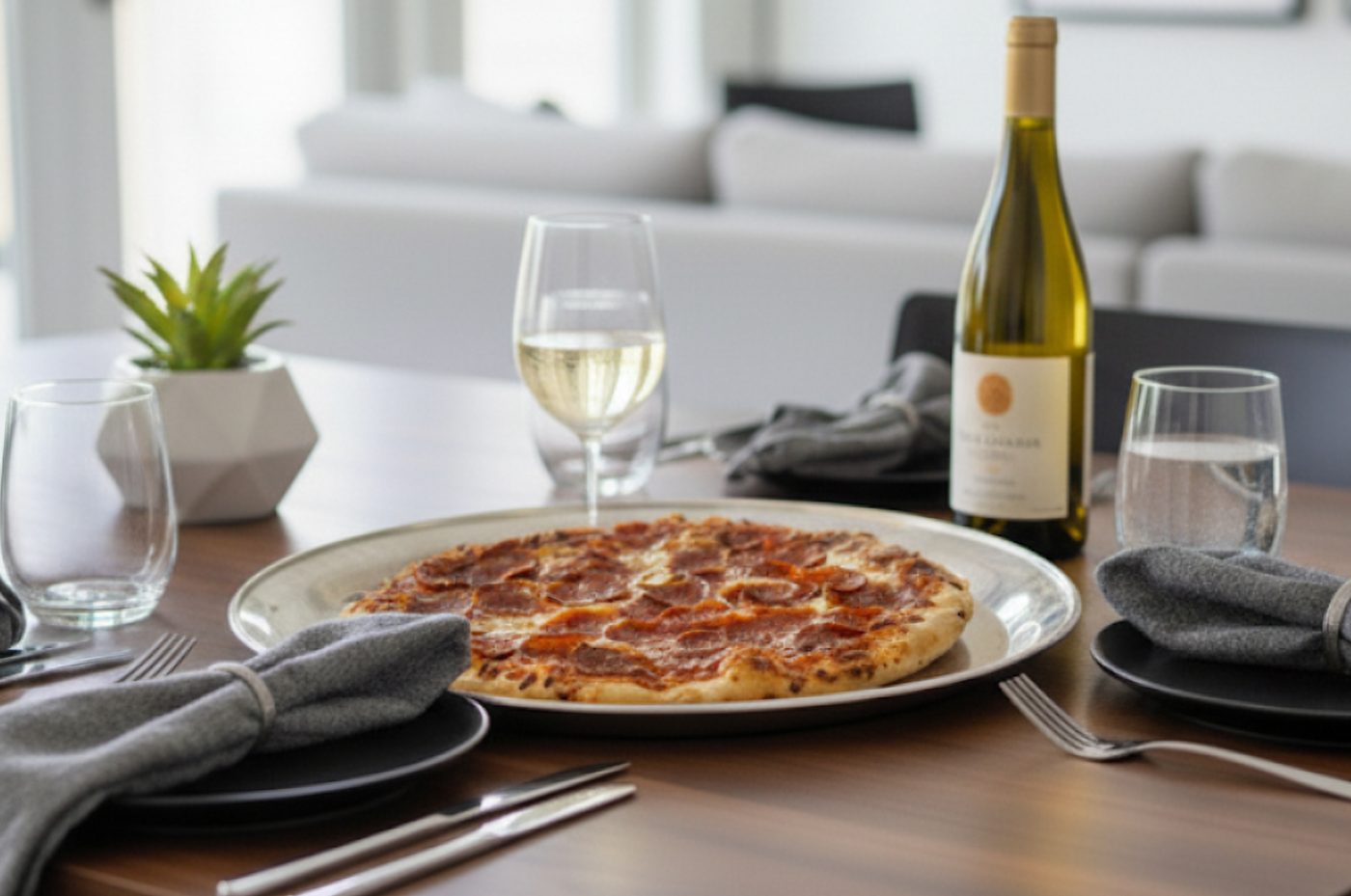
Serve warm.



Popular questions
What should I do if I have leftover sauce after making the 60 min. Pan Pizza?
The amount of sauce in this pizza sauce recipe is designed to use entire cans to avoid waste. However, if you prefer a pizza with a moderate quantity of sauce and do not use it all, feel free to store the remaining sauce in the refrigerator for up to one day. For longer storage, you can keep it in the freezer for up to half a year for your next homemade pepperoni pizza project.
Share
Click on the icons below to share "Title of the item to share"